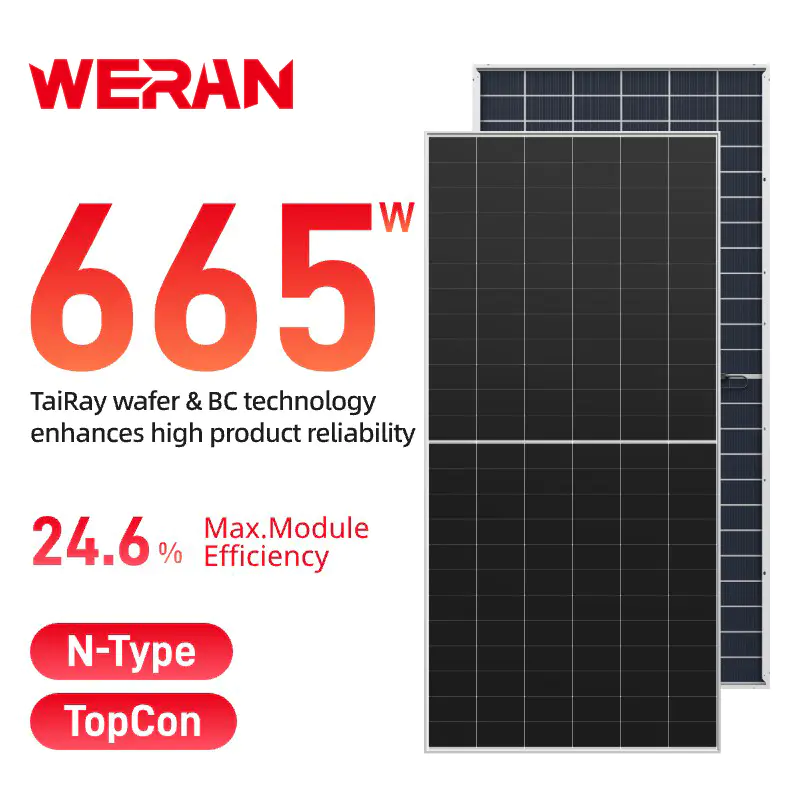
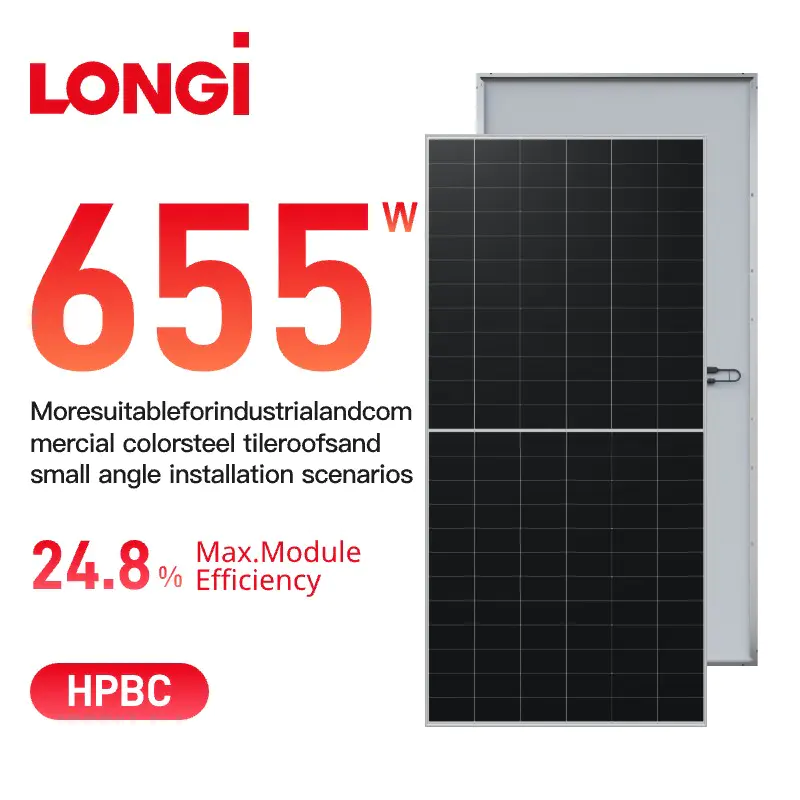
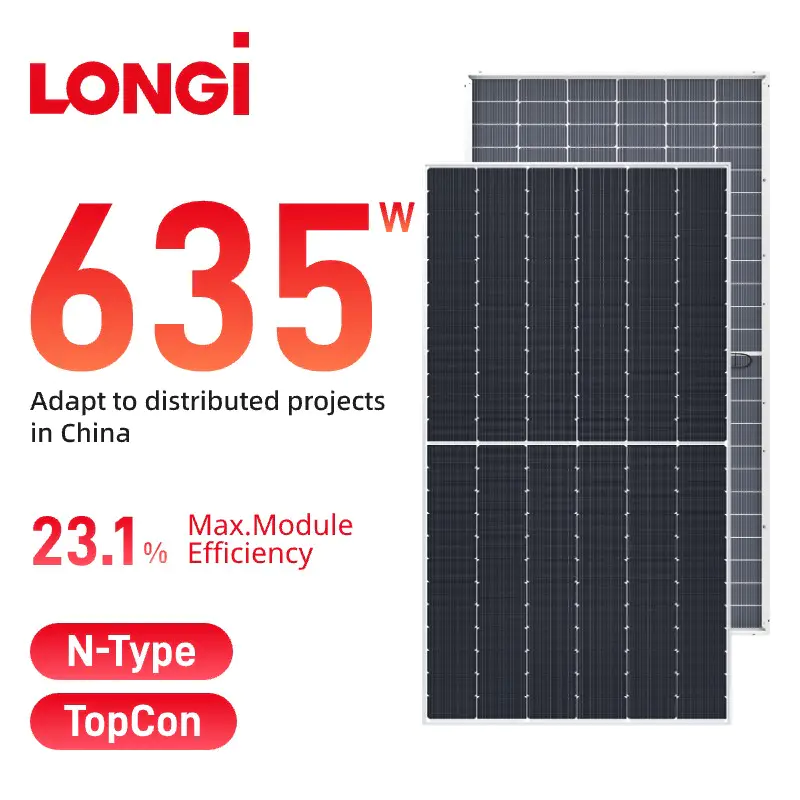
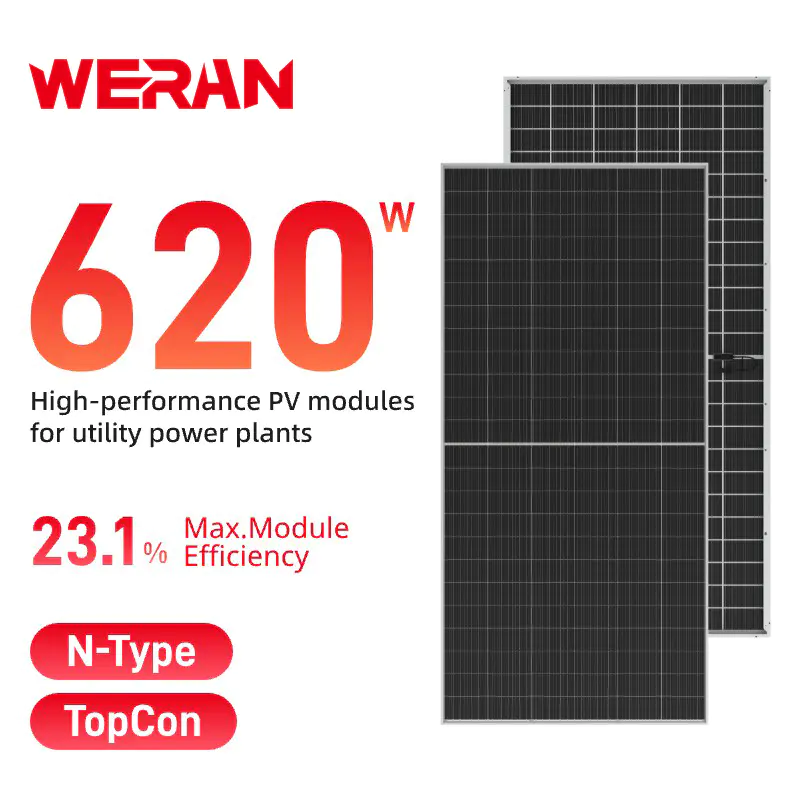
The shift toward high-wattage photovoltaic modules has fundamentally changed how solar professionals approach system design. A 600W monocrystalline solar panel represents the current generation of large-format PV technology, delivering exceptional power density while presenting new challenges in handling, structural integration, and logistics. Understanding exactly how much these panels weigh is not merely a matter of specification lookup—it directly determines safety protocols, installation costs, roof compatibility, and long-term system reliability.
Weight Range for 600W Monocrystalline Solar Panels
The weight of a 600W monocrystalline solar panel varies significantly depending on its construction type, cell technology, and frame design. Analysis of dozens of commercially available modules reveals a weight spectrum from approximately 22.5 kilograms to 52.7 kilograms per panel. This substantial range reflects different engineering approaches and intended applications.
Real Product Weight Data
Field data from multiple manufacturers demonstrates the actual weight distribution across different panel configurations:
Panel Type
Dimensions (L×W×H)
Weight (kg)
Construction
Monocrystalline PERC
1960 × 990 × 40 mm
22.5
Single glass, polymer backsheet
Monocrystalline (120 cells)
2172 × 1303 × 35 mm
30.9 ± 3%
Single glass, 210mm cells
N-type TOPCon bifacial
2382 × 1134 × 30 mm
32.8
Double glass, bifacial
Bifacial glass-glass
2382 × 1134 × 30 mm
33.1
Double glass, n-type cells
Bifacial glass-glass
2384 × 1134 × 30 mm
33.7
Double glass, 132 cells
Monocrystalline TOPCon
2172 × 1303 × 35 mm
35.0
Single glass, PERC
Monocrystalline bifacial
2384 × 1303 × 35 mm
38.5 ± 0.5
Double glass, 132 cells
Balcony kit panel
1580 × 1045 × 35 mm
52.66
Heavy frame, integrated kit
The lightest recorded 600W monocrystalline panel in commercial production weighs 22.5 kg, measuring 1960 mm by 990 mm with a 40 mm frame thickness, using a single glass front layer and polymer backsheet[reference:0]. At the other extreme, some specialized 600W configurations reach 52.66 kg, though these represent niche applications rather than mainstream utility or commercial modules[reference:1].
Standard Dimensions and Weight Distribution
Physical dimensions directly correlate with panel weight. Understanding the relationship between area, cell count, and mass helps installers predict handling requirements before a specific product is selected.
Typical Size Specifications
A standard 600W monocrystalline solar panel measures between 2172 mm and 2384 mm in length, with widths ranging from 1134 mm to 1303 mm. The predominant size cluster occupies approximately 2.28 to 2.38 meters in length and 1.13 to 1.30 meters in width, yielding a surface area of 2.58 to 3.10 square meters per panel. One common dimension specification is 2172 mm by 1303 mm, which creates a surface area of 2.83 square meters per module[reference:2].
Frame thickness typically falls between 30 mm and 40 mm, with the thinner profile corresponding to glass-glass constructions and the thicker profile associated with enhanced structural reinforcement. The anodized aluminum frame itself contributes 2.5 to 3.5 kg to total panel weight, varying with extrusion thickness and alloy composition.
Cell count also influences dimensions and weight. Most 600W panels contain either 120, 132, or 144 half-cut monocrystalline cells arranged in rectangular matrices. A 132-cell configuration measuring 2384 mm by 1134 mm typically weighs 33.7 kg, while a 144-cell panel of similar dimensions can weigh 27.2 kg when using single-glass construction with thinner 2.0 mm tempered glass[reference:3].
Weight Per Square Meter Analysis
Calculating weight per unit area provides a standardized metric for comparing panel designs regardless of absolute size. For 600W monocrystalline solar panels, the weight per square meter typically ranges from 10.7 kg/m² to 13.5 kg/m².
A 600W panel with dimensions 2384 mm by 1134 mm (area 2.70 m²) weighing 33.7 kg yields a weight density of approximately 12.5 kg/m²[reference:4]. A lighter 27.5 kg panel of identical dimensions would produce 10.2 kg/m²[reference:5]. Heavier constructions such as those weighing 38.5 kg over 3.11 m² generate approximately 12.4 kg/m², showing that larger panels distribute weight more evenly despite higher absolute mass[reference:6].
This metric becomes critical when evaluating roof load capacity. Industrial buildings with standard concrete roofs typically support 27-45 kg per square meter of additional distributed load[reference:7]. A 600W panel array with 12.5 kg/m² weight density plus mounting system contributions (approximately 3-5 kg/m²) remains within acceptable structural limits for most modern commercial roofing, though older or lightly constructed roofs require individual assessment.
Single Glass vs Double Glass Panel Weight
The most significant weight distinction among 600W monocrystalline solar panels is between single glass (glass-polymer backsheet) and double glass (glass-glass) constructions. This design choice affects mass by 17 to 20 percent on otherwise comparable panels.
Construction Differences
Single glass panels use a 3.2 mm fully tempered glass sheet on the front side and a polymer backsheet on the rear. Double glass panels employ glass on both sides, typically using 2.0 mm semi-tempered glass sheets for each layer. The glass alone constitutes approximately 72 percent of total panel weight in single glass designs and increases to roughly 83 percent in double glass configurations[reference:8]. This glass weight difference accounts for most of the mass disparity between the two construction types.
For a standard panel size of 2278 mm by 1134 mm, a double glass panel weighs approximately 5 kg more than an equivalent single glass panel. Real-world examples confirm this difference: a 600W single glass panel measuring 2278 mm by 1134 mm weighs 27.5 kg, while a double glass panel of nearly identical dimensions weighs 33.1 kg[reference:9][reference:10]. This 5.6 kg difference represents the additional rear glass layer and associated structural reinforcement.
Implications of Weight Difference
The weight disparity between single and double glass panels carries practical consequences. Single glass panels offer easier handling during installation, with individual panels remaining manageable for two-person lifting teams in most roof environments. The 22.5 to 30 kg range allows for faster deployment and reduced labor requirements on multi-day projects.
Double glass panels, while heavier, provide greater mechanical durability and bifacial generation capability. The glass-glass construction eliminates polymer backsheet degradation risks and offers superior resistance to moisture ingress. However, a commercial installation using 100 double glass panels at 33 kg each versus 27.5 kg single glass panels adds 550 kg of total array weight, potentially pushing marginal roofs beyond their rated capacity and requiring structural reinforcement costing thousands of dollars[reference:11].
600W Panel Installation Requirements
Installing large format 600W monocrystalline solar panels demands specific handling protocols, structural considerations, and equipment configurations distinct from smaller residential modules. The combination of increased weight and expanded surface area changes every aspect of the installation workflow.
Handling and Lifting Considerations
A single 600W panel weighing 30 to 38 kg requires two-person lifting for safe maneuvering on rooftops, particularly when working at heights or on sloped surfaces. Panels at the lighter end of the range (22-27 kg) can sometimes be handled by a single experienced installer, but most professional safety protocols mandate two-person handling for any panel exceeding 25 kg. The panel dimensions further complicate handling: a 2384 mm by 1134 mm panel has a diagonal length exceeding 2.6 meters, requiring careful navigation through roof hatches, around obstacles, and across scaffolding.
Mechanical lifting aids such as panel lifters, suction cup handles, or material hoists become practical considerations for large installations. A typical 600W panel pallet contains 31 to 36 modules, yielding a pallet weight of 850 to 1200 kg—exceeding the safe lifting capacity of many standard forklifts and requiring specialized unloading equipment[reference:12].
Structural Assessment Requirements
Before installing 600W panels, a structural engineer must evaluate the target roof or mounting structure. The weight of 600W panels plus mounting hardware and wind uplift forces must stay within the structure's rated load capacity. For roof-mounted systems, the total load includes dead load (panel weight plus racking) and live load (snow, maintenance access, wind).
Industry data indicates that a 600W panel with an area of 2.83 m² weighing 33 kg creates a distributed load of approximately 11.7 kg/m². When multiplied across an entire array, a 100-panel system adds 3,300 kg of dead load to the roof structure. The installation guide for large format panels recommends verifying that the roof load-bearing capacity meets or exceeds 40 pounds per square foot (approximately 195 kg/m²) when considering all combined loads[reference:13].
Mounting System Compatibility
Standard mounting rails designed for 400W panels may require upgrading to heavier-gauge profiles when supporting 600W panels. The increased panel weight and larger wind exposure area demand rail systems with higher structural ratings and closer support spacing. Industry recommendations suggest reducing rail span to 1.2 to 1.5 meters for 600W panels compared to 1.8 meters for smaller panels.
Clamping systems must accommodate the panel's weight and wind load ratings. Most 600W panels are certified for 5,400 Pa snow load and 2,400 Pa wind load, among the highest ratings available in the industry[reference:14]. Achieving these ratings requires proper clamp placement and torque specifications—typically 15 to 20 Newton-meters for mid-clamps and end-clamps.
Ground Mount Installations
For ground mount applications, 600W panels offer substantial advantages despite their weight. Ground-level installation eliminates height-related handling risks, allowing mechanical lifting equipment to place panels directly on mounting structures. The reduced panel count for a given system size means fewer electrical connections, shorter wire runs, and lower balance-of-system costs. A 1 MW ground mount system using 600W panels requires approximately 1,667 panels, whereas a 400W panel system would need 2,500 panels—a 33 percent reduction in modules, connections, and labor hours.
Monocrystalline Silicon Cell Technology Overview
The monocrystalline nature of these panels contributes to their power density and weight characteristics. Monocrystalline silicon cells are cut from a single crystal ingot, creating a uniform crystalline structure that achieves higher electron mobility than polycrystalline alternatives.
Cell Count and Configuration
Most 600W monocrystalline solar panels utilize half-cut cell technology, where standard-sized cells are laser-cut into two halves and interconnected. This configuration reduces internal resistance and improves performance under partial shading conditions. A typical 600W panel contains either 120 half-cells (equivalent to 60 full cells), 132 half-cells (66 full cells), or 144 half-cells (72 full cells) arranged in series-parallel matrices.
The 210mm wafer format has become increasingly common for 600W panels. These larger wafers enable higher power output per cell, reducing the number of cells required to reach 600W and potentially lowering manufacturing costs. A panel using 210mm wafers with 120 half-cells measures approximately 2172 mm by 1303 mm and weighs 30 to 35 kg depending on glass type[reference:15].
Advanced Cell Architectures
N-type TOPCon (Tunnel Oxide Passivated Contact) technology represents the current frontier for monocrystalline panels. These cells achieve efficiencies exceeding 22 percent while maintaining lower temperature coefficients than standard P-type PERC designs. Canadian Solar's CS6.2-66TB-600 panel, for example, uses N-type TOPCon cells with bifacial capability to reach 22.2 percent efficiency while weighing 32.8 kg[reference:16].
MBB (Multi Busbar) technology, where 9 to 12 thin conductive ribbons replace the traditional 3 to 5 busbars, also appears in most modern 600W panels. The increased busbar count reduces current collection distance, lowers resistive losses, and improves panel durability by distributing mechanical stress more evenly across the cell surface.
Specification Sheet Analysis
Understanding the specification sheet of a 600W monocrystalline solar panel requires attention to key weight-related parameters beyond the basic mass measurement. Multiple specifications interact to determine whether a panel suits a particular installation environment.
Mechanical Load Ratings
Panel weight correlates with mechanical load ratings, though not strictly linearly. Heavier panels often—but not always—withstand higher snow and wind loads due to thicker glass and stronger frames. A standard 600W panel carries snow load ratings of 5,400 Pa and wind load ratings of 2,400 Pa, representing the highest durability tier in the PV industry[reference:17].
These load ratings translate to real-world capabilities. A 5,400 Pa snow load equals approximately 540 kg of weight distributed across one square meter of panel surface, equivalent to nearly 2 meters of fresh snow or 0.6 meters of heavy wet snow. Panels with these ratings can withstand extreme weather events without structural failure, justifying their higher weight in snow-prone regions.
Glass Thickness Specifications
Specification sheets always list glass thickness and type. Single glass panels specify a 3.2 mm fully tempered front glass. Double glass panels specify two glass layers, typically 2.0 mm each, with "heat-strengthened" or "semi-tempered" classification indicating reduced residual stress compared to fully tempered glass. Some double glass designs use 1.6 mm glass sheets to reduce weight while maintaining bifacial capability, achieving weights comparable to single glass panels[reference:18].
Anti-Reflection Coating (ARC) on the front glass contributes minimally to weight but significantly to performance. Multi-layer ARC reduces reflective losses from approximately 4 percent per surface to less than 2 percent, improving energy yield by 2-3 percent annually.
Frame Specifications
The anodized aluminum frame contributes 8 to 12 percent of total panel weight. Frame dimensions are listed as height (30-35 mm typical) and cross-section profile. Frames with thicker walls (1.6 mm vs 1.2 mm) or reinforced corners add durability at the cost of additional weight. Mounting hole locations and drainage slots in the frame affect installation compatibility but not overall mass.
Weight Comparison Across Power Classes
Contextualizing the weight of 600W panels against lower-wattage alternatives helps installers evaluate tradeoffs between power density and handling complexity.
Panel Power
Typical Weight
Dimensions (L×W)
Weight per W
Weight per m²
400W
20.0 - 22.5 kg
1722 × 1134 mm
50.0 - 56.3 g/W
10.3 - 11.6 kg/m²
500W
25.0 - 28.0 kg
1956 × 1134 mm
50.0 - 56.0 g/W
11.3 - 12.7 kg/m²
600W
27.5 - 35.0 kg
2172 × 1303 mm
45.8 - 58.3 g/W
10.2 - 13.5 kg/m²
700W+
35.0 - 40.0 kg
2384 × 1303 mm
50.0 - 57.1 g/W
11.6 - 12.9 kg/m²
The data shows that 600W panels achieve similar or slightly lower weight per watt ratios compared to 400W panels, meaning the efficiency gains from larger format are not offset by disproportionate weight increases. The weight per square meter remains in the same range across power classes, indicating that weight is primarily a function of panel area rather than power output. This consistency means roof load calculations scale predictably when upgrading from 400W to 600W systems for the same total array area.
Transportation and Logistics Implications
The weight of 600W monocrystalline solar panels affects every stage of the logistics chain, from factory packaging to final installation site delivery.
Pallet and Container Loading
Standard pallets hold 31 to 36 panels, depending on panel dimensions and manufacturer packaging preferences. A pallet of 33.7 kg panels weighs 1,045 kg to 1,213 kg before adding pallet weight. This exceeds the typical 1,000 kg limit for manual forklift handling and requires heavy-capacity equipment for unloading.
Shipping containers maximize density with specific stacking patterns. A 40-foot high-cube container typically holds 620 to 720 panels, representing total cargo weights of 17,000 to 24,000 kg—approaching the container's maximum gross weight limit of 30,480 kg. Logistics planners must verify that the combined weight of panels, pallets, and packaging stays within transportation regulations.
On-site Movement
Moving panels from delivery truck to installation point requires planning for weight and dimension constraints. Roof access equipment such as material lifts must have capacity ratings exceeding the maximum single-panel weight plus a safety margin. Conveyor systems designed for smaller panels may require retrofitting for 600W formats.
Safety regulations in many jurisdictions require two-person teams for lifting loads over 25 kg. A 600W panel weighing 33 kg thus mandates two-person handling throughout the installation process, increasing labor costs by approximately 100 percent for the panel placement phase compared to lighter panels that allow single-person handling.
Common Questions About 600W Panel Weight
Q1: Can a single person install a 600W solar panel?
Not recommended for safe practice. A 600W panel typically weighs between 27 and 35 kg, exceeding the 25 kg single-person lifting limit specified in most occupational safety guidelines. Two-person lifting teams are required for safe handling, particularly on roofs or at heights. Some lighter models at 22-27 kg may be manageable by an experienced installer for ground-level placement, but professional installation protocols still recommend two-person handling.
Q2: How does bifacial panel weight compare to monofacial panels?
Bifacial panels, which generate power from both front and rear sides, typically weigh 17 to 20 percent more than monofacial panels of equivalent power rating. This weight increase comes from the rear glass layer required for bifacial operation. A typical 600W bifacial double glass panel weighs 32-35 kg, while a monofacial single glass panel of the same power weighs 27-30 kg. However, newer designs with 1.6 mm rear glass achieve bifacial capability with weight comparable to single glass panels[reference:19].
Q3: Will my roof support 600W solar panels?
Most modern commercial and industrial roofs can support 600W panels, but individual assessment by a structural engineer is essential. The distributed weight of 600W panels (approximately 10-13 kg/m²) plus mounting hardware (3-5 kg/m²) falls within the typical roof load capacity of 27-45 kg/m² for modern construction. Older roofs, wooden structures, or roofs with existing damage may require reinforcement. A professional structural assessment costing $300-600 identifies potential issues before installation[reference:20].
Q4: Are lighter 600W panels less durable than heavier ones?
Not necessarily. Some lighter 600W panels achieve reduced weight through thinner glass (1.6 mm vs 3.2 mm) or polymer backsheets instead of rear glass, while maintaining identical mechanical load ratings of 5,400 Pa for snow and 2,400 Pa for wind. However, durability under specific conditions varies: heavier double glass panels generally offer superior resistance to moisture ingress and chemical degradation, while lighter panels may have better hail resistance due to thicker front glass. Installation environment should guide material selection rather than weight alone.
Q5: How many 600W panels fit on a standard pallet?
Standard pallet configurations for 600W panels contain 31 to 36 panels. A 31-panel pallet of 33 kg panels totals 1,023 kg before adding pallet weight, while a 36-panel pallet of 27.5 kg panels totals 990 kg. The exact quantity varies by panel dimensions and manufacturer packaging specifications. Always verify pallet weight with the supplier before arranging logistics to ensure handling equipment capacity matches requirements.
 English
 Français
 Español
 عربى
عربى Український