Navigating the solar industry text can often feel like swimming in an alphabet soup. Recently, the buzzword dominating technological roadmaps is BC (Back Contact). If you enter a manufacturing facility or review an EPC procurement list, you are bound to encounter terms like TBC, HPBC, HBC, ABC, or DBC.
Are they entirely competing technologies? Not exactly. Let's break down the underlying architecture of the BC family and clarify how these innovations match against real-world scenario demands like utility-scale deployment.
1. Understanding the Core: BC is a Framework, Not a Single Technology
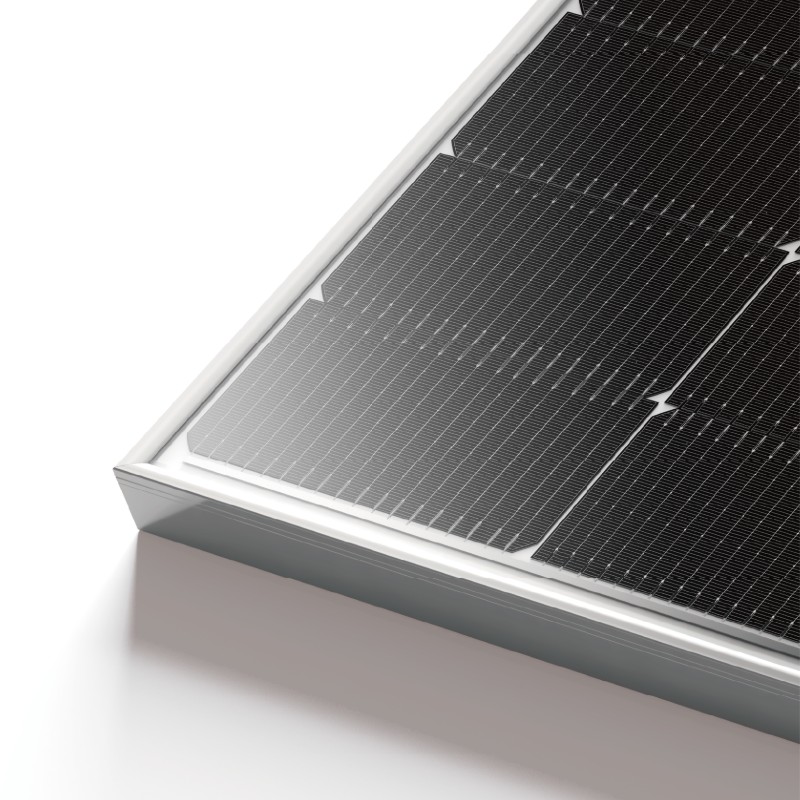
The most common misconception in the PV industry is treating "BC" as a standalone cell chemistry equivalent to TOPCon or HJT. In reality, BC stands for Back Contact. It describes a structural architecture where all metal electrodes are moved to the rear side of the solar cell, leaving the front surface completely uninterrupted by busbars or finger grids.
Think of BC as a smartphone chassis. The layout remains buttonless on the front (zero shading), but the internal operating system can vary wildly. Because it eliminates front-side grid shading, it increases the light absorption area by roughly 3%, delivering an immediate boost to Short-Circuit Current (Jsc).
2. The Evolution Chain: From Baseline IBC to "Stacked Buffs"
While the structural principle of moving grids to the back remains constant, manufacturers differentiate by applying different passivation layers to the rear. This creates the diverse branches of the BC family tree:
IBC (Interdigitated Back Contact)
The classical foundation of all back-contact cells. It utilizes an N-type silicon wafer substrate with alternating P+ and N+ regions patterned like interlocking comb teeth on the rear side. It is highly efficient but complex to manufacture seamlessly at low cost.
TBC (Tunnel Oxide Passivated Contact + BC)
This is a combination of TOPCon chemistry inside a BC layout. By applying an ultra-thin tunnel oxide layer and doped polysilicon to the rear interdigitated structures, it merges the excellent passivation qualities of TOPCon with the zero-shading structure of BC.
HBC (Heterojunction + BC)
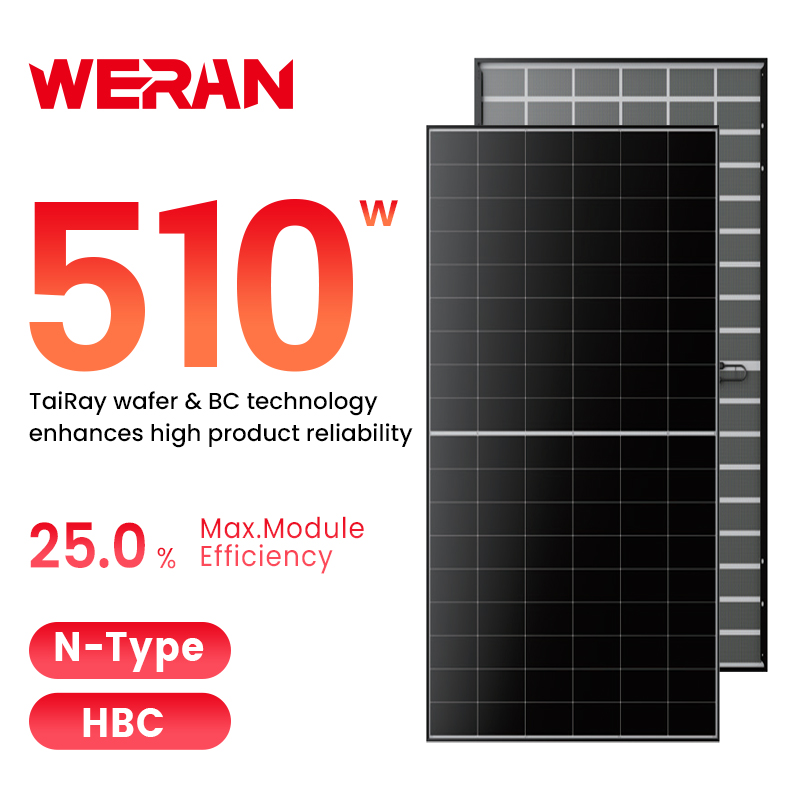
This fuses HJT thin-film passivation into a BC layout. It yields the highest theoretical efficiency limits due to the exceptional low-temperature coefficient of amorphous silicon combined with zero front shading. However, its high capital expenditure (CapEx) and narrow processing temperature window pose large-scale mass production hurdles.
| Technology Route |
Front-Side Grid |
Rear Passivation Strategy |
Mass Production Characteristics |
| Standard TOPCon |
Traditional Grid Lines (~3% shading) |
Tunnel Oxide Passivated Contact |
Current market mainstream; highly cost-effective |
| TBC (TOPCon + BC) |
Zero Shading (All Clear) |
TOPCon Layer + Interdigitated Layout |
High efficiency; manufacturing lines require structural retrofits |
| HBC (HJT + BC) |
Zero Shading (All Clear) |
Amorphous Silicon (a-Si:H) Heterojunction |
Highest efficiency ceiling; high equipment investment costs |
3. Commercial Brand Labels vs. Technical Underpinnings
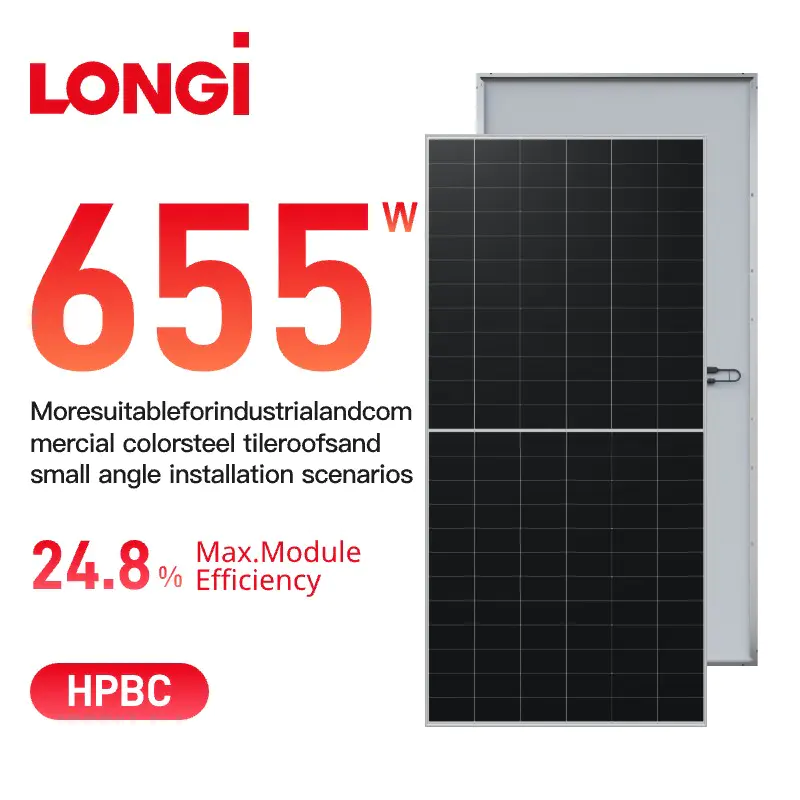
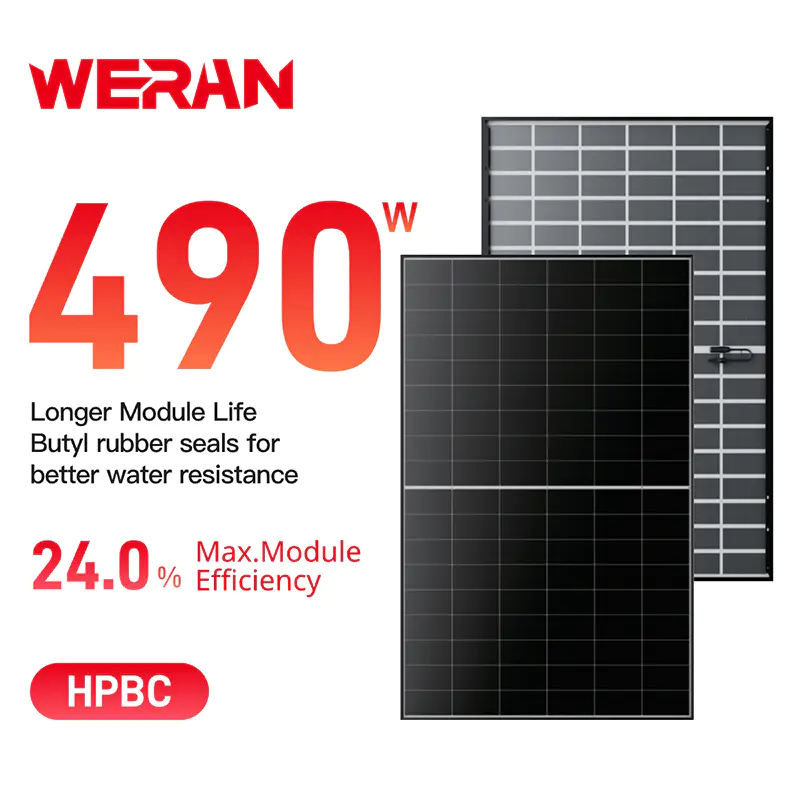
To make matters more confusing for project procurement, tier-1 manufacturers label these routes with proprietary marketing terms. For instance, ABC (All Back Contact) is a commercial brand built around N-type IBC variants. Meanwhile, HPBC (Hybrid Passivated Back Contact) represents a proprietary hybrid approach utilizing P-type or N-type configurations depending on generation iterations.
4. Application Matching: Where BC Excels vs. The Utility-Scale Champion
Because BC modules feature a sleek, grid-less front aesthetic, they are exceptionally suited for premium residential roofs, high-end commercial carports, and Building-Integrated Photovoltaics (BIPV). However, in utility-scale ground stations or locations featuring high ground albedo (such as sand, concrete, or snow), the back-contact layout introduces a physical compromise: a lower bifaciality ratio.
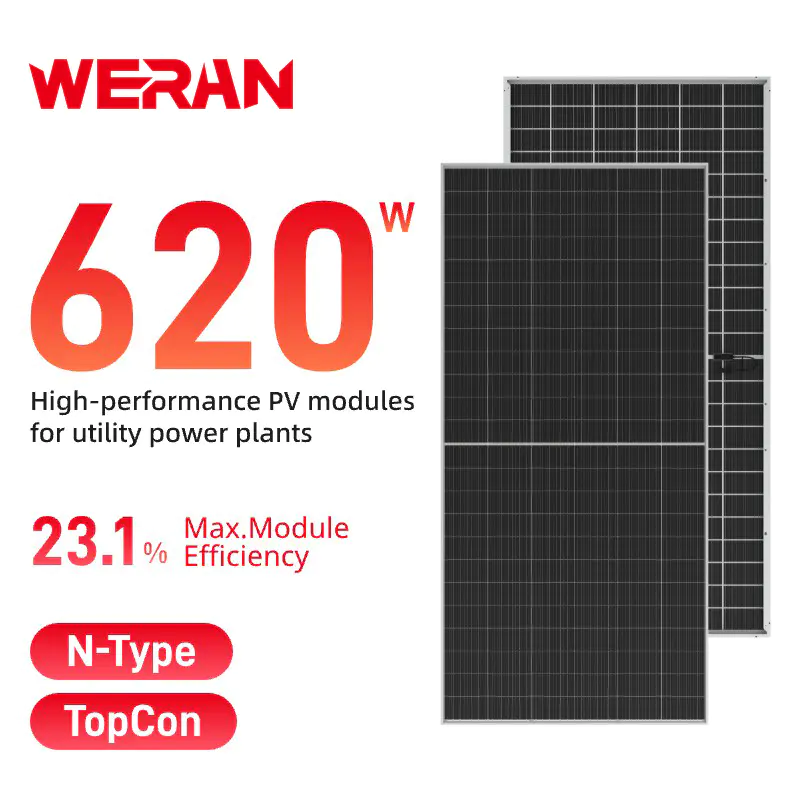
For utility-scale assets where Levelized Cost of Electricity (LCOE) is tied tightly to rear-side energy yield, advanced N-type Bifacial modules utilizing high-conductivity passivated contact structures remain the absolute industry gold standard.
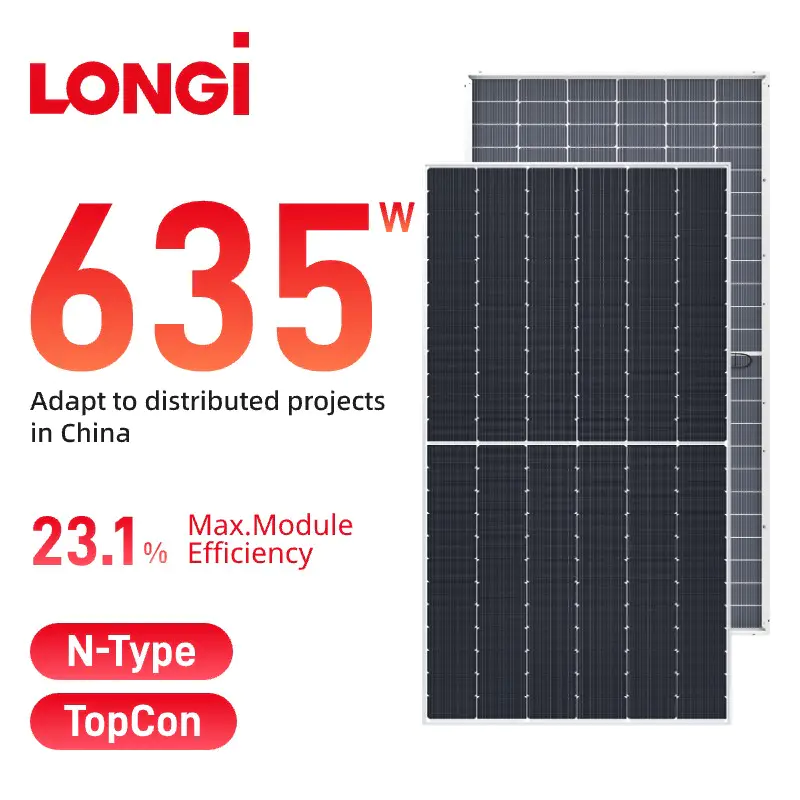
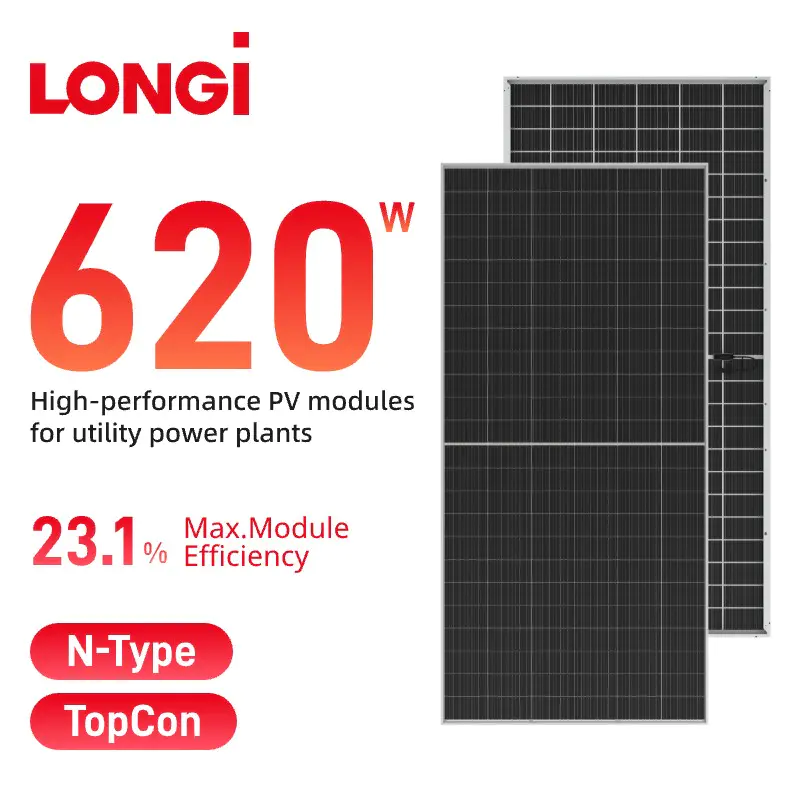
LONGi Hi-MO7 Bifacial 615-645W Solar Panel (LR5-78HGD)
Engineered precisely to counter the high-shading and low-bifaciality constraints of standard layouts. Powered by advanced N-type HPDC cell architecture, this panel is the definitive choice for utility-scale ROI maximization.
- Massive Power Envelope: High-density scaling delivering 615W to 645W output.
- Market-Leading Bifaciality: Reaches up to 80% bifacial ratio, maximizing rear albedo returns compared to premium BC solutions.
- Extreme Thermal Performance: An ultra-low -0.28%/°C temperature coefficient ensures peak yields in blistering climates.
- Decades of Reliability: Backed by a strict 30-year linear power output warranty with minimal annual degradation.
Explore Technical Datasheet →
Industry Takeaway: While BC variations like TBC and HBC represent exciting frontiers for premium architectural aesthetic roof applications, the premium LONGi Hi-MO7 Bifacial LR5-78HGD series remains unmatched in raw, high-albedo utility economics.
Conclusion
To summarize the complex world of Back Contact: BC is the outer architecture, TOPCon/HJT are the inner passivation chemistries, while labels like HPBC or ABC are vendor-specific brand names.
When selecting panels for your next major development asset, balancing cell efficiency against bifacial generation ratios and balance-of-system (BOS) structures is paramount. For a comprehensive economic layout simulation or container loading configurations of the LONGi Hi-MO7 615-645W series, contact our Weran Solar engineering desk today.
 English
 Français
 Español
 عربى
عربى Український