A Comprehensive Technical Insight into Back Contact Architecture and the Breakthrough of LONGi Hi-MO X10
The photovoltaic (PV) industry is undergoing an accelerated phase of technological iteration. Having transitioned from first-generation crystalline silicon to second-generation thin-film networks, the global market is now firmly anchored in third-generation high-efficiency solar cells. Within this landscape, N-type technologies—predominantly TOPCon, HJT, and IBC—have led the charge. However, the true game-changer emerging at the forefront of ultimate efficiency is Back Contact (BC) technology, a structural revolution redefining light absorption and module aesthetics.
1. Understanding BC Technology: The Zero-Shading Revolution
BC cell technology stands for Back Contact solar cells. Its foundational architecture traces back to the Interdigitated Back Contact (IBC) design. Unlike conventional crystalline silicon solar cells, the defining distinction of BC architecture is that the emitter, surface fields, and metal grids are all relocated entirely to the rear side of the cell in an interdigitated arrangement.
By moving all front-side metal busbars and finger grids to the back, the front surface of a BC cell is completely unshaded. This structural layout provides critical performance and visual benefits:
Zero Optical Shading Loss: Eliminating front-facing metal grids maximizes incident light absorption, ensuring every square millimeter of the front aperture actively participates in photon collection.
Superior Conversion Efficiency: A significantly higher effective photon-to-electron strike area unlocks higher short-circuit currents (Isc) and higher overall conversion efficiency thresholds.
Unmatched Architectural Aesthetics: Without messy gridlines, the cells present a sleek, uniform, purely dark aesthetic, making them ideal for high-end residential, commercial, and Building Integrated PV (BIPV) installations.
Figure 1: Simplified High-Precision Cross-Sectional Diagram of BC (Back Contact) Cell Architecture.
2. A Platform-Level Technology: Seamless Structural Integration
Strictly speaking, BC is not an isolated cell material class, but rather a sophisticated architectural platform technology. Because it is non-exclusive and exhibits vast cross-compatibility, it can be overlaid on both P-type and N-type crystalline substrates, giving rise to specialized, high-performance cell configurations:
Base / Core Technology
BC Overlay Acronym
Structural Integration Advantage
Conventional P-type
PBC / HPBC
Upgrades legacy manufacturing architectures to achieve ultra-sleek, rear-contact aesthetic benefits with a noticeable efficiency boost.
TOPCon (Tunnel Oxide Passivated Contact)
TBC (POLO-IBC)
Combines TOPCon's ultra-thin tunneling oxide passivation layer with back-contact grids, significantly boosting open-circuit voltage (Voc).
HJT (Heterojunction Technology)
HBC
Merges hydrogenated amorphous silicon thin-film layers with back contacts, minimizing carrier recombination and generating peak short-circuit currents.
As the solar industry converges on these combinations, BC cell technology splits into three dominant commercial vectors: classic premium IBC, ultra-high-efficiency HBC, and commercially optimized TBC. These technologies challenge manufacturers to achieve flawless nano-scale patterning and tight gap control across the rear contact zones while driving down levelized production costs.
3. Commercial Implementation: The Commercial Frontier
While the theoretical efficiency of BC technology has always been attractive, mass commercialization required industry-leading engineering prowess to overcome manufacturing complexities. BC cells mandate complex back-surface patterning, multi-stage masking, precise laser ablation or photolithography, and robust passivation to ensure extended carrier lifetime.
Tier-1 manufacturers have chosen distinct paths to deploy this technology. Some lines utilize complex matrix-cross finger alignments, whereas others implement streamlined linear electrode arrays to maximize yield rates. In the massive commercial and utility-scale solar sectors, the combination of advanced back-contact engineering with raw power delivery represents the peak of modern PV design.
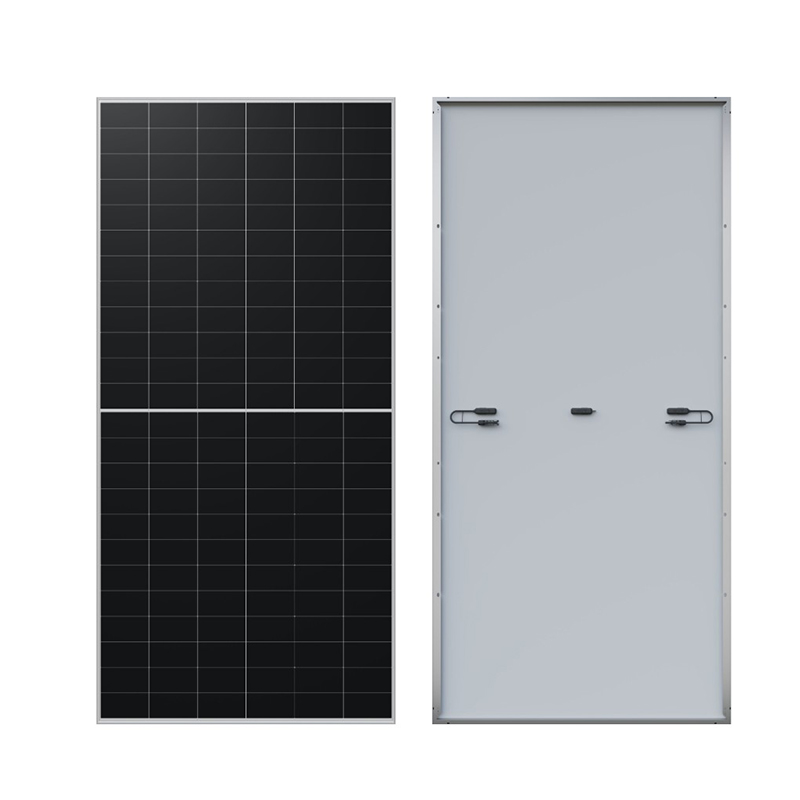
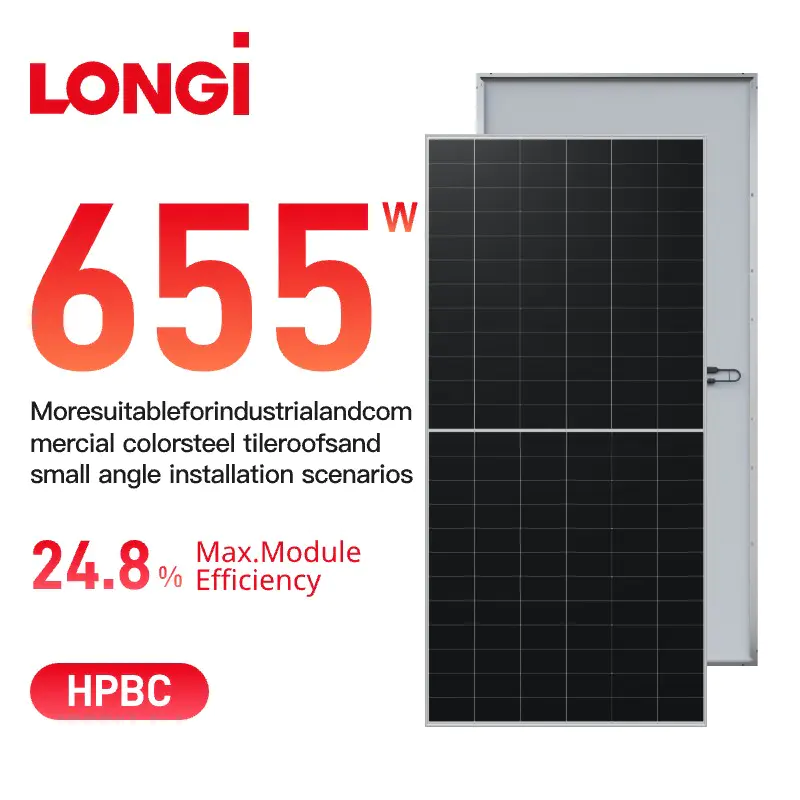
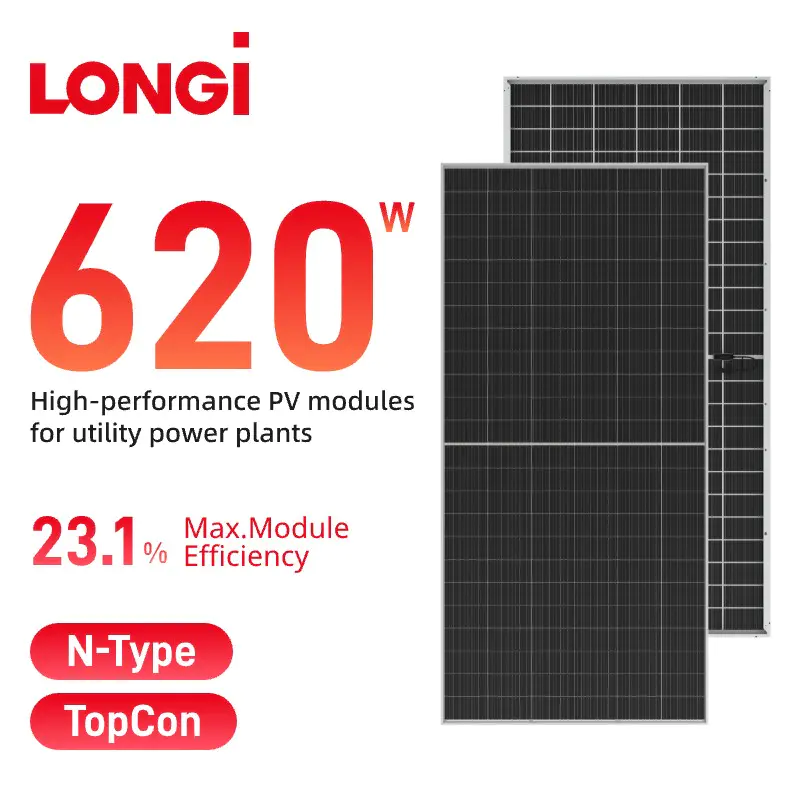
Bringing this high-efficiency platform technology into real-world grid deployments is the groundbreaking LONGi Hi-MO X10 Monofacial 640-670W LR7-72HVHF Solar Panel. Representing the pinnacle of large-format back-contact design, this series couples advanced structural passivation with massive power output configurations.
Engineered specifically to minimize optical losses and eliminate thermal mismatch degradation across industrial networks, it delivers up to 670W of pure, unobstructed frontside generation. Explore Full Technical Specifications →
4. Advanced Manufacturing Breakdown: TBC vs. HBC Technical Paths
The TBC (Tunneling Back Contact) Vector
TBC combines the strengths of Tunnel Oxide Passivated Contact (TOPCon) systems and IBC back-surface layouts. Often designated as POLO-IBC, its structural architecture deposits an ultra-thin tunnel oxide layer followed by heavily doped P+ and N+ polysilicon on the rear surface.
By leveraging tunnel oxide passivation effects alongside back-grid current paths, TBC drastically reduces surface carrier recombination. This results in an exceptional leap in open-circuit voltage (Voc) while maintaining a highly cost-efficient production flow. Structurally, the manufacturing line inserts steps for specialized chemical vapor deposition (APCVD/PECVD), selective laser opening, and precise localized etching to resolve the dual-polarity patterning required on the back surface.
The HBC (Heterojunction Back Contact) Vector
HBC represents the synthesis of Heterojunction (HJT) thin-film engineering and back-contact architecture. It relies on a front surface treated exclusively with a highly transparent passivation layer of hydrogenated amorphous silicon, completely stripping away front-side metal obstructions.
Key Advantage: The rear side features alternating N-type and P-type amorphous silicon thin films to build the heterojunction. This allows HBC cells to hit record-high open-circuit voltages and maximum short-circuit currents by capturing all accessible blue-spectrum photons on the front, paired with near-zero carrier recombination at the back.
However, the manufacturing matrix remains demanding. Producers must balance HJT's strict low-temperature processing boundaries with the micro-patterning precision mandated by the complex IBC contact array, ensuring zero cross-contamination in the tight gap spaces between poles.
5. The Strategic Outlook for Global PV Markets
As standard top-and-bottom contact modules approach their practical efficiency plateaus, BC technology serves as the premier platform framework for the next decade of PV advancement. Its capacity to blend harmoniously with continuous upgrades in thin-film passivation ensures that as underlying processes mature, the modules deployed on tracking systems and rooftops can seamlessly extract more power per square meter.
For modern commercial investors, utility developers, and technical planners, upgrading to premium configurations like the LONGi Hi-MO X10 series is no longer just about adopting a modern look—it represents an intelligent, future-proof strategy to secure maximum yield, optimize levelized cost of energy (LCOE), and leverage the most advanced platform technology the solar industry has to offer.
 English
 Français
 Español
 عربى
عربى Український