Every kilowatt-hour a solar array produces over its lifetime traces back to a handful of measurable factors: cell architecture, module construction, thermal behavior, and how well the panel resists gradual power loss. Efficiency ratings printed on a datasheet only tell part of the story. Two panels with identical rated wattage can behave very differently once installed on a rooftop in a hot climate or a utility field exposed to wind-driven soiling.
Understanding these variables matters because solar photovoltaic pv panels represent a long-term capital investment. A difference of even one percentage point in real-world efficiency compounds over twenty-five years into a meaningful gap in total energy harvested, especially on projects where roof or land area is limited.
Cell Technology
Determines base conversion rate and temperature response
Module Design
Affects light capture, hot spot resistance, and durability
Site Conditions
Shapes actual annual yield versus laboratory rating
Core Technologies Driving Higher Efficiency
Efficiency gains over the past several years have come from a combination of cell-level and module-level improvements working together rather than any single breakthrough. The following developments are the ones most likely to appear on a modern datasheet and most worth understanding before comparing quotes.
Half-cut cell design: splitting standard cells in half reduces internal resistance losses and improves shade tolerance, typically adding a small but consistent efficiency gain across the module.
Multi-busbar interconnection: using nine, ten, or more thin busbars instead of the older three or four-busbar layout shortens current travel paths and lowers resistive losses, particularly under partial shading.
Bifacial cell structure: allowing both the front and rear surfaces to capture light lets a module harvest reflected irradiance from the ground or roofing surface, commonly adding several extra percentage points of annual energy depending on albedo and mounting height.
Passivated contact layers: reducing electron recombination at the cell surface improves both efficiency and long-term stability, especially in high-temperature installations.
Advanced encapsulation materials: newer encapsulant formulations reduce light-induced degradation and improve moisture resistance, protecting efficiency gains over the module's operating life.
A module rated at the same nameplate wattage as a competitor can still deliver a noticeably different annual yield once temperature coefficient, bifacial gain, and degradation rate are factored in together.
Comparing Common PV Module Technologies
Choosing between module types depends heavily on project type, budget, and site conditions. The table below summarizes how the most widely used cell technologies typically compare on the metrics that matter most for real-world energy yield.
Technology
Typical Efficiency
Temperature Coefficient
Best Fit
Standard Mono PERC
20 to 21.5 percent
Moderate
Cost-sensitive residential
N-Type TOPCon
22 to 23.5 percent
Low
Residential and commercial
Heterojunction (HJT)
22.5 to 24 percent
Very low
Premium residential, hot climates
Bifacial Dual-Glass
21 to 23 percent front
Low
Utility-scale, commercial ground mount
Temperature coefficient deserves particular attention for projects in warm regions. A lower coefficient means the panel loses less power per degree of temperature rise above standard test conditions, which translates directly into stronger summer afternoon output when electricity demand and value are often highest.
How Site Factors Convert Rated Power Into Real Energy Yield
The wattage printed on a panel label is measured under fixed laboratory conditions. Converting that number into actual delivered energy involves several sequential adjustments, illustrated below.
Because the middle two adjustments can shift outcomes by ten percent or more in either direction, comparing panels purely on rated wattage overlooks the variables that actually determine long-term project returns.
Matching Panel Choice to Project Type
Efficiency priorities shift depending on whether a project sits on a residential roof, a commercial building, or an open utility field. Space constraints, budget tolerance, and structural loading all influence which module class makes sense.
Residential Rooftops
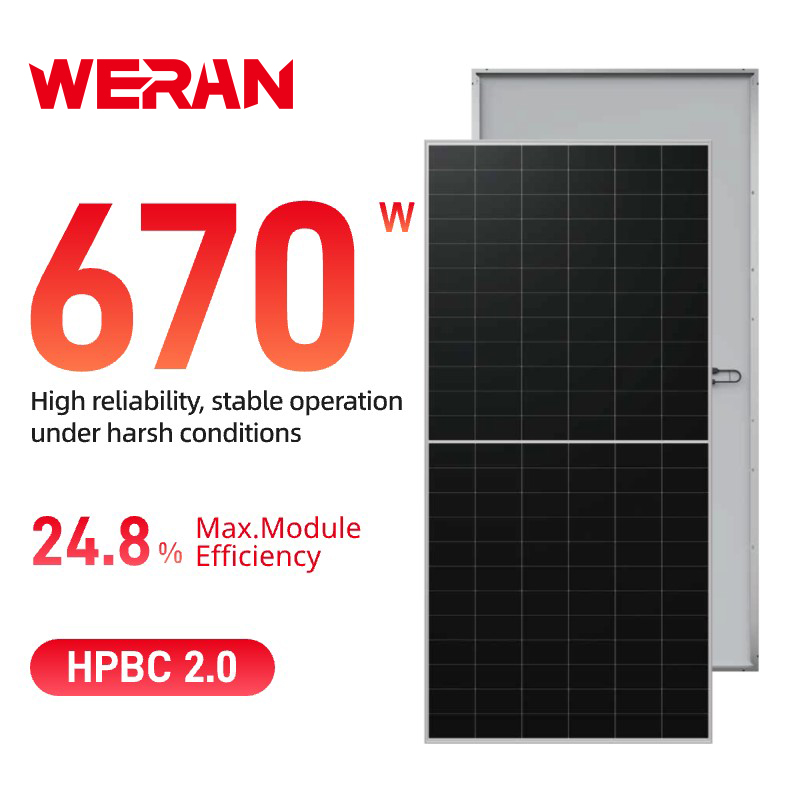
Limited roof area makes efficiency per square meter the dominant factor. A WERAN Solar Panel built on higher-efficiency cell architecture allows homeowners to reach a target system size using fewer modules, which also reduces mounting hardware and labor costs during residential solar panel installation. For homes with partial roof shading from trees or chimneys, half-cut cell designs with strong shade tolerance are especially valuable.
Commercial Buildings
Commercial roofs often carry structural load limits, favoring lighter-weight, higher-efficiency modules over lower-cost but heavier alternatives. Efficiency gains here reduce the total module count needed, easing both installation logistics and long-term maintenance across large flat-roof arrays.
Utility-Scale Ground Mount
Open land allows more flexibility on module footprint, but land acquisition, racking, and wiring costs still scale with the number of modules deployed. Bifacial modules paired with elevated tracking structures are increasingly common here, since ground reflectance can be optimized through surface material choice to boost rear-side gain.
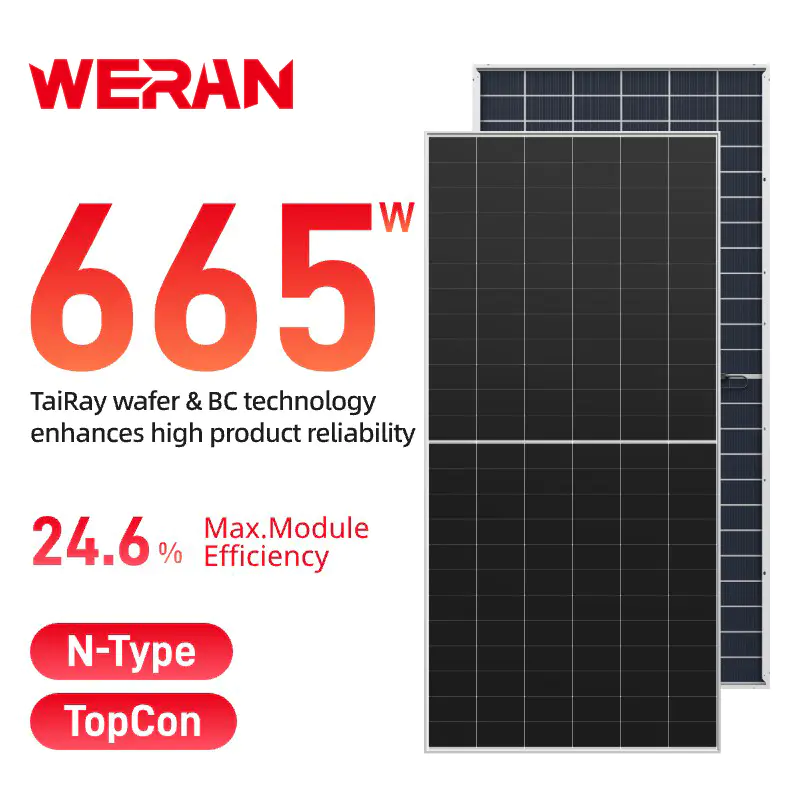
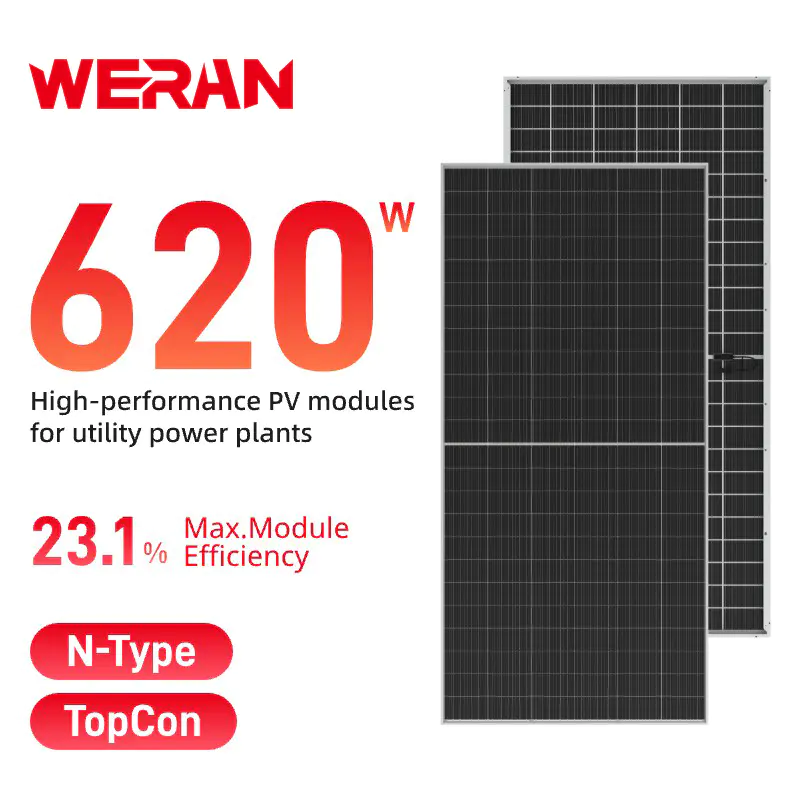
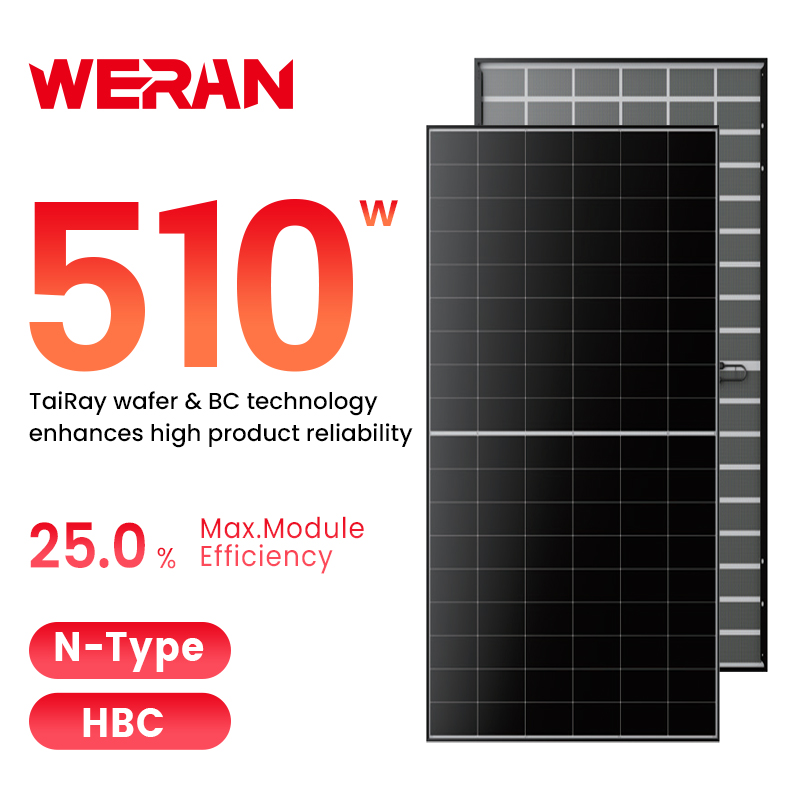
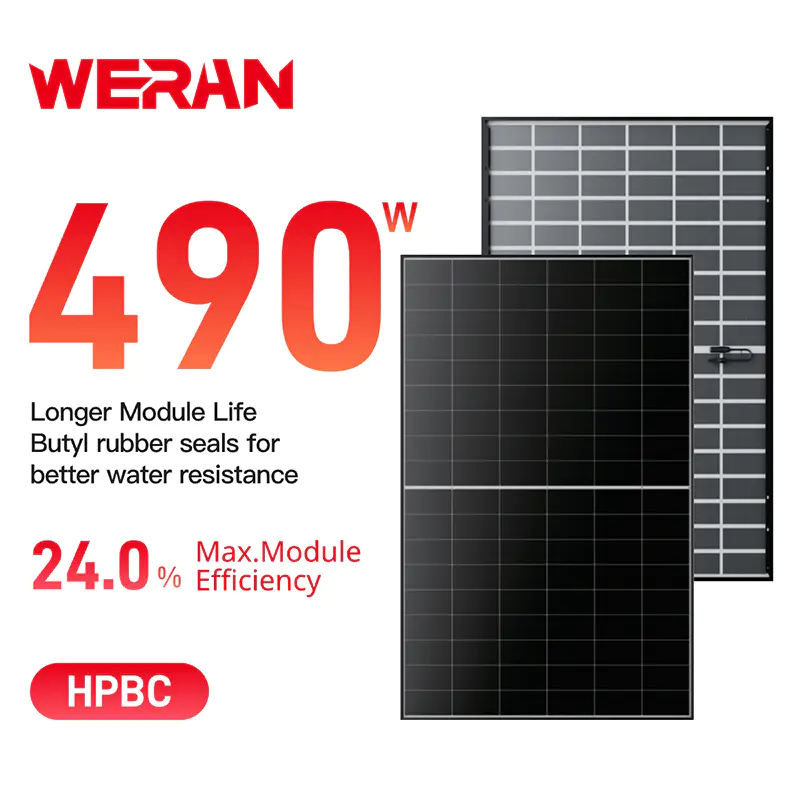
A high-efficiency bifacial module designed for both residential and large-scale installations
Durability Factors That Protect Long-Term Efficiency
Rated efficiency at the time of purchase means little if the panel degrades quickly. Durability engineering determines how much of that initial efficiency remains after ten, twenty, or twenty-five years in the field.
Below 1 percentTypical first-year degradation for advanced cell types
Around 0.4 percentAnnual degradation rate for well-engineered modules thereafter
25 to 30 yearsTypical performance warranty window
Frame rigidity, junction box sealing, and glass coating quality also influence how well a panel withstands wind loading, hail impact, and humidity ingress over its service life. Third-party certification testing for mechanical load, thermal cycling, and damp heat exposure remains one of the more reliable indicators of long-term reliability, since these tests simulate years of field stress within a controlled timeframe.
Installation Practices That Preserve Rated Efficiency
Even the most efficient module underperforms if installation details are overlooked. The following practices consistently protect the energy yield a panel is designed to deliver.
Maintain adequate rear ventilation gap to reduce operating temperature and limit thermal efficiency losses.
Verify string sizing and inverter matching to avoid clipping losses during peak irradiance hours.
Use certified mounting hardware rated for local wind and snow load conditions to prevent micro-cracking over time.
Schedule periodic cleaning in dusty or high-pollen environments, since soiling losses can reach several percentage points annually if left unmanaged.
Inspect wiring and connectors during commissioning to prevent resistive losses from poor connections.
For homeowners planning a rooftop system, working through a proper site assessment before residential solar installation helps confirm shading patterns, roof orientation, and structural suitability before committing to a module type and system size.
Frequently Asked Questions
Q1: What efficiency range should I expect from modern residential solar panels
Most current residential-grade panels fall between 20 and 23 percent module efficiency, with premium cell technologies reaching slightly higher under favorable temperature conditions.
Q2: Do bifacial panels make sense for residential rooftops
Bifacial gain is smaller on rooftops than on elevated ground mounts because roofing material typically reflects less light than open ground, but some gain is still possible depending on roof color and mounting height.
Q3: How much does temperature actually affect panel output
Panels with lower temperature coefficients lose less power as cell temperature rises above standard test conditions, which can meaningfully improve output during hot summer afternoons compared to standard technology.
Q4: How often should solar panels be cleaned
Cleaning frequency depends on local dust, pollen, and rainfall patterns, but many installations benefit from inspection at least twice a year to catch soiling losses early.
Q5: What warranty terms should buyers look for
A meaningful performance warranty typically guarantees output above roughly 87 percent of rated power near the twenty-five to thirty year mark, alongside a separate product workmanship warranty covering materials and defects.
Q6: Does higher efficiency always mean a better investment
Not necessarily. Efficiency should be weighed against available installation space, budget, and site conditions, since a lower-efficiency panel can still be the more cost-effective choice on projects with ample space.
 English
 Français
 Español
 عربى
عربى Український