Solar plants keep moving into deserts, semi-arid plains, mining districts and dry coastal belts, where irradiance is strong and land is affordable. These places also bring fine particles, sand storms and rainless seasons that can last for months. Dust settles on the glass, blocks part of the light, and rarely settles evenly, so the loss it causes is larger than its thin layer suggests.
For asset owners the concern is twofold: lost energy and rising cleaning cost. Every washing round consumes labor, water, vehicle time and handling risk. An anti-dust dual-glass module addresses the cause and not only the symptom, because it holds less dust on the surface and reduces the trips needed each year.
This guide follows a practical order: how dust causes loss, how it grows between cleanings, which design features help, how to compare cost, and what to check before choosing a supplier.
Typical annual soiling loss in dusty regions without a cleaning plan
0.2 to 0.6%
Typical daily loss during long dry spells
25 to 40%
Share of site O&M spending that cleaning can reach in arid plants
01Why Dust Causes Shading and Mismatch Losses
Dust reduces output through two separate mechanisms, and only one of them is obvious. The first is uniform dimming: a thin, even film scatters and absorbs light, so every cell receives a little less. The second is local shading, which is far more damaging because solar cells are wired in series.
Uniform Dimming Versus Local Shading
Uniform dimming behaves like a lower irradiance level. Current falls in proportion, and the loss stays close to the visible dirt density. Local shading behaves differently. When one row of cells is covered by a dust band, the shaded cells limit the current of the whole substring, and bypass diodes may activate. A dust line covering only a few percent of the glass area can therefore remove a much larger share of module power. This is why minimized shading loss matters more than a small gain in cell efficiency.
Why the Lower Edge Collects Dirt
On a conventional framed module, water and dust travel down the tilted glass and stop at the lower frame lip. A dirty strip forms, and the bottom cell row receives less light than the rest. Several conditions make this worse:
Low tilt angles, especially below 15 degrees
Frame lips that trap particles at the glass edge
Rough or aged glass surfaces
Frequent dew or high night humidity
Nearby farming, construction or unpaved roads
Climate sets the baseline. The chart shows typical annual soiling loss by site type when no regular cleaning is applied.
A humid temperate site may lose little because frequent rain rinses the glass. A desert site can lose more than five times as much when modules stand for weeks without rain. Local measurement matters more than any generic figure, and it drives every later decision about module choice and cleaning budget.
Light showers can make things worse. They turn loose dust into mud streaks that dry into hard marks, especially on rough or aged glass.
02How Fast Output Falls Between Cleanings
Soiling loss grows in a nearly steady way during dry weather and resets after rain or washing. The daily rate depends on particle load, wind, tilt and surface condition, and in dusty regions it commonly falls between 0.2 and 0.6 percent per day during long dry spells.
Dew, Humidity and Hardened Films
In many deserts night temperatures fall low enough to create dew. Moisture binds fine particles into a paste, and the next dry day locks that paste onto the glass. This film resists wind, and it is the main reason surface properties matter. Particles above 50 microns roll off tilted glass easily, but particles below 10 microns cling through electrostatic and capillary forces.
The chart compares a 30-day dry spell for a standard framed module and a module with a low-adhesion surface and an anti-dust frame.
After 30 days the standard module retains about 87 percent of its output, while the anti-dust module keeps about 94 percent. That seven-point gap can remove several washing rounds from a season, because the cleaning trigger is reached later.
Measuring the Real Rate
Use two reference cells, one cleaned daily and one left untouched. The ratio of their output is the most direct soiling indicator, and it feeds cleaning models with site data instead of assumptions. String-level current data and drone thermal images then show whether the pattern is even or local.
Values in the charts are illustrative field ranges. Verify them with a soiling station during at least one dry season before setting a budget.
03Long-Term Cost and Yield Over 25 Years
A project lasts 25 to 30 years, so small annual differences compound. Cleaning cost, water use, glass wear and lost energy all accumulate, and the module that needs fewer interventions usually wins over the full life, even when its purchase price is slightly higher.
Dual-glass
What Compounds Over Time
Each washing round carries direct cost and indirect risk. Brushes and high-pressure water can scratch glass, damage coatings and stress edge seals, so fewer rounds protect the module as well as the budget.
Lower crew and vehicle hours every year
Reduced water hauling and storage
Less mechanical wear on glass and coatings
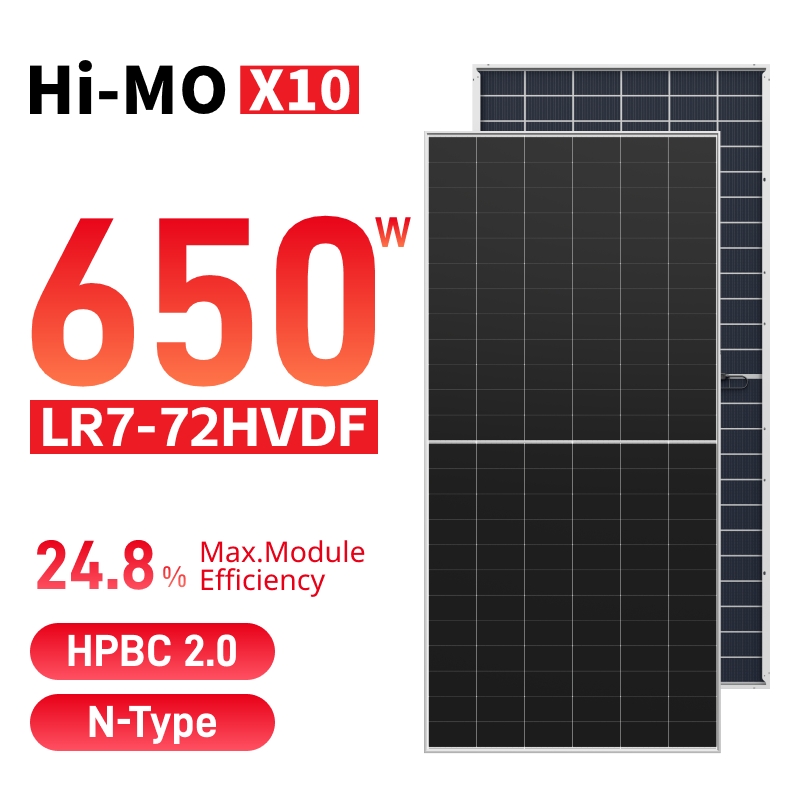
Product families such as the hi-mo x10 guardian show how surface treatment, edge design and a dual-glass structure can be combined in one high-power module for this purpose.
The chart shows cumulative cleaning cost as an index, with the standard module set to 100 at year five.
By year 25 the gap is large, and the saved budget can be redirected to inspection, thermal imaging and inverter maintenance, which also protect yield.
Energy Yield Beyond Cleaning
Less soiling also means higher average output between cycles and better low-light performance, because dust scatters diffuse and low-angle light. Mornings, evenings and cloudy periods lose proportionally more, so these shoulder hours add up over a year of operation.
04Design Features That Reduce Dust Retention
No single feature solves dust. The best results come from stacking measures that work at different scales: glass surface, frame edge, module structure and operation. The radar chart scores two module types on a ten-point scale across five criteria. Scores are illustrative engineering trade-offs, not laboratory results.
The anti-dust module leads on dust resistance and edge shading control, and it also improves cleaning savings and low-light yield. Durability improves mostly through the dual-glass structure and through reduced wear from fewer cleaning rounds.
Low-Adhesion Surface Treatment
Low-adhesion coatings reduce the force that holds particles on glass, so wind and light rain remove more of them. Durability matters here: a coating that wears out in three years gives little benefit over a 30-year project life.
Frame Edge Geometry
Modified frame profiles let water and dust slide off the edge instead of collecting on a lip. This lowers bottom-row shading, the most damaging pattern for series strings, and often delivers more energy than a small gain in cell efficiency.
Dual-Glass Structure
Glass on both sides resists abrasion from wind-blown sand, moisture ingress and micro-cracks better than a polymer backsheet, which suits environments where sand and cleaning tools contact the module.
05From Site Survey to Module Decision
High-power modules reduce the number of units, trackers and connections per megawatt, but a larger module also exposes more glass to soiling. A decision process based on site data keeps the choice grounded and links module selection to the cleaning plan.
Measure dust load and rain frequency for at least one dry season.
Model soiling loss and cleaning cost for each candidate module.
Compare frame profile, surface treatment and glass structure.
Set a cleaning trigger from measured loss, not a fixed calendar.
Track results and recalibrate the plan every year.
Operating Practices That Multiply the Benefit
Steeper overnight stow on trackers helps dew and loose particles run off before they harden. Cleaning early in the morning avoids thermal shock on hot glass and cuts evaporation, and dry brushing is often enough when the surface keeps particles loosely attached.
Monitoring and Early Detection
Uneven soiling often points to a local dust source such as an unpaved access road, or to a drainage problem at the array edge that can be fixed cheaply.
06Comparing Total Cost of Ownership Across Site Types
Total cost of ownership shifts with site type, plant size and access to water. The table shows how the value of an anti-dust approach changes between two common deployments.
Factor
Utility-scale desert plant
Commercial roof in a dusty area
Cleaning cycles avoided
Large volume, high savings
Fewer costly roof visits
Water and labor demand
Strongly reduced
Moderately reduced
Value of edge shading control
High on low-tilt rows
High on flat roofs
Sensitivity to low-light hours
Moderate
High with morning shade
Impact of cleaning wear
Lower glass abrasion
Longer coating life
Main payback driver
Reduced O&M costs
Recovered energy per roof area
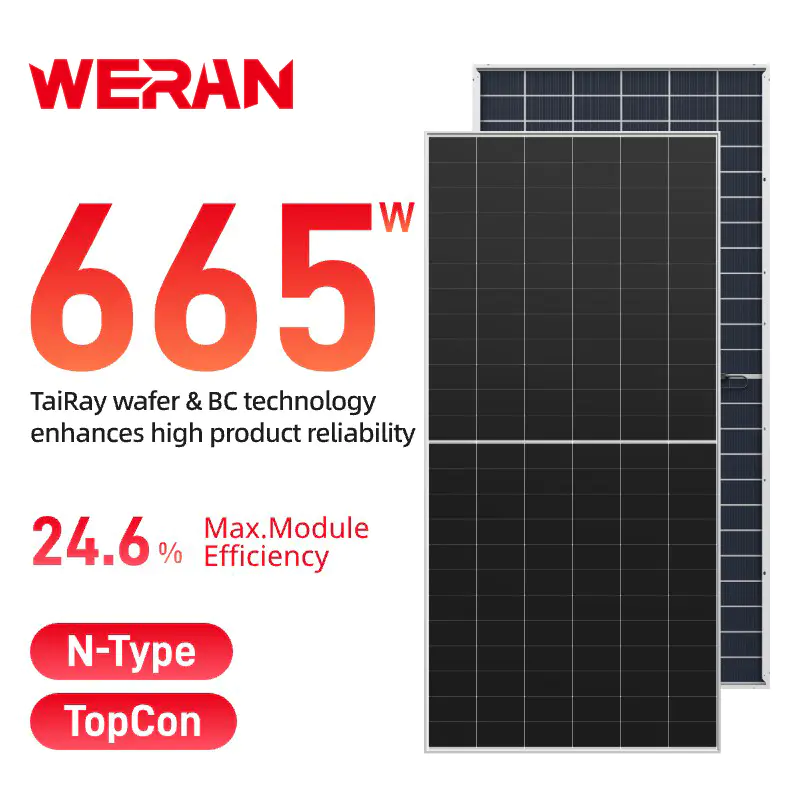
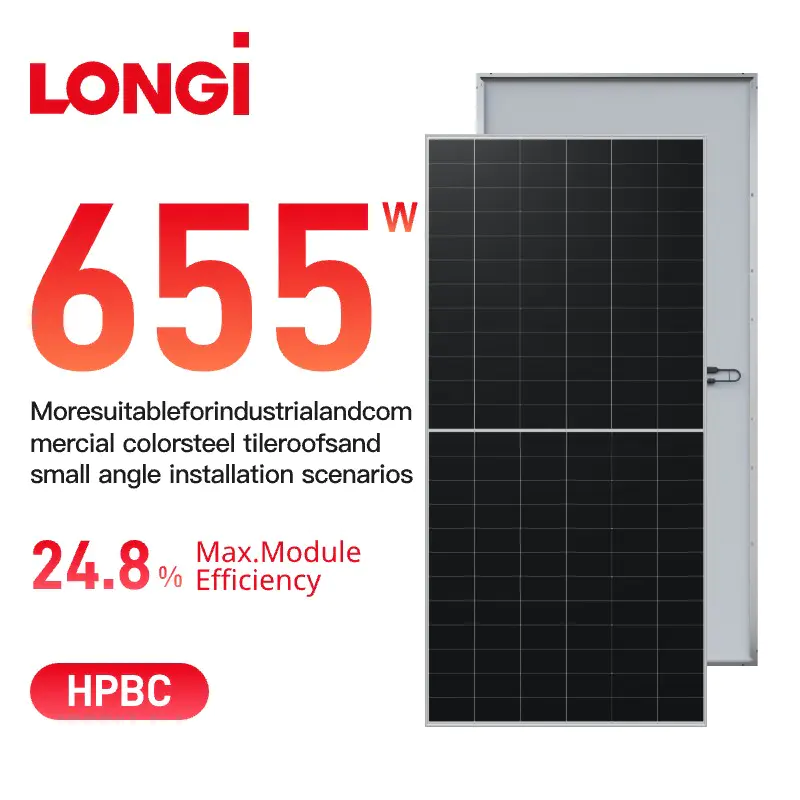
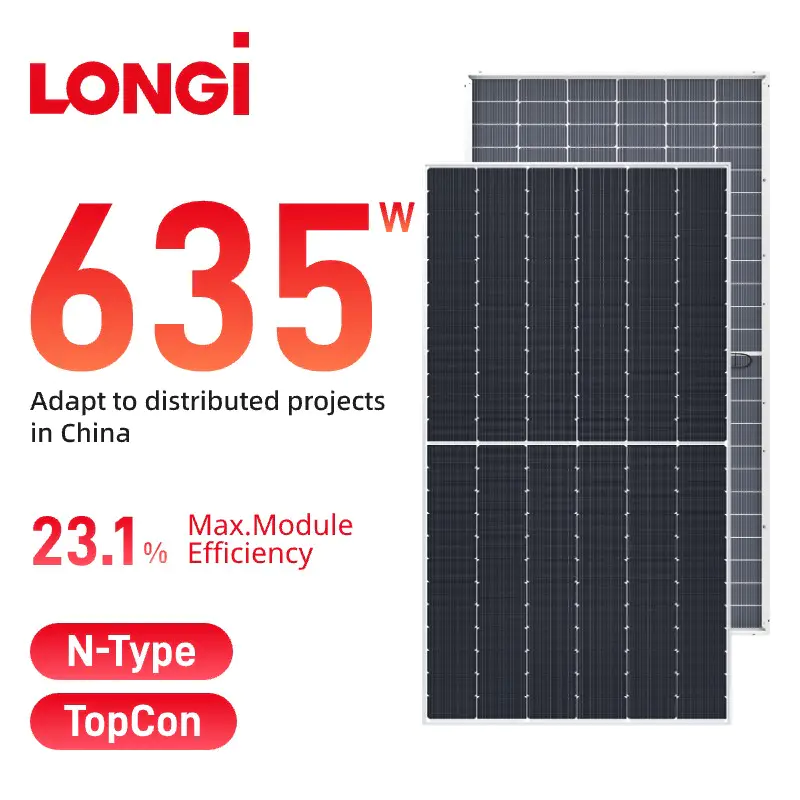
When comparing a 640-670w anti-dust module with a standard alternative, model at least three items: recovered energy, avoided cleaning rounds and reduced glass wear.
In utility plants the main driver is cleaning volume, because savings scale with the number of modules. In distributed sites, access, roof safety and water restrictions matter more, and each avoided visit has a high value.
Cost Items to Include
Module price difference per watt
Crew, vehicle and water cost per cleaning round
Value of energy recovered between rounds
Replacement risk from scratched glass or seals
Monitoring equipment such as soiling stations
07What to Evaluate When Choosing an Anti-Dust Module Supplier
Choosing well depends on evidence, not slogans. Three checks separate a robust offer from a marketing claim.
Test evidence. Not every claim is measured the same way. Ask for soiling test data under conditions close to your site, with the method, duration and reference module clearly stated. Results from a clean laboratory bench say little about desert dust.
Durability proof. Check coating evidence such as abrasion, damp heat and UV test results, plus frame profile drawings. Confirm that dual-glass mechanical load ratings match your tilt and wind class, and that handling and cleaning guidance is documented.
Warranty and support. Look beyond nameplate power to degradation guarantees, glass and coating coverage, and support for on-site soiling studies. A strong supplier can explain limits honestly, including where cleaning is still needed.
Finally, remember that anti-dust design is one layer of a complete plan. Combined with sensible tilt, tracker stow, measured cleaning triggers and regular monitoring, it delivers stable yield and lower cleaning frequency across the life of the plant.
08Frequently Asked Questions
Q1: What is an anti-dust solar module?
It is a PV module designed to keep less dust on its surface and to shed dust more easily. Typical measures include low-adhesion glass treatment, frame edges that avoid dust traps and a durable dual-glass structure.
Q2: How much output can dust remove in desert projects?
Annual soiling loss commonly ranges from 3 to 8 percent without regular cleaning, and it can be higher after storms or long dry spells. A soiling station gives the reliable local number.
Q3: Does an anti-dust module remove the need for cleaning?
No. It reduces how often cleaning is needed and how much energy is lost between rounds. Very heavy dust environments still require a planned schedule, but with fewer cycles.
Q4: Why is a dual-glass structure suited to harsh environments?
Glass on both sides resists sand abrasion, moisture ingress and micro-cracks better than a polymer backsheet. This supports stable output over decades in areas with strong wind and abrasive particles.
Q5: How can I estimate cleaning savings for my site?
Measure the soiling rate for a full dry season, model the loss for each module type, and compare the value of recovered energy with the cost of each washing round. The break-even point sets the schedule.
Q6: Does dust also affect low-light performance?
Yes. Dust scatters diffuse and low-angle light, so mornings, evenings and cloudy periods lose proportionally more energy. A surface that sheds dust keeps these hours productive.
 English
 Français
 Español
 عربى
عربى Український