Why a home battery backup? Understanding the real need
Extreme weather, ageing grids, and time-of-use electricity rates have made energy independence a practical goal for homeowners. A well-sized battery backup doesn't just keep your lights on during outages — it also maximises solar self-consumption and reduces reliance on volatile utility prices. However, the wrong capacity leads to either useless overspending or frustrating blackouts. This guide walks you through every technical and financial variable before you approach any residential energy storage system supplier.
30%
annual savings on peak-demand tariffs (typical)
10–20 kWh
common backup capacity for average 3-4 BR home
90%
round-trip efficiency in modern LFP systems
Before you contact a solar battery storage supplier, you need to answer three core questions: how much energy do you need during an outage, what loads are critical, and how fast can your battery discharge that energy (power rating). This buyer's guide eliminates guesswork.
Critical battery metrics: kWh, kW, DoD & efficiency
Most homeowners focus only on total kilowatt-hours (kWh), but overlooking power (kW) and depth of discharge (DoD) leads to mis-sized systems. The table below breaks down each parameter.
Metric
Meaning
Why it matters for sizing
Usable capacity (kWh)
Actual stored energy after DoD limit
80% DoD means a 10 kWh battery offers only 8 kWh usable
Power rating (kW)
Maximum instantaneous output
Running a well pump (1.5 kW) + fridge (0.8 kW) requires ≥2.3 kW continuous
Round-trip efficiency
Energy out / energy in
90% efficient → 10 kWh in gives 9 kWh out
Pro tip: Always compare usable capacity, not gross capacity. Many suppliers advertise nominal figures, but the usable window defines your actual backup runtime.
How to size your battery: a practical 4‑step method
Using a solar battery sizing calculator or home battery backup calculator starts with your home's load profile. Follow these steps manually to validate any automated tool.
Step 1: List essential circuits and their wattage
Identify loads you cannot live without during an outage: refrigerator, lighting, internet/router, medical devices, furnace fan, and sump pump. Use a plug-in power meter or check appliance labels.
Step 2: Estimate daily backup energy (kWh/day)
Multiply each device's wattage by estimated daily run hours. Example: 150W fridge x 10h = 1.5 kWh; LED lights 60W x 5h = 0.3 kWh. Sum all values to get total daily backup need.
Step 3: Apply depth-of-discharge and efficiency factors
If your daily need is 8 kWh and your battery DoD is 90%, required gross capacity = 8 / 0.9 = 8.9 kWh. Further divide by inverter efficiency (95%): final ≈ 9.4 kWh. This is the minimum nameplate capacity.
Step 4: Decide backup duration
One day of autonomy? Two days? Multiply required kWh by number of days. For two days of backup: 9.4 kWh × 2 = 18.8 kWh gross capacity.
Example: A suburban home with critical loads totaling 6 kWh/day, 90% DoD, 95% inverter efficiency → need 6 / (0.9*0.95) ≈ 7 kWh usable. Round up to 10 kWh to handle surge events and cloudy days.
Many solar calculator battery tools are available online, but they require accurate inputs. Use the table below as a quick reference for typical loads.
Appliance
Avg. Watts
Daily hours
Daily kWh
Refrigerator (energy star)
180
10
1.8
LED lights (10 bulbs)
100
5
0.5
Laptop + router
80
8
0.64
Sump pump (1/2 HP)
900
1
0.9
Integrating with solar: the solar panel battery bank relationship
A solar panel battery bank without proper coupling ratios leads to underutilisation. The battery should be sized to capture excess solar generation during sunny hours and discharge at night. For grid-tied systems, the common “1:1” rule of thumb – for every 1 kW of solar, consider 1–1.5 kWh of battery capacity – is a starting point, but evaluate your export limits.
If your solar array produces 40 kWh on a summer day but your home only uses 30 kWh, a 10 kWh battery can store that surplus. Larger arrays often need proportionally larger batteries to avoid curtailment. Always ask your solar battery storage supplier about peak shaving and self-consumption optimisation.
Remember: a battery bank sized too small will clip your solar harvesting; oversized storage may never recoup its cost via arbitrage. Use the solar battery sizing calculator approach described above with average solar yield data from your location.
Battery chemistry comparison: LFP vs NMC vs lead‑acid
While most modern residential energy storage system supplier catalogs feature lithium iron phosphate (LFP), older lead-acid and NMC (nickel manganese cobalt) still exist. The following table helps you decide based on safety, cycle life and usable capacity.
Chemistry
Cycle life (80% DoD)
Usable DoD
Safety
Typical use case
LFP (LiFePO4)
4,000–8,000
90-100%
Very high, no thermal runaway
Daily cycling, solar + backup
NMC
2,000–4,000
80-90%
Moderate (cooling required)
Compact spaces, higher energy density
Sealed lead-acid
500–1,200
50%
High but venting needed
Budget off-grid cabins
For most homeowners, LFP dominates because of its longevity and tolerance to high DoD. A trusted solar battery storage supplier will often recommend LFP for grid-tied backup systems. Remember to check warranty fine print: 10 years or 6,000 cycles, whichever comes first.
How to vet a residential energy storage system supplier
Selecting the right partner matters as much as the hardware. When evaluating a residential energy storage system supplier, ask these specific questions:
Does the supplier provide a local installer network with NABCEP (or equivalent) certification?
What is the response time for warranty claims and parts replacement?
Do they offer remote monitoring and firmware updates integrated with your solar inverter?
Request real-world degradation data: less than 70% capacity after 10 years is unacceptable for modern LFP.
Warning sign: Any supplier that refuses to provide a detailed “solar calculator battery” output or cannot explain how they derived your recommended capacity is likely overselling or undersizing. Demand a load audit before purchase.
A transparent solar battery storage supplier will also help you claim incentives (e.g., federal tax credits, SGIP, self-generation incentives). Always request at least three system layouts with different capacity options.
Financial reality: upfront cost, payback and incentives
Residential storage costs have dropped roughly 70% over the last decade. As of early 2026, average installed cost per usable kWh ranges from $800–$1,200 (LFP systems). For a 13.5 kWh usable battery, that’s $10,800–$16,200 before incentives. With the 30% federal Investment Tax Credit (ITC) in the US, effective cost falls to $7,560–$11,340. Many states add another 10–20% rebate, shortening payback to 6–9 years for households with high time-of-use spreads ($0.30+ peak vs $0.10 off-peak).
To calculate your break-even, estimate annual utility savings from load shifting and backup value (avoided outage cost). If your utility charges demand charges, batteries help shave peaks. A rule of thumb: each kWh of daily load shifting saves $70–150 per year depending on tariff structure.
Key financial questions for any residential energy storage system supplier: what is the warranted throughput (MWh over life) and does the price include an extended labor warranty?
Installation requirements and safety essentials
Battery systems must meet local electrical codes (NEC 706 for ESS in the US). Key considerations:
Location: garages, utility rooms or outdoors (weatherproof IP rating required). Keep away from living spaces due to thermal events (rare with LFP).
Clearance: minimum 3 ft for service access and ventilation.
Interconnectivity: ensure your existing inverter or hybrid inverter is compatible; many systems require proprietary communication.
Permitting: your chosen solar battery storage supplier should handle permits or provide stamped engineering drawings.
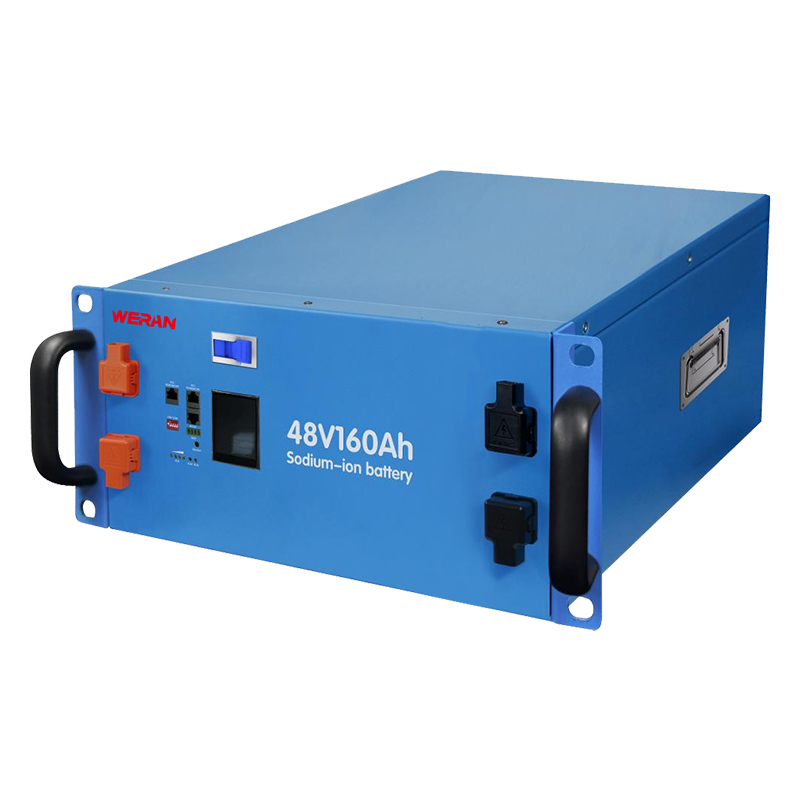
Typical 48V modular battery series designed for home energy storage – compact and scalable.
Never attempt DIY installation for systems above 1 kWh. Professional installation ensures correct grounding, emergency disconnect, and UL9540 listing (fire safety).
Longevity: how to extend your battery’s calendar life
Most LFP batteries degrade to 80% capacity after 10–15 years. You can maximise lifespan by:
Keeping ambient temperature between 10°C and 30°C (50–86°F) – high heat is the biggest enemy.
Avoiding prolonged 100% state-of-charge; set charge limits to 95% if stationary storage.
Ensuring the battery management system (BMS) has active balancing.
Performing a full cycle (100% to 20% DoD) once a month to recalibrate BMS.
Quality suppliers provide a mobile app that tracks battery health and suggests maintenance. Ask your residential energy storage system supplier for thermal management specifications: active cooling is superior for hot climates.
Fact: Properly maintained LFP batteries in stationary applications often exceed 10,000 cycles at 70% DoD – far more than typical daily use (365 cycles/year).
Final buyer’s checklist: answers to “how many solar batteries do I need?”
To answer how many solar batteries do I need for full home backup, most households need between 10 kWh and 30 kWh usable capacity. Use the formula:
List backup loads → total daily kWh (A).
Multiply by days of autonomy (typically 1–2) → B = A × autonomy.
Divide by (DoD × inverter efficiency) → gross capacity = B / (DoD × efficiency).
Divide gross capacity by individual battery module size to get number of modules.
Example: daily backup 9 kWh, 1.5 days, 90% DoD, 95% inverter → 9×1.5 = 13.5 / (0.9×0.95) ≈ 15.8 kWh gross. If each battery module is 5 kWh, you need 4 modules (20 kWh nominal).
Load audit completed
DoD / efficiency factored
Supplier warranty ≥10 yrs
Always oversize by 15-20% to account for unforeseen load growth and partial shading. Use a reliable home battery backup calculator from your supplier’s website, but validate with your own audit. Now you’re equipped to talk to any solar battery storage supplier with confidence.
Frequently asked questions (FAQ)
Q1: What size battery backup do I need for a 2000 sq ft home?
The typical 2000 sq ft home without electric heating uses about 25–35 kWh per day. For partial backup (refrigerator, lights, outlets), 10–15 kWh usable is sufficient. For whole-home backup, aim for 25–30 kWh usable. Use the solar battery sizing calculator approach above with your actual usage.
Q2: How many solar batteries do I need to go off-grid?
Off-grid requires 3–5 days of autonomy and larger arrays. Calculate average daily consumption (e.g., 20 kWh) × 3 = 60 kWh usable. With 90% DoD, gross capacity ≈ 67 kWh. That might translate into 12–14 modules (5 kWh each). Pair with a generator as backup for extreme cloudy periods.
Q3: Can I add batteries to an existing solar system?
Yes, if your inverter is “hybrid-ready” or supports AC coupling. AC coupling means adding a battery inverter on the AC side of your existing solar inverter. Most modern systems work, but verify compatibility with your residential energy storage system supplier before purchase.
Q4: What is the difference between power (kW) and energy (kWh) for backup?
Power (kW) determines how many devices you can run simultaneously. Energy (kWh) determines how long they run. For example, a 5 kW inverter can start a 4 kW well pump, while a 10 kWh battery can keep it running for 2 hours (10 kWh / 5 kW = 2 hours).
Q5: How often should I fully discharge my battery?
Avoid full discharges daily; LFP batteries prefer shallow cycles (20–80%). A full discharge to 10% once per month helps the BMS recalibrate. Lead-acid needs more frequent full charges to prevent sulfation. Check your supplier’s manual.
 English
 Français
 Español
 عربى
عربى Український