1. Why Commercial Solar-Plus-Storage Is No Longer Optional for Energy Cost Control
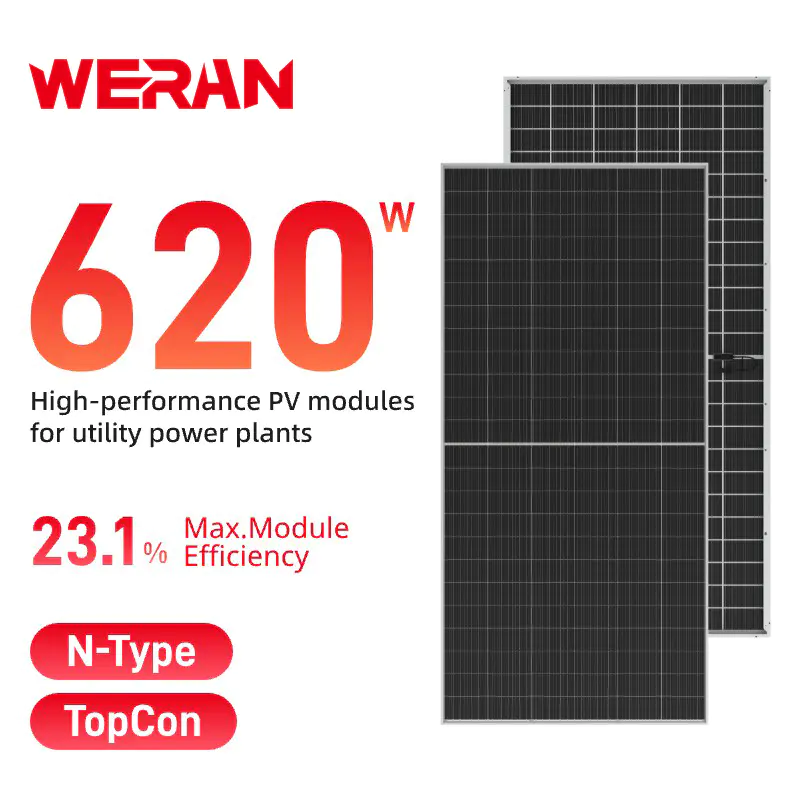
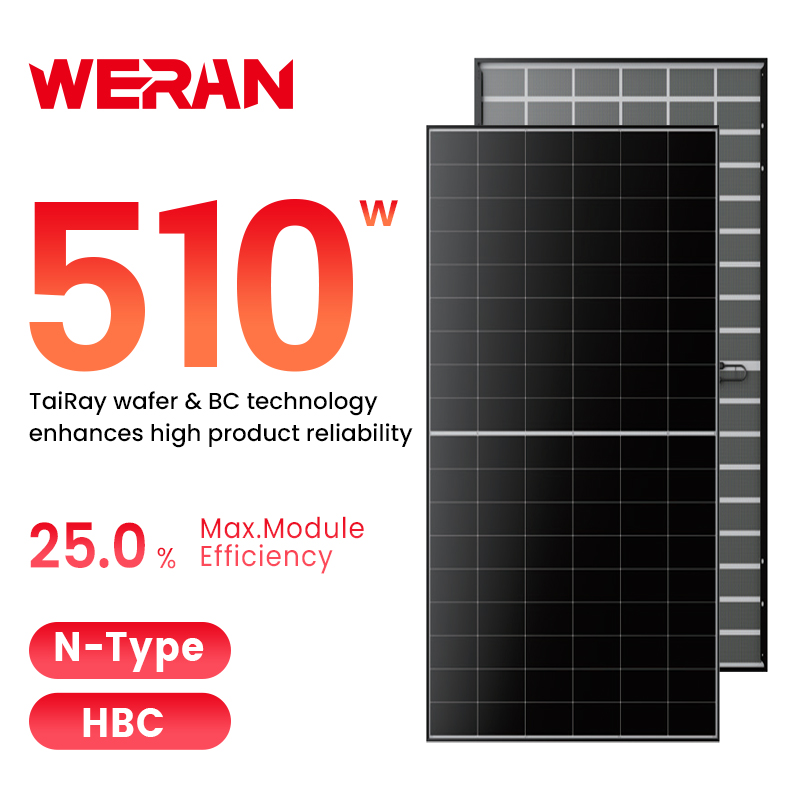
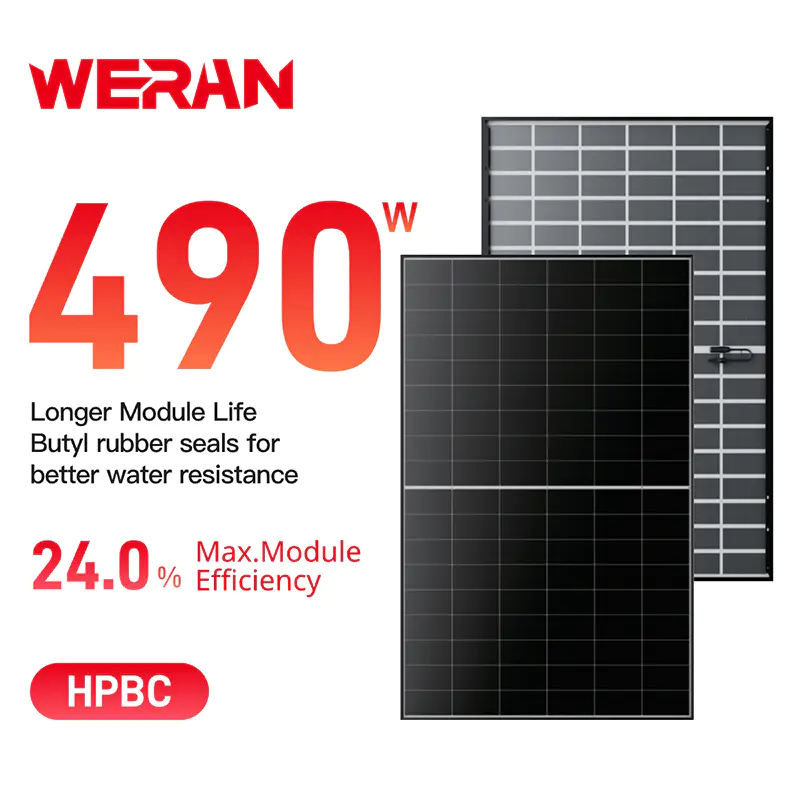
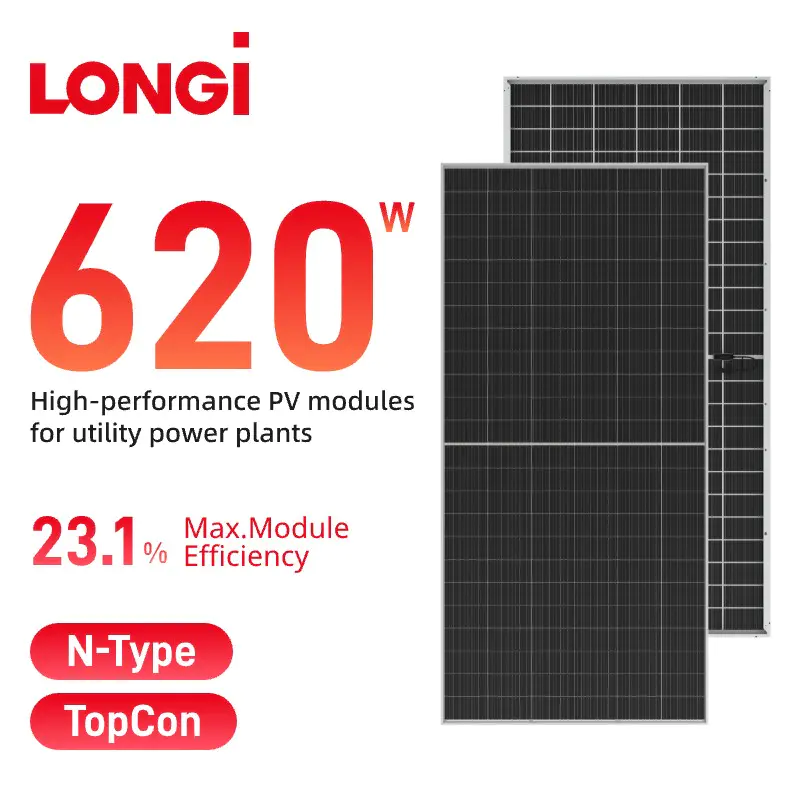
Commercial electricity tariffs increasingly penalize peak demand, while grid instability risks disrupt operations. A well-designed combination of commercial solar panels for sale with intelligent battery banks transforms a passive rooftop asset into an active energy management tool. This guide moves beyond theory and delivers engineering-grade insights for system integrators, facility managers, and business owners aiming for peak shaving or partial grid independence.
Data from the US Energy Information Administration shows that demand charges account for 30-50% of a commercial customer’s monthly bill in many regions. By pairing photovoltaic arrays with a properly sized battery bank, a facility can shave these peaks and reduce annual energy costs by 18-27% without changing operational habits. For organizations targeting true off grid solar power systems readiness, the same hardware architecture provides backup autonomy and enables participation in demand response markets.
30-50%
of commercial electricity bills can be demand charges
2. Architecture Deep Dive: Grid-Tied with Backup vs. True Off-Grid
Understanding the topology differences is critical before selecting any complete solar power systems approach. Two dominant architectures exist for commercial-scale PV+storage: grid-tied with battery backup, and off-grid autonomous systems. Each serves different objectives — peak shaving vs. full independence.
Feature
Grid-Tied with Battery Backup
Off-Grid Solar Power Systems
Grid connection
Maintained (bidirectional)
No physical grid link
Peak shaving capability
Excellent – uses grid for excess/shortfall
Limited – relies on oversized battery bank
Backup duration
Hours to 2 days (optimized for outages)
Multiple days (oversized generation+storage)
Cost per kWh stored
Lower (smaller battery relative to load)
Higher (3-5x battery capacity)
Typical payback period
4-7 years (demand charge reduction)
8-12 years (remote or high-reliability needs)
For 85% of commercial applications, a grid-tied system with smart battery backup delivers the fastest ROI while still offering islanding capability during grid faults. True off-grid designs are reserved for remote facilities where grid extension costs exceed $50k per mile or for critical infrastructure requiring absolute autonomy.
3. Sizing the Solar Array and Solar System Battery Bank
Oversizing or undersizing directly destroys project economics. A methodical four-step process ensures optimal capacity for peak shaving or grid independence goals.
3.1 Load profile analysis – 15-minute interval data
Demand charges are typically measured in 15- or 30-minute intervals. Obtain one year of interval meter data to identify the top 10% peaks. A warehouse might see 450 kW peaks for 2 hours each afternoon; a retail store may have short 200 kW spikes. The solar system battery bank must cover the duration of those peaks minus the solar contribution during those same intervals.
3.2 Solar array sizing – offset vs. peak coverage
For peak shaving, size the solar array to cover at least 70% of the facility’s midday baseload (10 AM – 2 PM). For a commercial building with 300 kW midday load, a 250-280 kWp DC array is typical. For off-grid independence, the array must be oversized by 1.2-1.5x the maximum daily load to account for seasonal variations.
3.3 Battery bank capacity – power vs. energy
Two metrics: power rating (kW) must handle the peak reduction target. Energy rating (kWh) must sustain that power for the discharge window. Example: peak of 500 kW for 2 hours → target shave 200 kW → battery must deliver 200 kW for 2 hours = 400 kWh usable. Apply 90% DoD for LFP cells = 445 kWh nominal. Grid tied solar power systems with battery backup typically use 1-2 hour duration for demand charge management, while off-grid needs 6-12 hours.
C-rate impact: 1C battery (fully discharged in 1h) is acceptable for peak shaving; 0.25C to 0.5C for off-grid.
Cycle life: For daily peak shaving (365 cycles/year) a battery should have ≥6000 cycles at 80% DoD.
4. Peak Shaving in Action – Performance Data and Control Logic
Peak shaving is not static; it requires predictive energy management. A best-in-class control system uses short-term load forecasting (machine learning or persistence) and real-time solar generation data to decide when to discharge.
Case: 600 kW office building
Original peak: 580 kW (4 PM summer). After 300 kWp solar + 500 kWh BESS, new peak limited to 410 kW → 29% reduction. Annual demand charge saving: $24,500.
Case: 1.2 MW cold storage
Refrigeration compressors cause 15-minute spikes. 750 kWh battery shaves 320 kW peak three times daily. Payback period: 3.8 years without incentives.
The logic sequence: every 5 seconds, the EMS (energy management system) compares real-time import from grid to a dynamic threshold. If import exceeds the target limit (e.g., 400 kW), battery discharges the surplus. When solar generation exceeds building load and battery is fully charged, power may be exported or curtailed depending on tariff structure. This hybrid approach works seamlessly with China BESS supplier equipment that offers Modbus or CAN communication.
5. Engineering Grid Independence – Beyond Backup
True grid independence means the facility can sustain normal operations for 72+ hours with no grid power, even during winter overcast days. This requires a fundamental shift in design philosophy: generation redundancy, deep-cycle battery banks, and typically a backup generator (if 100% renewable is not mandatory). A practical approach for most commercial sites is "island-ready" – they remain grid-connected for economic benefits but can disconnect seamlessly.
Battery autonomy: For a 200 kWh daily load, a minimum 1.2 MWh usable bank (6 days) is required in moderate climates. Multiply by 1.15 for LFP headroom → 1.38 MWh nominal.
Solar oversizing factor: 1.3 to 1.8 times daily consumption to recharge batteries in low-insolation weeks. A site using 600 kWh/day would need 900 kWp solar (assuming 5 sun hours) – commercial rooftop feasible for warehouses.
Inverter/charger topology: Multi-mode inverters with fast islanding detection (<100ms) and seamless transition. Many commercial energy storage system supplier platforms offer all-in-one units that handle both on-grid and off-grid modes.
A 2023 field study of three light-industrial facilities converting to off grid solar power systems with 3-day autonomy showed a 92% reduction in grid purchases, but capital costs were 2.7x higher than a grid-tied peak-shaving system. Therefore, grid independence is recommended only for sites with unreliable utility power (>10 outages/year) or those located in high-cost diesel replacement scenarios.
6. Economic Modeling – LCOE, Payback and Revenue Stacking
For commercial solar+storage, the financial case combines three revenue streams: demand charge reduction, energy arbitrage (if time-of-use tariffs exist), and backup value (avoided outage costs). A standardized approach uses the Levelized Cost of Storage (LCOS) compared to utility demand tariffs.
$0.12 - 0.18
LCOS per kWh for commercial BESS (2025-2026 data)
Example: A 500 kW / 1 MWh battery system installed at $380/kWh ($380,000). Annual demand charge saving: $32,000; arbitrage: $8,000; backup avoided loss: $6,000. Total annual benefit = $46,000. Simple payback = 8.3 years. With 20% ITC equivalent benefit (where applicable), payback reduces to 6.2 years. Battery cycle life of 8000 cycles ensures 15+ years of operation.
When evaluating bids from any China BESS supplier or regional integrator, request performance guarantees: round-trip efficiency (≥88%), throughput warranty (≥6 MWh per kWh of capacity over 10 years), and response time (≤200 ms for peak shaving).
7. Selecting a Supplier – Technical Criteria for BESS and Complete Systems
Beyond the hardware itself, the long-term success depends on choosing a partner that understands commercial load patterns. Key evaluation points when reviewing a commercial energy storage system supplier or China BESS supplier include:
Certifications: UL 9540 (system), UL 1973 (cells), IEC 62619 for industrial environments.
BMS protocol openness: Modbus TCP/IP or CANopen allows integration with third-party solar inverters and building automation.
Thermal management: Liquid cooling is preferred for high-cycle applications (daily peak shaving) as it reduces cell delta-T below 3°C, extending life by 15-20%.
Project references: At least 10 commercial installations >200 kWh each, with verifiable performance data.
For buyers looking for complete solar power systems that include panels, inverters, and BESS from a single interface, ensure that the provider offers a unified EMS platform. This eliminates integration risks and provides a single warranty contact. Hybrid inverters from such suppliers often have pre-validated battery compatibility lists – stick to those for guaranteed performance.
complete solar power systems that bundle PV, storage and management software typically reduce installation soft costs by 12-18% compared to component sourcing, while improving system reliability.
8. Integration Best Practices – Communication, Safety and Monitoring
Field experience from 200+ commercial retrofits shows three common failure points: incorrect CT placement, undersized AC breakers, and lack of remote firmware update capability. Mitigation checklist:
Verify current transformers (CTs) are installed on the utility side of the main breaker, not on the load side of the BESS.
Use 125%-rated breakers for continuous BESS current (NEC 706.10). For a 200A continuous battery inverter, specify 250A breaker.
Remote monitoring: require 5-second resolution data logging for at least 2 years. Cellular failover ensures visibility even during grid outages.
For facilities combining grid tied solar power systems with battery backup, anti-islanding settings must coordinate between solar inverters and the BESS. The battery inverter should be the grid-forming master during island events, with PV inverters set to micro-grid capable mode (frequency-watt).
Total annual benefit: $200,000. System cost: $890,000. Payback = 4.45 years.
This real-world example demonstrates why commercial solar panels for sale combined with modern lithium storage consistently beat natural gas generators on lifecycle cost while providing daily savings instead of standby idle costs.
10. Future Outlook – AI-Driven Energy Management and Second-Life Batteries
By 2028, 70% of new commercial BESS will include edge AI for predictive peak shaving – learning from weather forecasts, production schedules, and real-time tariffs. For existing systems, cloud-based optimization engines can add 9-12% additional savings. Meanwhile, second-life EV batteries (still at 70-80% SOH) are entering the market for low-C-rate commercial storage, potentially lowering upfront costs by 40% for off-grid projects.
Regardless of technology trends, the core engineering principles in this guide remain valid: accurate load profiling, proper power/energy ratio, and open communication protocols. Whether you work with a single China BESS supplier or a local integrator, always validate performance in the specific commercial context.
Frequently Asked Questions
Q1: What is the difference between peak shaving and load shifting?
Peak shaving actively caps the maximum power drawn from the grid, typically using battery discharge during short high-demand intervals (15-120 minutes). Load shifting moves consumption from expensive peak tariff periods to cheaper off-peak times, which can be done by BESS or by rescheduling equipment. Both can be combined, but peak shaving primarily targets demand charges, while load shifting targets energy charges.
Q2: Can I add battery storage to an existing commercial solar system?
Yes, retrofitting is common. You need a hybrid inverter (or AC-coupled battery inverter) plus a battery bank. The existing grid-tied solar inverter remains. The battery inverter measures grid import and discharges to shave peaks. Ensure the battery inverter’s power rating matches your peak reduction target and that your utility allows bidirectional power flow modifications.
Q3: How many cycles will a commercial BESS last for daily peak shaving?
Premium LFP batteries rated at 6000-8000 cycles at 80% depth of discharge. For one full cycle per weekday (260 cycles/year), that equals 23-30 years of life – exceeding typical warranty periods. Even with daily cycling including weekends, 10 years at 365 cycles/year is well within 6000 cycles. Calendar aging (typically 15-20 years) becomes the limiting factor.
Q4: What safety certifications should I require from any BESS supplier?
For the US market: UL 9540 (system), UL 9540A (thermal runaway propagation tested). For Europe: IEC 62619, IEC 63056. For global best practice, also ask for UN38.3 for transport and ISO 13849 for safety control systems. A reliable commercial energy storage system supplier will provide these certificates readily.
Q5: Is grid independence technically feasible for a typical retail store?
Technically yes, but economically rarely justified. A 20,000 sq ft store consuming 150 kWh/day would need 60 kWp solar and 600 kWh battery (4 days autonomy) costing ~$180,000. The same store can achieve 90% grid defection with a grid-tied system at $80,000 and still have backup for 12 hours. Full independence only makes sense where grid reliability is below 98% or where no grid exists.
 English
 Français
 Español
 عربى
عربى Український