The Critical Importance of Right-Sizing Battery Capacity for C&I Systems
For commercial and industrial (C&I) energy storage, selecting the correct battery capacity is not merely a technical detail—it is a financial and operational cornerstone. An undersized system leaves facilities vulnerable to demand spikes, grid outages, and lost revenue from demand charge reduction programs. Conversely, oversized capacity ties up capital in unused infrastructure, extending payback periods beyond acceptable limits. This guide provides a pragmatic, data-driven methodology for C&I buyers to calculate and specify the ideal battery bank size. Whether you are evaluating a commercial energy storage system supplier or an industrial battery storage supplier, understanding these principles ensures you procure a system aligned with your real-world load profile and financial goals.
Modern C&I facilities face complex energy landscapes: time-of-use tariffs, peak demand charges, renewable integration (solar panels), and backup reliability requirements. A well-calibrated battery capacity directly impacts each of these areas. Using a structured battery bank size calculator approach—without relying on oversimplified rules of thumb—you can achieve a system that maximizes savings and resilience. This article walks through key parameters, step-by-step calculations, real-world examples, and vendor evaluation criteria.
Key Factors Influencing Battery Capacity Selection for Large-Scale Storage
Before performing any calculations, buyers must understand the interdependent variables that determine the required capacity. Ignoring one factor can offset even the most precise load analysis.
Load Profile and Autonomy Requirements
The hourly, daily, and seasonal energy consumption pattern defines the baseline. For C&I systems, autonomy—the number of hours the battery can sustain critical loads during a grid outage—typically ranges from 2 to 8 hours. Peak shaving applications may require only 1–2 hours of high-power discharge, while off-grid or backup-heavy installations need longer durations.
Depth of Discharge and Cycle Life
Manufacturers specify a recommended maximum depth of discharge (DoD) to preserve cycle life. For modern lithium-ion batteries used in most C&I projects, usable DoD is between 90% and 95%. This means that to deliver 1000 kWh of usable energy, the installed nameplate capacity must be roughly 1050–1110 kWh. Lead-acid options (rare in new large-scale systems) offer only 50–60% DoD, significantly increasing required raw capacity.
System Efficiency Losses
Round-trip efficiency (AC-to-AC) for battery systems typically ranges from 85% to 92%. Losses occur in power conversion systems (inverter/charger), battery internal resistance, and thermal management. For every 100 kWh stored, only 85–92 kWh is retrievable. Capacity calculations must include a derating factor to compensate for these losses.
Temperature and Aging Margins
Battery performance degrades in extreme temperatures and over calendar years. Many C&I buyers add a 10–15% oversizing buffer to account for end-of-life capacity fade (typically 80% of initial capacity after 10 years) and seasonal temperature variations. Ambient conditions outside 15–35°C may require additional thermal management or capacity headroom.
Insight from real projects: A midwestern automotive parts plant originally sized its system using average daily load only. After adding DoD, efficiency, and temperature margins, the required nameplate capacity increased by 28% compared to raw load calculations. This avoided a costly retrofit 18 months later.
Step-by-Step Approach: Using a Battery Bank Size Calculator for C&I Systems
While every project is unique, a standardized methodology allows buyers to generate preliminary capacity requirements before consulting vendors. The following five steps form the core of any robust battery bank size calculator process. No complex mathematical formulas are needed—only logical multipliers and realistic load data.
Step 1: Quantify the Real Load Profile
Collect 12 months of 15-minute interval load data from utility meters or sub-meters. Identify the average daily energy consumption (kWh/day) and peak power demand (kW). For backup-only applications, focus on critical loads only. For peak shaving, analyze the top demand intervals. For solar self-consumption, estimate generation vs. load mismatches. A typical manufacturing plant may show 400 kW average load with 800 kW peaks lasting 1–2 hours.
Step 2: Define Autonomy or Discharge Duration
Based on business continuity needs, decide how many hours the battery must supply energy without grid or renewable input. For demand charge management, 1–2 hours often suffices to clip peaks. For outage protection of essential processes, 4–8 hours is common. Off-grid or remote industrial sites may require 24–72 hours, but those often pair with battery bank for solar panels and generators.
Step 3: Calculate Raw Energy Requirement
Multiply the average critical load power (kW) by autonomy hours to get raw energy (kWh). Example: 500 kW average load * 4 hours = 2000 kWh. This is the energy that must be discharged from the battery terminals. Do not stop here—this raw number ignores system losses and DoD.
Step 4: Apply DoD and Round-Trip Efficiency Derating
Adjust raw energy for usable capacity: Raw Energy ÷ (DoD × Efficiency). Using 2000 kWh with 92% DoD and 88% efficiency: 2000 ÷ (0.92 × 0.88) = 2000 ÷ 0.8096 ≈ 2470 kWh nameplate capacity. This is the minimum battery energy rating (at battery terminals, DC side).
Practical tip: Many C&I buyers also consider a “useable capacity floor”. Instead of designing for 100% depth of discharge daily, engineers often limit maximum DoD to 80% for day-to-day cycling to extend calendar life, reserving the extra 15% for emergencies. Factor this into your operational strategy.
Real-World Data Example: 5-MW Manufacturing Facility
To illustrate the calculation process, consider a real automotive components factory in the southeastern United States. The facility operates two shifts, with a weekday average load of 1.2 MW and peak demand around 2.8 MW lasting 1.5 hours. The management wants to achieve two goals: shave the peak demand to reduce utility demand charges, and provide 3 hours of backup power for conveyor lines and lighting (critical load 800 kW).
Step 1: Critical Load for Backup = 800 kW × 3 h = 2400 kWh raw
Step 2: Apply DoD 94% and efficiency 90% → 2400 ÷ (0.94×0.90) = 2400 ÷ 0.846 = 2837 kWh
For peak shaving (additional 1.5 h of partial discharge at 1.0 MW above baseline), an extra 1500 kWh (after derating) was added, bringing total required capacity to approximately 4700 kWh. The table below summarizes the load breakdown.
Application
Power (kW)
Duration (h)
Raw Energy (kWh)
Derated + Margin (kWh)
Backup (critical loads)
800
3.0
2400
3177
Peak shaving (above baseline)
1000
1.5
1500
1985
Total required nameplate
3900
~5162
After evaluating bids from several suppliers, the facility installed a 5.2 MWh lithium-ion system. In the first year, demand charges dropped by 34%, and the system provided seamless backup during two grid disturbances. This real-world case underscores the importance of the battery bank size calculator approach—using raw data without derating would have resulted in a 3.9 MWh system, undersized by over 30%.
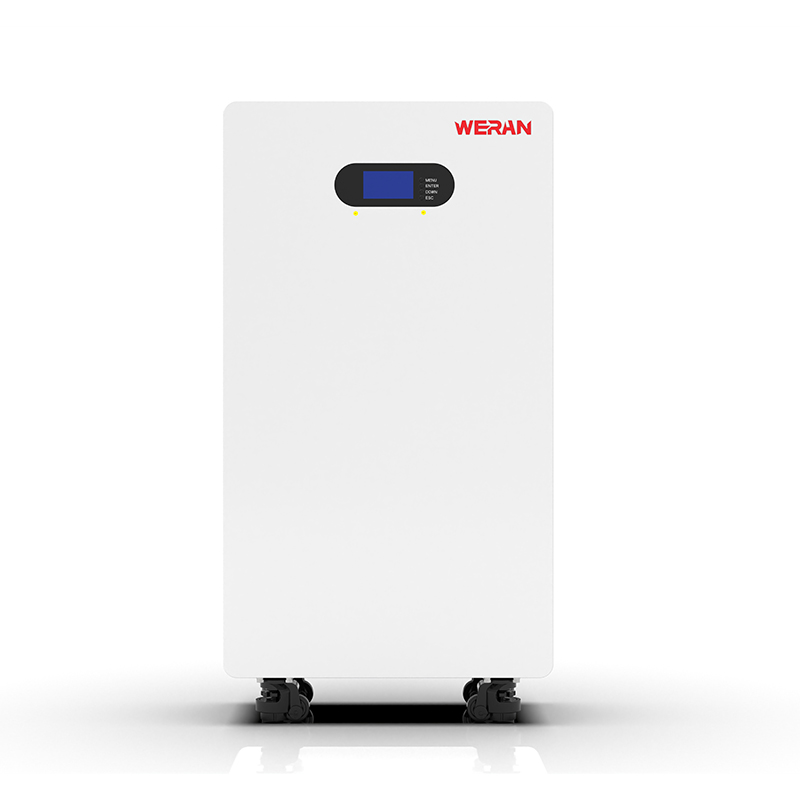
Example of a modular battery unit suitable for scalable C&I installations (image for illustration).
Integrating Solar PV: Battery Sizing for Solar Systems and Off-Grid Scenarios
Many C&I buyers pair storage with on-site solar generation to increase self-consumption and achieve energy independence. When solar is part of the equation, the battery sizing for solar system requires additional considerations. The battery must absorb excess generation during midday and discharge during evening peaks or cloudy periods. An off-grid battery calculator for fully islanded systems involves a more detailed analysis of seasonal solar variability, worst-case consecutive cloudy days, and load shifting requirements.
Key differences for solar-integrated C&I storage:
Daily cycling depth: Systems often cycle 1–2 full equivalent cycles per day, demanding higher cycle life ratings (6000+ cycles).
Cloud cover buffer: Add 30–50% extra capacity beyond the raw daily mismatch to handle two consecutive low-irradiance days.
Inverter clipping management: If solar array size exceeds inverter nameplate, battery can capture otherwise curtailed energy.
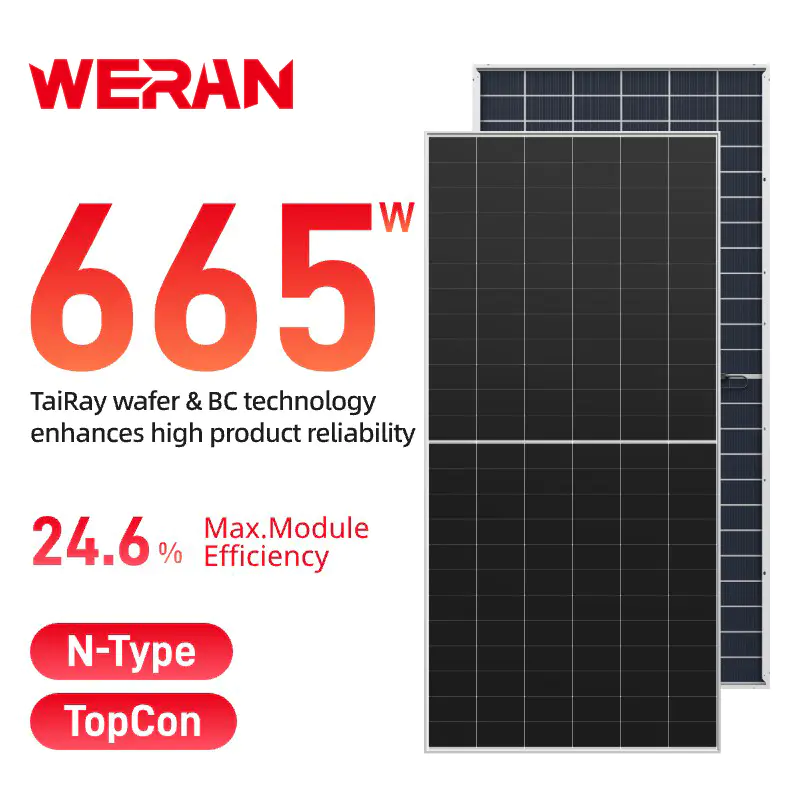
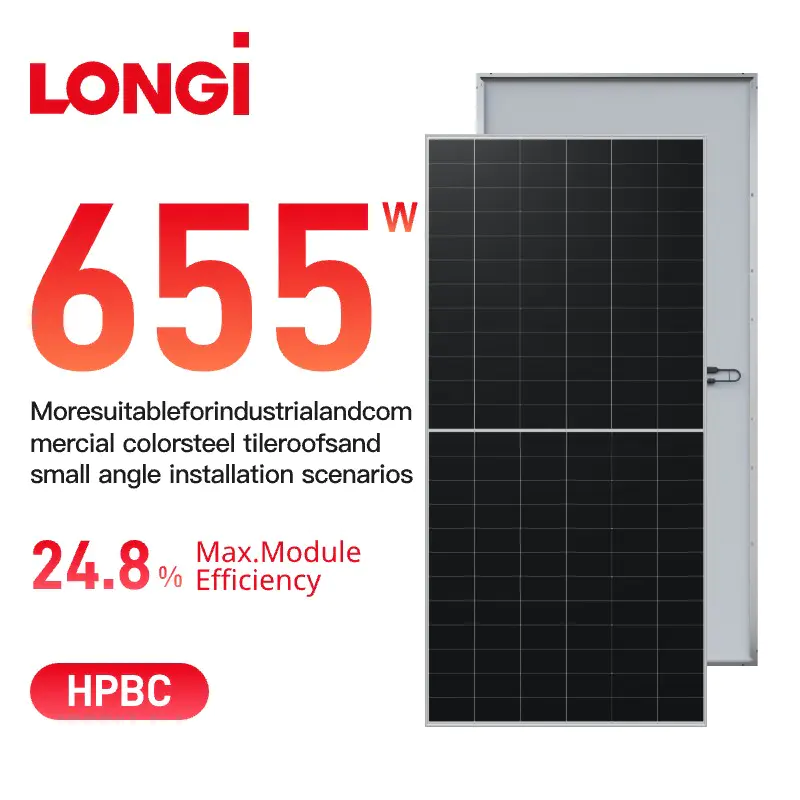
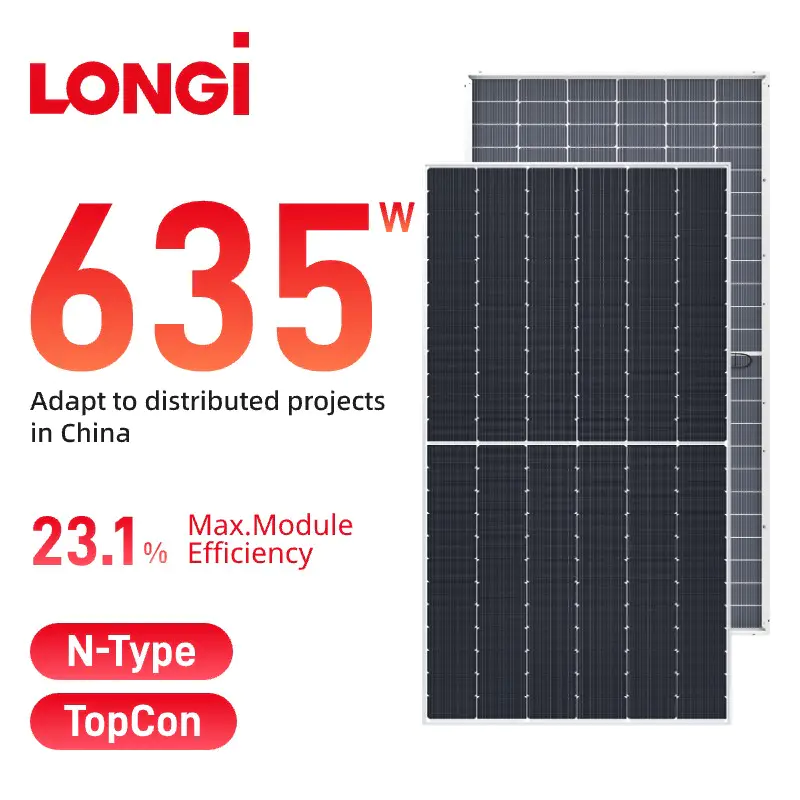
For a typical 2 MWp solar array on a warehouse roof paired with a 1.5 MW / 6 MWh battery, the battery bank for solar panels must be sized to absorb ~4 hours of peak generation above consumption. An off-grid battery calculator for remote industrial sites (e.g., mining or telecom) would also incorporate generator run-time optimization, often reducing required capacity by 20–30% via hybrid control logic.
Case snapshot: A food processing plant in California with 1.2 MW solar and 3.8 MWh storage achieved 92% renewable self-consumption during summer months. The initial capacity was sized using only daily net load curves; after adding a 15% oversizing factor for cloudy weeks, the system avoided 18 grid import events per year.
What to Look for When Evaluating a Commercial or Industrial Battery Storage Supplier
Once you have calculated your required capacity range, the next step is selecting a qualified commercial energy storage system supplier or industrial battery storage supplier. Beyond the price per kilowatt-hour, technical specifications and vendor capabilities determine long-term ROI. Use the following checklist to compare proposals.
Essential supplier evaluation criteria:
Capacity verification testing: Does the supplier provide factory test reports confirming usable capacity at various C-rates and temperatures?
Scalability and modularity: Can the battery bank be expanded by adding cabinets or racks without replacing existing units? This future-proofs your investment.
Thermal management design: Liquid-cooled systems often achieve higher cycle life and more stable capacity in hot climates compared to air-cooled.
Warranty terms on capacity retention: Reputable suppliers guarantee ≥80% of nameplate capacity after 10 years or 6000 cycles. Avoid vague language.
Software integration: The supplier’s energy management system should provide real-time battery bank size calculator feedback, state-of-health tracking, and automated dispatch logic.
Request that each potential supplier recalculates the capacity based on your load data using their proprietary models. Compare outputs and ask for justification of any significant deviations. A transparent supplier will explain exactly how they account for DoD, efficiency, and aging—values that directly affect your required investment.
Common Capacity Sizing Mistakes and How to Avoid Them
Even experienced C&I buyers occasionally fall into traps that lead to suboptimal battery bank sizing. Recognizing these pitfalls is the first step toward a robust specification.
Mistake 1: Using average load without peak or duration analysis
A facility with 500 kW average load may require 1500 kW for 30 minutes during a production startup. If the battery cannot deliver that power (kW rating), the capacity in kWh is irrelevant. Always verify both power (kW) and energy (kWh) requirements with your load duration curve.
Mistake 2: Ignoring inverter and auxiliary consumption
Power conversion systems consume 2–5% of rated power continuously. For a 1 MW inverter, that is 20–50 kW parasitic load. Over a 4-hour discharge, 80–200 kWh of battery capacity is consumed by the inverter itself, not delivered to loads. Include this in calculations.
Mistake 3: Over-reliance on manufacturer’s optimistic DoD
While datasheets may claim 95% DoD, daily deep discharges accelerate aging. For systems designed to cycle daily, limit operational DoD to 80–85% to achieve 15-year service life. Keep the extra 10–15% as a reserve buffer.
Real example: A logistics hub sized its battery based on 95% DoD and 10-year warranty. After 3 years of daily cycling, capacity degradation reached 18%, forcing early replacement. Using a more conservative 85% operational DoD would have extended life by an estimated 4 years.
Frequently Asked Questions (FAQ)
Q1: What is the difference between nameplate capacity and usable capacity in C&I batteries?
Nameplate capacity refers to the total energy stored in a fully charged battery (DC side). Usable capacity accounts for depth of discharge limitations, efficiency losses, and safety buffers. For lithium-ion systems, usable capacity is typically 85–92% of nameplate. Always request both figures from your commercial energy storage system supplier and base your calculations on usable capacity.
Q2: How does the battery bank size calculator differ for off-grid vs. grid-tied C&I systems?
An off-grid battery calculator must include autonomy for multiple consecutive days of low solar or generator fuel constraints, plus deeper DoD for emergency reserves. Grid-tied systems (most common for C&I) focus on peak shaving, load shifting, and backup of 2–8 hours. Off-grid typically requires 3–5 times more capacity per daily load than grid-tied.
Q3: Can I use the same methodology for sizing battery bank for solar panels on a commercial building?
Yes, the core steps remain: quantify net load (load minus solar generation), define autonomy (e.g., cover evening hours), and apply DoD/efficiency/margins. However, solar integration adds variability: you should analyze at least one year of 15-minute interval data and include seasonality. Many C&I buyers oversize by 20% when solar is involved to accommodate cloud cover and winter production drops.
Q4: What safety margin should I add for future load growth?
For industrial sites planning expansion, add 15–25% extra nameplate capacity. Alternatively, specify modular battery cabinets that allow adding capacity without replacing existing equipment. Discuss scalability options with your industrial battery storage supplier before finalizing the contract. A modular design often has lower upfront cost than buying all capacity upfront.
Q5: How often should I recalculate my battery capacity requirements?
Recalculate every 3–5 years or after significant changes: new production lines, extended shifts, added solar capacity, or utility tariff revisions. Many energy management platforms include an integrated battery bank size calculator that re-runs scenarios monthly using real performance data, alerting you when original assumptions drift beyond 10%.
Making Confident Capacity Decisions: From Calculation to Procurement
Selecting the right battery capacity for large-scale C&I storage is a balance of engineering precision, financial prudence, and operational strategy. By following a structured, factor-aware methodology—collecting accurate load data, applying realistic DoD and efficiency derates, adding temperature and aging margins, and validating with real-world examples—you can produce a defensible capacity requirement. This not only streamlines discussions with potential vendors but also ensures that the installed system delivers promised savings and resilience for its entire service life.
Remember to use the derived capacity requirement as a baseline for competitive bids. Request that each commercial energy storage system supplier or industrial battery storage supplier provide detailed capacity verification reports, cycle life projections at your specific DoD, and thermal performance data. A well-sized battery bank, coupled with a reliable supplier, transforms energy storage from a capital expense into a strategic asset.
 English
 Français
 Español
 عربى
عربى Український