English
 Français
 Español
 عربى
عربى Український


Introduction: Why Proper Sizing Matters More Than You Think
Selecting the correct capacity for a residential energy storage system is not a matter of guesswork. An undersized battery leaves you vulnerable during grid outages and fails to maximize solar self-consumption, while an oversized unit wastes capital on unused kilowatt-hours. To answer the question “what capacity residential energy storage system do I need”, you must first understand your daily household electricity consumption kwh, peak load requirements, and backup objectives. This guide provides a data-driven methodology, free from brand bias, to help you calculate the optimal how many kwh battery for house you should install.
Based on field data from thousands of residential installations, the average residential battery size has shifted from 5-8 kWh to 10-15 kWh as homeowners seek longer autonomy. However, a one-size-fits-all answer does not exist. Your specific needs depend on appliance usage patterns, solar array size (if applicable), and whether you aim to back up critical loads or your entire home. This article delivers a practical framework, including a home energy storage capacity calculator methodology, real consumption benchmarks, and a clear process for sizing a solar backup battery that aligns with your energy lifestyle.
1. Measuring Your Daily Household Electricity Consumption (kWh)
The foundational step in battery sizing is determining your average and peak daily usage. Utility bills provide monthly kWh totals; divide by 30 to obtain a rough average. For granular insight, use an energy monitor or log appliance runtimes. Below is a typical breakdown of household loads based on data from the U.S. Energy Information Administration (EIA) and European residential studies.
Typical Consumption by Appliance Category
- HVAC (cooling/heating): 15-40 kWh/day in extreme seasons, 3-8 kWh in mild conditions.
- Water heater (electric): 9-12 kWh/day for a family of four.
- Refrigerator/freezer: 1.5-2.5 kWh/day (Energy Star models).
- Lighting & electronics: 2-4 kWh/day (LEDs and efficient devices).
- Washer/dryer & dishwasher: 3-6 kWh per load.
- EV charging: 10-30 kWh per day depending on commute.
Add these values to estimate your daily household electricity consumption kwh. For a baseline, a two-person home without EV or electric heating averages 15-20 kWh/day. A four-person home with electric heat and central AC often consumes 30-40 kWh/day. High-consumption households with EV, workshop tools, or pool pumps may exceed 60 kWh/day. Record a 30-day average; note seasonal variations because winter heating and summer cooling create peak demands that directly affect battery capacity decisions.
Key insight: The top 10% of energy users in temperate climates consume over 45 kWh/day, while efficient all-electric homes can operate on 12-18 kWh/day. Your required storage is directly proportional to this number multiplied by desired autonomy days.
2. Critical Factors That Influence Required Battery Size
Several variables interact to determine the ideal how many kwh battery for house. Ignoring even one can lead to an unsatisfactory system. The primary factors are:
- Backup duration (autonomy): Do you need to cover a 4-hour evening peak, a full 24 hours, or three consecutive cloudy days?
- Depth of Discharge (DoD): Modern lithium batteries allow 80-95% usable capacity. A 10 kWh battery with 90% DoD offers 9 usable kWh.
- Round-trip efficiency: About 85-92% of stored electricity is retrieved; oversize by ~10% to compensate losses.
- Peak power vs. energy: Starting a well pump or air conditioner may require 5-8 kW surge power. Even if total energy is sufficient, the inverter must handle instantaneous loads.
- Solar self-consumption vs. backup priority: For grid-tied solar, a smaller battery (5-10 kWh) can time-shift excess generation. For outage protection, size based on essential loads.
Additionally, consider future expansion. Installing a modular battery system (e.g., adding cabinets later) gives flexibility. Many homeowners start with 10 kWh for basic backup of lights, fridge, and internet, then expand to 20-30 kWh to include HVAC or EV charging.
3. Using a Home Energy Storage Capacity Calculator (Step-by-Step Methodology)
A home energy storage capacity calculator is not a magic black box — it follows a transparent logic. You can replicate its calculations manually. Follow these three steps to compute your minimum usable capacity:
Step 1 – Determine your essential daily load (kWh)
List circuits you want to back up: refrigerator, lights, modem, medical devices, sump pump, and perhaps a heating/cooling circuit. Add their daily energy use. Example: refrigerator (1.5 kWh), lights+electronics (2 kWh), furnace fan (2 kWh), internet (0.3 kWh) = 5.8 kWh/day.
Step 2 – Choose autonomy days
How many hours/days should the battery support these loads without solar recharge? For most homeowners, 1 day (24h) is adequate because grid outages rarely exceed 24 hours in urban areas. Rural or storm-prone regions may desire 2-3 days.
Step 3 – Apply DoD and inverter efficiency factors
Divide the result of (daily load × autonomy days) by the system’s usable fraction. Example: 5.8 kWh × 2 days = 11.6 kWh needed at the loads. If battery DoD is 90% and inverter efficiency 92%, then required battery nameplate capacity = 11.6 / (0.90 × 0.92) ≈ 14.0 kWh. This is your target.
| Daily essential load (kWh) | Autonomy days | DoD+eff factor (typical) | Suggested battery capacity (kWh) |
|---|---|---|---|
| 5 | 1 | 0.82 | 6-7 |
| 8 | 1 | 0.82 | 10-11 |
| 12 | 1.5 | 0.82 | 22-24 |
| 20 | 1 | 0.82 | 25-27 |
| 30 | 2 | 0.85 | 71-75 |
For homes with solar, the calculator can reduce required capacity by factoring in daytime generation. A properly configured home energy storage capacity calculator will also ask for your solar array’s peak output and estimated winter generation, ensuring you don’t overspecify.
4. Average Residential Battery Size: Real-World Benchmarks
Industry surveys from 2024-2025 indicate the average residential battery size installed in North America and Europe is 12.4 kWh usable (≈14 kWh nameplate). However, this varies by region:
- Small apartments/townhomes: 5-8 kWh (essential backup only).
- Suburban single-family without AC backup: 10-12 kWh.
- Homes with electric heat/AC backup: 15-20 kWh.
- Off-grid or whole-home backup: 25-40 kWh plus generator.
When considering how many kwh battery for house, understand that adding more than 20 kWh often requires a second battery cabinet or higher-voltage system. Also note that battery capacity alone does not guarantee whole-home backup; the inverter’s power rating (kW) must be sufficient. For a typical 200A service, you need at least 10-12 kW continuous output to run central AC, dryer, and oven simultaneously.
A useful heuristic: the average residential battery size is roughly 60-80% of a home’s daily consumption if only covering evening peak (4-5 hours). For full 24h backup, it equals 100-120% of daily consumption after accounting for losses.
5. Sizing a Solar Backup Battery: Matching PV Generation
When you already have or plan to install solar, the sizing equation changes. The goal is to store excess daytime production for evening use and unexpected outages. Start by analyzing your hourly generation and consumption curves. The chart below illustrates a typical summer day with a 6 kW solar array and a household that consumes 30 kWh/day, with peak generation from 10 AM to 3 PM.
For effective sizing a solar backup battery, compute the average surplus energy (generation minus consumption during sun hours). In the example, surplus from 10 AM to 3 PM totals about 12 kWh. To avoid clipping, the battery should have at least 10-12 kWh usable capacity. If you need backup for multi-day cloudy periods, triple that capacity. A common rule: battery capacity (usable) = 30-50% of daily consumption if paired with solar for self-consumption only; = 100-150% of daily consumption for full backup.
6. Practical Worksheet: Determine Your Exact kWh Requirement
Use this worksheet to arrive at a precise battery size. Fill in your own numbers.
- List essential backup loads and their daily kWh: (e.g., fridge 1.2, chest freezer 0.9, lights 0.8, router 0.2, well pump 1.5, furnace fan 1.8) → subtotal A = ____ kWh.
- Optional: add comfort loads (TV, microwave, extra circuits): subtotal B = ____ kWh.
- Total daily backup need: A + B = C = ____ kWh.
- Desired autonomy (days, typically 1–2): D = ____.
- Energy needed at loads: E = C × D = ____ kWh.
- Battery round-trip efficiency & DoD factor: For LFP (90% DoD, 92% eff) → factor = 0.828; for NMC (85% DoD, 90% eff) → factor=0.765. Use 0.8 as conservative. Factor F = ____.
- Minimum battery nameplate capacity: E / F = ____ kWh.
- Add 10-20% for future expansion or unusual weather: Final recommended capacity = ____ kWh.
For a concrete example: a home with essential loads totaling 8 kWh/day, wanting 1.5 days autonomy (12 kWh needed at loads). Using factor 0.82 → 12/0.82 ≈ 14.6 kWh. Adding 15% gives ~16.8 kWh. Therefore a 17 kWh battery bank is ideal. This aligns with the average residential battery size for partial backup homes.
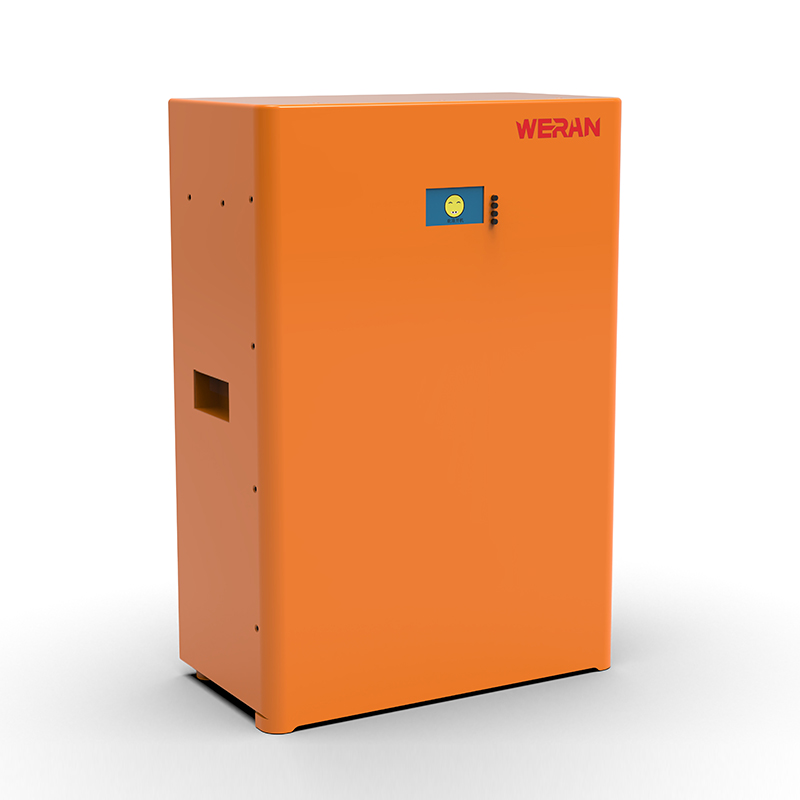
Modern residential energy storage system – compact design enables scalable capacity from 5 kWh to over 40 kWh.
7. Common Sizing Mistakes (And How to Avoid Them)
Even experienced homeowners fall into these traps when answering “what capacity residential energy storage system do I need”:
- Only looking at total monthly kWh: Averages hide peaks. If you consume 30 kWh/day on average but 50 kWh on very hot days, size for the peak.
- Ignoring surge power requirements: Starting a central AC can draw 6-8 kW for 2 seconds. Your battery inverter must support that surge, otherwise the system shuts down.
- Assuming 100% DoD availability: Always apply DoD factor. Using 100% of rated capacity dramatically shortens battery life (most warranties require ≤90% DoD).
- Forgetting about solar charge rate: If your solar array is small (e.g., 2 kW), a 30 kWh battery might never fully recharge on short winter days. Balance PV size and battery capacity.
- Oversizing without load analysis: A 40 kWh battery for a 10 kWh/day home wastes capital. The payback period may exceed the battery’s warranty life.
Always perform a sizing a solar backup battery audit using actual load data from a power meter or detailed utility interval data. If in doubt, choose a modular system that allows adding extra battery modules later.
8. Linking Battery Capacity to Real ROI and Practicality
Once you have calculated the ideal capacity (in kWh), evaluate the economics. For grid-tied homes with time-of-use (TOU) rates, a battery sized to shift 80% of peak consumption often provides the best return. For example, if your peak rate is $0.45/kWh and off-peak $0.12/kWh, each stored kWh saves $0.33. A 15 kWh battery cycled daily saves ~$4.95 per day, ~$1,800 annually. Simple payback = battery cost ÷ annual savings. Without incentives, a $10,000 battery would pay back in 5.5 years.
For backup-only applications, the value comes from avoided outage losses (spoiled food, lost productivity, hotel costs). A 10 kWh battery can keep essentials running for 12-18 hours, which covers 95% of outages in most regions. The how many kwh battery for house decision thus balances cost, outage risk, and comfort level. Data from the Lawrence Berkeley National Lab indicates that most homeowners are satisfied with 10-15 kWh for outage coverage and daily solar self-consumption.
Frequently Asked Questions (FAQ)
Q1: What is the average residential battery size recommended for a typical home?
The average residential battery size installed today is 12-14 kWh usable (about 15 kWh nameplate). For a home with 25-30 kWh daily consumption and no electric heating backup, this provides roughly 8-10 hours of essential load coverage. Homes with electric heat or long backup requirements often choose 20-30 kWh.
Q2: How do I calculate how many kWh battery for house if I have solar panels?
First, find your average daily surplus generation (total PV production minus daytime self-consumption). Then decide if you need only time-shifting (size battery equal to 100-120% of surplus) or full outage backup (size battery equal to 150-200% of daily essential load). A rule of thumb: for solar self-consumption, 0.5 kWh per kW of solar; for backup, 10-15 kWh plus 1 kWh per 2 kWh of critical load.
Q3: Can I run my whole house on a battery backup system?
Yes, but you need a large battery (≥30 kWh) and a high-power inverter (≥10 kW continuous). Plus you must manage large loads like central AC, electric dryer, and oven. Most homeowners instead back up a dedicated “essential loads” subpanel, which reduces required capacity to 10-20 kWh. For whole-home, perform a load study and consider a battery with built-in load shedding.
Q4: What is the difference between power (kW) and energy (kWh) when sizing a battery?
Power (kW) is the instantaneous rate – it determines how many appliances you can run simultaneously. Energy (kWh) is the total stored fuel – it determines how long those appliances run. Your battery must satisfy both: a 15 kWh battery with only 3 kW output cannot start a 5 kW well pump, even though it has ample energy. Always check the inverter’s rated power and surge capacity.
Q5: Do I need a home energy storage capacity calculator if I hire a professional installer?
Reputable installers perform load calculations, but using your own home energy storage capacity calculator helps you verify their proposal and avoid oversizing or undersizing. The calculator also reveals how different autonomy targets or adding/removing loads changes the cost. It’s always wise to double-check with your own audit.
Q6: How does temperature affect battery capacity sizing?
Lithium batteries lose 10-30% of usable capacity at freezing temperatures (0°C/32°F) unless they have internal heating. If your battery is installed in an uninsulated garage, increase the calculated capacity by 15-25% to compensate for cold-weather derating. Manufacturers usually specify temperature vs. capacity curves in datasheets.
Conclusion: Your Capacity Roadmap
Determining what capacity residential energy storage system do I need ultimately comes down to three numbers: your daily essential consumption (kWh), desired backup hours, and the round-trip efficiency of your battery technology. Start with a meticulous load inventory, apply the worksheet above, and cross-check with the average residential battery size for your home type. Remember that battery sizing is not permanent; many systems allow adding capacity in 2-5 kWh increments. For solar owners, prioritize a battery that can accept high charge currents (≥0.5C) to capture all midday surplus. Use a reliable home energy storage capacity calculator to refine your numbers, and always plan for at least 10% headroom. With the right capacity, your home gains energy independence, lower utility bills, and resilience against blackouts.