The global photovoltaic industry has undergone a fundamental transition from p-type PERC to n-type technologies, with N-type TOPCon module emerging as the dominant architecture. By the end of 2025, TOPCon technology accounted for approximately 80% of all new solar cell production capacity installed worldwide, making it the mainstream choice for utility-scale and commercial projects [9†L2-L5]. One of the most significant performance advantages of TOPCon lies in its bifaciality factor, which directly translates into higher energy yield across diverse installation environments. This article examines the technical and physical mechanisms through which the bifaciality factor of TOPCon modules enhances overall energy generation, supported by field data, engineering simulations, and design considerations.
What Is Bifaciality Factor and Why Does It Matter for Energy Yield?
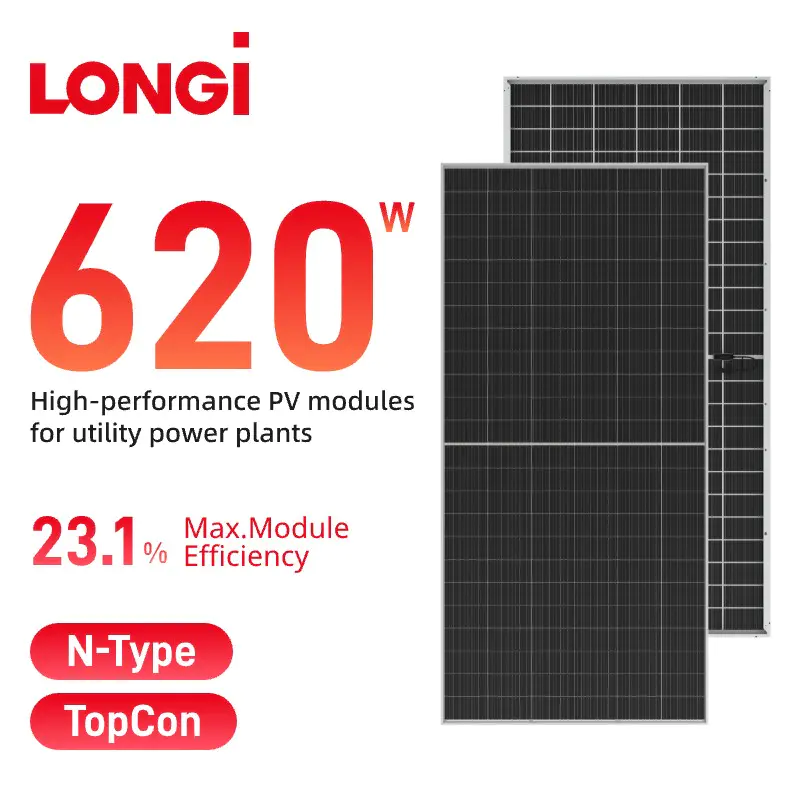
The bifaciality factor, often denoted as BF, is defined as the ratio of a module's rear-side conversion efficiency to its front-side efficiency under standard test conditions. A bifaciality factor of 80% means that the rear side of the module can produce 80% of the power generated by the front side when both receive identical irradiance. For monofacial modules, the rear side contributes essentially no active generation, setting their bifaciality factor at zero. For TOPCon modules currently in production, the bifaciality factor typically ranges from 80% to 85%, with advanced designs reaching up to 88% [0†L20-L22][7†L21-L23].
The bifaciality factor matters because it establishes the theoretical maximum for rear-side energy contribution. It sets the upper bound for how much additional energy a bifacial module can harvest from reflected and diffuse light compared to a monofacial counterpart. While the actual bifacial gain in real-world systems depends on site-specific variables such as ground albedo, mounting height, row spacing, and tilt angle, the bifaciality factor remains the fundamental specification that determines the module's capability to convert rear-side irradiance into electrical power.
TOPCon achieves its high bifaciality factor through several key physical mechanisms: the passivating contact structure that reduces carrier recombination on both surfaces, the inherently lower defect density of n-type silicon, and the ability to maintain excellent rear-side passivation without compromising transmittance. Unlike PERC cells, where the rear aluminum contact inherently limits rear-side optical access, TOPCon cells incorporate a thin tunnel oxide and doped polysilicon layer that provides both exceptional passivation and, with appropriate design modifications, optical transparency for bifacial configurations.
Albedo: The Critical Environmental Multiplier for Rear-Side Generation
Albedo, defined as the reflectivity of the ground or surface beneath a solar module, is the single largest environmental factor determining how effectively a high bifaciality factor translates into actual energy gain. Ground surfaces vary dramatically in their reflective properties, and the bifacial gain achievable for any given module is fundamentally constrained by the albedo of its installation environment [13†L13-L15].
Different surface materials produce distinctly different albedo values, which directly affect the magnitude of rear-side generation. The following table presents measured albedo ranges for common ground surfaces and their corresponding estimated rear-side generation gain contributions:
| Ground Surface Type |
Albedo Range |
Estimated Rear Generation Gain |
| Fresh Snow |
80% - 90% |
25% - 30% |
| White TPO/EPDM Roof |
70% - 80% |
20% - 25% |
| Dry Sand / Light Soil |
25% - 35% |
8% - 12% |
| Green Grass |
15% - 25% |
6% - 8% |
| Old Concrete / Cement |
20% - 30% |
7% - 10% |
| Dark Asphalt / Wet Soil |
10% - 15% |
Less than 5% |
Research from the Aladdin cloud simulation platform in Oman demonstrates the quantitative relationship between albedo and bifacial gain. For bifacial PV systems operating over a moderate albedo of 0.30, the monthly bifacial gain peaks at 9.5% during June, while the same system operating over a high albedo of 0.65 yields a June peak of approximately 19% [20†L32-L36]. This nearly doubling of bifacial gain with increased albedo illustrates how a high bifaciality factor in the module combines with favorable ground conditions to produce substantially higher energy yields.
PVsyst simulation studies further confirm that albedo is a decisive factor in system performance. Transitioning from a 5% albedo level to a 70% albedo level in simulations resulted in an increase in annual energy production from 1,792 kWh/kWp/year to 1,973 kWh/kWp/year, alongside an increase in Performance Ratio from 85.36% to 93.98% [22†L28-L32]. These findings demonstrate that the albedo value of the installation ground is not merely a secondary consideration but a critical and decisive factor in realizing the full potential of high bifaciality modules.
Glass-Glass N-Type Module Design: Enabling High Bifacial Performance
The transition to glass-glass module construction has been one of the most significant structural shifts in photovoltaic manufacturing over the past decade. Glass-glass module shipments crossed 40% of global solar capacity in 2025, and by 2026, roughly 79% of bills of materials submitted to reliability testing institutes utilize rear glass construction [18†L5-L8]. This shift is not merely a manufacturing trend but a direct response to the specific requirements of TOPCon cell technology and the pursuit of higher bifacial gains.
The glass-glass design enables high bifacial performance through several mechanisms. First, the transparent rear glass eliminates the opaque polymeric backsheet used in conventional modules, allowing unimpeded optical access to the rear cell surface. With typical glass thickness of 2.0 mm on both front and rear sides, these modules achieve mechanical durability with transparent rear-side transmission exceeding 90% in the spectral range relevant to silicon photovoltaic conversion [7†L14-L16].
Second, the dual-glass structure provides superior environmental protection. The zero water permeability of glass compared to polymeric backsheets significantly reduces the risk of Potential Induced Degradation and moisture-related degradation. Glass-glass TOPCon modules have demonstrated up to 10% to 30% extra power from the rear side compared to monofacial panels, while the glass-glass construction prevents formation of micro-cracks and protects cells from degradation caused by moisture and salt mist [12†L8-L14].
Third, glass-glass construction supports extended warranty terms that directly reflect confidence in long-term reliability. While glass-backsheet modules typically offer 25-year linear power warranties, glass-glass TOPCon modules commonly carry 30-year performance warranties. This five-year extension is supported by measured annual degradation rates of 0.35% for TOPCon modules, compared to 0.50% to 0.55% for PERC alternatives, ensuring that bifacial gains continue to contribute throughout the full operational lifespan of the system [6†L18-L19][8†L24-L26].
Rear-Side Power Generation Percentage: Quantifying the Contribution
The rear-side power generation percentage represents the actual contribution of reflected and diffuse light to the total energy output of a bifacial module under specific installation conditions. For TOPCon modules with bifaciality factors of 80% to 85%, the real-world rear-side contribution typically ranges from 5% to 15% of total generation in standard ground-mount configurations, with upper values reaching 20% to 25% in high-albedo, optimally elevated installations [14†L9-L11][13†L3-L5].
Engineering data reveals that the relationship between mounting height and rear-side gain follows a distinct pattern. At heights below 0.5 meters, the rear side receives severely uneven illumination, with gain typically below 4%. The range from 0.5 meters to 1.0 meters produces the steepest increase in gain, with raising height from 0.5 meters to 1.0 meters yielding an additional 2% to 3% system efficiency boost on grass surfaces. The optimal balance point for most ground-mounted power stations lies between 1.0 and 1.2 meters, where the incremental power generation begins to show diminishing returns relative to increased structural costs [14†L39-L46].
Tracked bifacial systems demonstrate even more favorable rear-side generation percentages. When combined with single-axis tracking mounted at 1.5 to 2.5 meters height, bifacial TOPCon modules can achieve total bifacial gain of 15% to 25% beyond monofacial tracked performance. The combination of tracking plus bifacial gain can add 35% to 45% over a fixed-tilt monofacial system, with tracked systems reaching bifacial gains of 10% to 25% depending on site-specific albedo and row spacing configurations [13†L44-L47].
Diffuse Light Absorption: How TOPCon Captures Non-Direct Irradiance
Diffuse light constitutes a substantial portion of total annual solar irradiance in many geographic regions. On cloudy days, during early morning and late evening hours, and in high-latitude locations with significant atmospheric scattering, diffuse radiation can represent 30% to 60% of total daily insolation. The ability to efficiently convert diffuse light into electrical power therefore has a direct and material impact on annual energy yield.
TOPCon modules exhibit excellent diffuse light absorption characteristics due to their n-type silicon foundation and optimized surface passivation. The n-type base material features higher minority carrier lifetimes and reduced defect densities compared to p-type alternatives, enabling effective collection of photogenerated carriers even under low-light conditions where the charge generation rate is reduced. The tunnel oxide passivated contact structure minimizes surface recombination at both interfaces, preserving the photogenerated carriers that would otherwise be lost through defect-assisted recombination.
Field performance data confirms the real-world significance of these diffuse light capabilities. In a Middle East parking lot field test covering early and late hours with low irradiance conditions, TOPCon modules demonstrated a 2.75% power generation yield gain beyond the daily average level, fully leveraging their performance potential in high-reflection scenarios during low-light periods [4†L17-L22]. The modules showed sustained generation during early morning and late afternoon when direct irradiance was minimal, directly contributing to longer daily generation windows and higher total annual output.
The low-light performance advantage of TOPCon translates to measurable annual energy differences. For installations in regions with significant diffuse light fractions, the superior diffuse absorption capability of n-type TOPCon modules can increase annual yield by 3% to 5% compared to p-type alternatives with equivalent nameplate ratings. This advantage compounds with the bifaciality factor, as diffuse light contributes both to front-side generation and, through reflection from ground surfaces, to rear-side generation as well.
Bifaciality Factor Ranking 2026: Where TOPCon Stands
The 2026 photovoltaic technology landscape presents a clear bifaciality factor hierarchy across competing architectures. HJT modules achieve the highest bifaciality factor among commercial silicon technologies, with typical values of 85% to 95% and maximum rear-side generation efficiency approaching front-side performance [19†L22-L26]. TOPCon modules occupy the middle tier, with bifaciality factors of 80% to 85% and demonstrated lab results reaching 88.3% for optimized devices. PERC modules, increasingly phased out of new utility-scale installations, have bifaciality factors of approximately 70% [16†L20-L24][0†L20-L23].
Five-year measured field data from operating plants across multiple climate zones ranks the three technologies on real-world performance. TOPCon delivers annual degradation of 0.40% per year, the strongest bifacial gain in commercial deployments, and the lowest Levelized Cost of Energy at utility scale among current technologies. Bifacial n-TOPCon delivers up to 13.4% more kWh/kWp than monocrystalline PERC, with the bifaciality advantage representing a substantial portion of this difference [16†L20-L25].
While HJT maintains a higher theoretical bifaciality ceiling, TOPCon achieves the most favorable combination of bifacial performance, manufacturing scale, and cost-effectiveness. The 80% plus bifaciality factor of TOPCon, combined with its dominant market share of approximately 65% of new installations as of 2026, represents the mainstream bifacial solution that delivers high rear-side generation without the 30% to 50% cost premium associated with alternative technologies [9†L37-L39][16†L34-L38].
Calculating the Total Energy Yield Impact of Bifaciality
The total energy yield of a bifacial TOPCon module can be expressed as the sum of front-side generation and albedo-modulated rear-side generation. The fundamental relationship is:
Total Energy = Front Energy + (Bifaciality Factor × Albedo × Rear Irradiance Fraction × Front Energy)
In practical terms, a bifacial panel with an 80% bifaciality factor installed over a light-colored ground surface with 25% albedo captures approximately 8% to 12% additional energy annually compared to an equivalent monofacial installation [4†L10-L13]. For a TOPCon module with 85% bifaciality factor over the same ground surface, the annual bifacial gain increases proportionally, demonstrating the direct linear relationship between bifaciality factor and total rear-side energy contribution.
Field validation of these calculations comes from twin plant comparisons in real operating environments. In a side-by-side evaluation of TOPCon and BC modules in identical mounting and ground conditions, the TOPCon module showed higher bifaciality and correspondingly stronger rear-side generation performance [4†L43-L46]. A separate field test in Yantai, Shandong province, conducted over a monitoring period from November 2025 to February 2026, recorded TOPCon modules achieving an average cumulative power gain of 3.16% per watt compared to competing technologies under identical site conditions [0†L25-L28].
The economic implications of bifaciality-driven energy yield increases are substantial. For a utility-scale installation of 100 MW capacity, each percentage point of bifacial gain translates to approximately 1,000 MWh to 1,500 MWh of additional annual generation, depending on site-specific irradiation conditions. Over a 30-year operational lifetime, the cumulative additional generation attributable to high bifaciality factor can represent millions of dollars in incremental revenue, directly improving project economics and accelerating returns on investment.
Practical Optimization Strategies for Bifacial TOPCon Installations
Maximizing the energy yield contribution of TOPCon high bifaciality factor requires attention to several site-specific optimization parameters:
Mounting Height Optimization - For ground-mount installations, a minimum clearance of 1.0 meter between the module bottom and ground surface is recommended to achieve uniform rear-side illumination. The optimal range of 1.0 to 1.5 meters provides the best balance between gain and incremental structural costs, with the most pronounced gain improvements occurring between 0.5 and 1.0 meters of elevation.
Row Spacing Configuration - Increasing spacing between module rows reduces self-shading of the rear side. For fixed-tilt bifacial systems, row spacing should be sufficient to ensure that the rear side of each row does not fall into the shadow cast by the preceding row during peak generation hours. Typical minimum spacing of 1.5 to 2.0 times the module width is recommended for bifacial systems.
Ground Surface Enhancement - In low-albedo environments, ground surface enhancement can substantially increase rear-side generation. White gravel, reflective crushed stone, or high-albedo painted surfaces can increase effective ground albedo from typical grass values of 0.15 to 0.25 up to 0.50 to 0.70. The incremental cost of surface enhancement should be evaluated against expected additional generation, with generally favorable economics for large-area installations where the per-square-meter enhancement cost is low.
Tracker Integration - Single-axis tracking systems are highly synergistic with bifacial TOPCon modules. Trackers maintain optimal front-side orientation throughout the day while the elevated mounting height above ground ensures excellent rear-side illumination. Systems combining tracking with bifacial TOPCon modules consistently achieve bifacial gains of 15% to 25% beyond tracked monofacial baselines.
Module Orientation for Vertical Applications - For specialized applications including agrivoltaics, noise barriers, and parking canopies, vertical or east-west oriented bifacial installation can achieve bifacial gains comparable to standard tilted ground-mount configurations, with the added benefit of reduced land-use conflicts and lower row-spacing requirements.
Conclusion: The Bifaciality Advantage Drives TOPCon Energy Yield Leadership
The high bifaciality factor of TOPCon modules is a fundamental driver of their superior energy yield across residential, commercial, and utility-scale installations. Through the combination of n-type silicon physics, glass-glass construction that enables optical rear-side access, and optimized passivating contact structures that maintain high efficiency on both module faces, TOPCon achieves bifaciality factors of 80% to 85% with demonstrated reliability and low degradation rates.
The magnitude of the bifaciality impact on total system performance depends on the interplay between module specifications and site parameters. High ground albedo values of 0.50 or greater enable bifacial gains of 15% to 25% for TOPCon systems, while even moderate albedo surfaces of 0.20 to 0.30 produce 5% to 12% additional generation compared to monofacial alternatives. The linear relationship between bifaciality factor and rear-side energy contribution means that each percentage point of bifaciality improvement delivers measurable annual generation increases across all installation types.
For project developers, EPC firms, and asset owners selecting modules for new installations in 2026, the bifaciality factor of TOPCon represents a proven, bankable performance advantage. With the industry having completed its transition from p-type PERC to n-type technologies, and with TOPCon accounting for the majority of new capacity, the high bifaciality factor of TOPCon modules has become the standard benchmark for modern bifacial system performance and the foundation of lowest-cost solar electricity generation worldwide.
Frequently Asked Questions
Q1: What is the typical bifaciality factor range for TOPCon modules in 2026?
TOPCon modules currently achieve bifaciality factors of 80% to 85% for mass production units, with advanced designs reaching up to 88%. This represents a significant improvement over PERC modules (approximately 70%) while remaining slightly below HJT modules (85% to 95%).
Q2: How does ground albedo affect the energy yield of high bifaciality TOPCon modules?
Ground albedo is the single largest environmental factor influencing bifacial gain. For TOPCon modules with 80% bifaciality, increasing ground albedo from 0.20 (grass) to 0.65 (white gravel or fresh snow) can increase annual bifacial gain from approximately 6% to 8% up to 19% or more, based on field measurements and simulation studies.
Q3: What is the optimal mounting height for bifacial TOPCon ground-mount systems?
The optimal mounting height typically ranges from 1.0 to 1.2 meters above ground. This range provides the best balance between rear-side gain and structural cost. Gains increase most rapidly when raising height from 0.5 to 1.0 meters, with diminishing returns above 1.2 meters.
Q4: Do glass-glass TOPCon modules provide higher bifacial gain than glass-backsheet designs?
Yes. Glass-glass construction provides superior optical transparency for rear-side illumination and has become the dominant structure for bifacial modules, with approximately 79% of new module designs utilizing rear glass construction as of 2026. Glass-glass also offers better moisture protection and supports 30-year performance warranties.
Q5: How does diffuse light absorption differ between TOPCon and other technologies?
TOPCon modules demonstrate excellent diffuse light absorption due to their n-type base material and passivating contact structure. The high minority carrier lifetime of n-type silicon enables efficient carrier collection even under low-light conditions. Field data confirms TOPCon modules achieve measurable generation advantages during cloudy conditions and early/late daily hours compared to p-type alternatives.
Q6: Can bifacial TOPCon modules be used effectively on rooftops?
Yes, but the bifacial gain is typically lower for rooftop installations due to limited clearance and potentially lower albedo of roofing materials. Elevated rooftop installations with white membranes can achieve 8% to 15% bifacial gain, while flush-mount residential installations on dark roofs produce minimal rear-side benefit, making standard monofacial modules potentially more cost-effective in these scenarios.
Q7: What is the annual degradation rate for bifacial TOPCon modules?
Commercial bifacial TOPCon modules exhibit first-year degradation rates of 1% followed by annual degradation rates of 0.35% to 0.40%, resulting in approximately 88% to 89% retained output after 30 years of operation. This low degradation profile ensures that bifacial gains continue to contribute meaningfully throughout the full system lifetime.
Q8: How does the bifaciality factor ranking compare across technologies in 2026?
The 2026 bifaciality factor ranking from highest to lowest is: HJT (85% to 95%), TOPCon (80% to 85%), and PERC (approximately 70%). While HJT maintains the highest theoretical bifaciality, TOPCon provides the most favorable combination of bifacial performance, manufacturing cost, and commercial availability for large-scale deployments.
Q9: Does tracking increase the bifacial gain of TOPCon modules?
Yes. Single-axis tracking is highly synergistic with bifacial modules. Tracked bifacial TOPCon systems mounted at 1.5 to 2.5 meters height can achieve total bifacial gains of 15% to 25% above tracked monofacial baselines, and 35% to 45% above fixed-tilt monofacial systems, depending on site conditions.
Q10: What albedo value is required to justify the incremental cost of bifacial modules?
Data indicates that only when ground albedo exceeds 15% to 20% does the additional generation revenue from bifacial modules reliably cover the incremental equipment and installation costs. For lower albedo surfaces such as dark asphalt, monofacial modules may be more cost-effective.
 English
 Français
 Español
 عربى
عربى Український