01Why Power Class Selection Matters More Than Ever
A decade ago, comparing solar modules mostly meant comparing a few wattage steps inside one familiar frame size. Today the catalog spans more than 200W between the smallest residential panel and the largest utility format, and the gap keeps widening. Power class selection is no longer a matter of picking the biggest number on a datasheet. It decides how many modules a project needs, how strings are wired, how trucks are loaded and how quickly stock leaves the warehouse.
This article follows module specification evolution from the 480W residential class to the 680W-plus range, and turns each step into decisions that distributors, EPC teams and installers face when they build a purchasing plan.
480W to 685W+Span of mainstream catalog classes
About 30% fewerModules per megawatt, lowest to highest class
0.4-0.5MWTypical large-format container load
Key point: Power class selection is a portfolio decision, not only a project decision. The right mix lets you serve rooftop customers and utility tenders from one warehouse without carrying dead stock.
Readers new to the topic can use this guide as a checklist: start with the evolution timeline, match your customers to a class, then work through compatibility and ordering rules in turn.
Three forces drive the change: higher cell efficiency, larger wafer formats and the push to lower balance-of-system cost. Each one affects buyers differently, so the sections below treat them separately.
For distributors the stakes are practical. A class chosen too early can leave cartons on the shelf for months, while a class chosen too late can lose a tender to a competitor with the right format in stock. Understanding how each step in power was reached makes both mistakes easier to avoid.
What This Guide Covers
How module specifications evolved across four eras
Where each power class fits in real projects
How formats, electrical limits and mounting hardware interact
How to plan stock and place orders without slow-moving inventory
02Module Specification Evolution: Four Eras of Power Growth
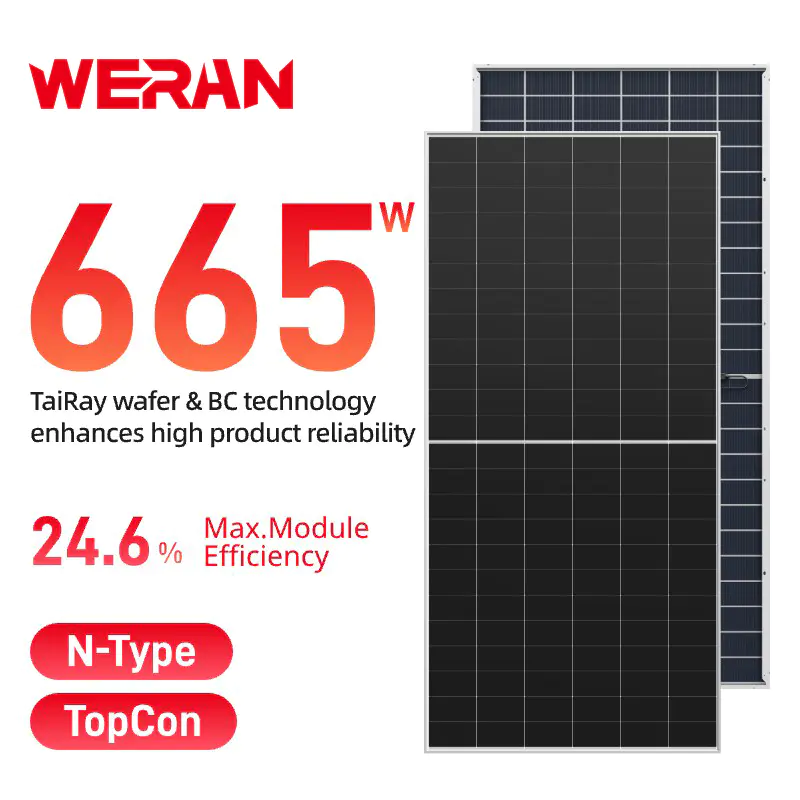
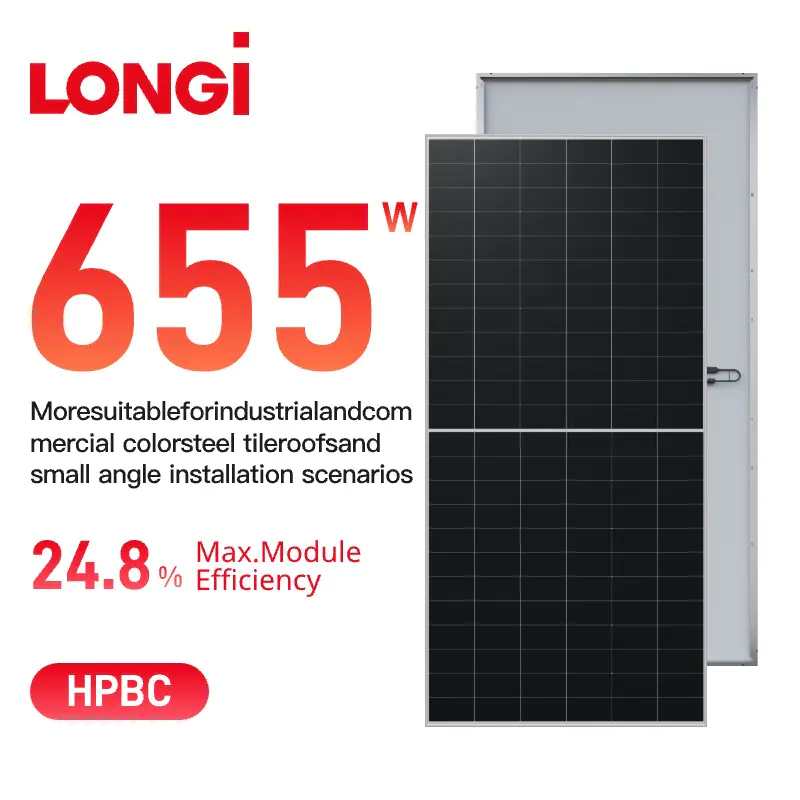
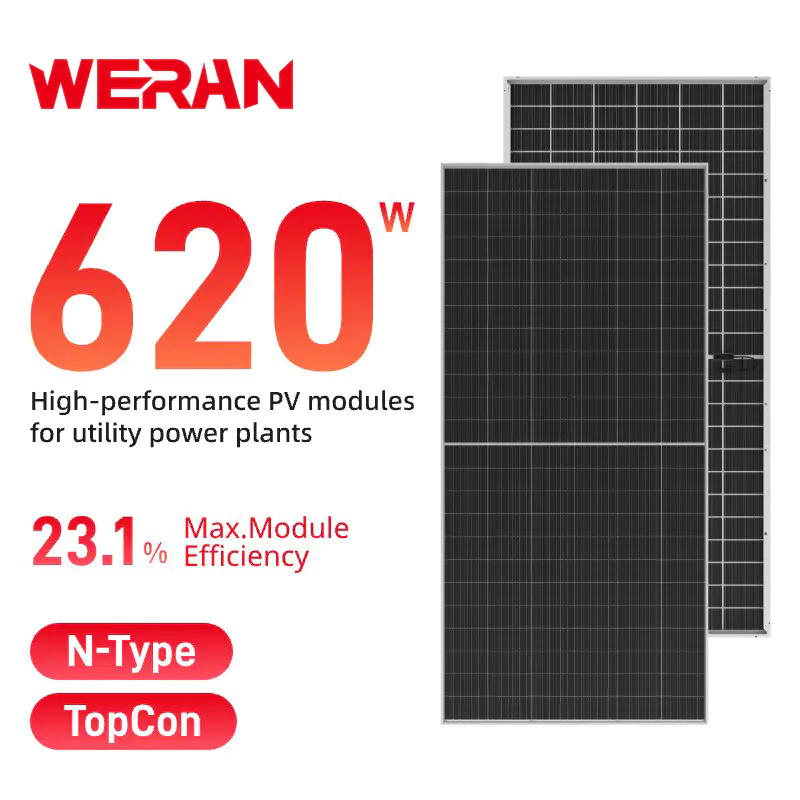
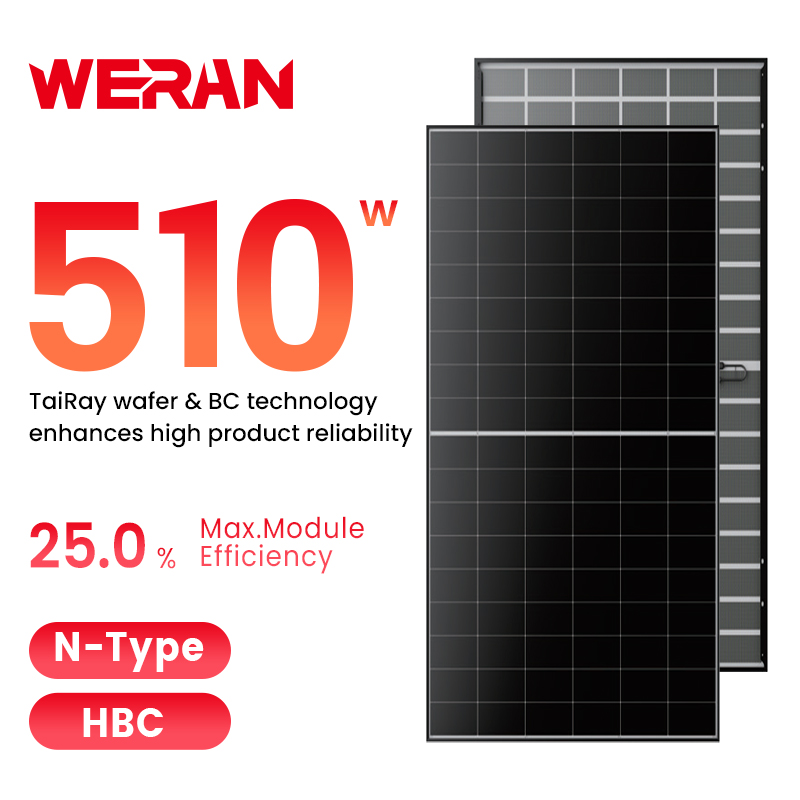
Early commercial modules used 60 or 72 full cells and delivered roughly 250W to 350W. Gains came mostly from cell efficiency. Around 2019, half-cut cells and larger wafers changed the picture: modules passed 400W, then 500W, without a matching jump in glass and frame cost. Since 2022, bifacial double-glass construction and N-type cells have pushed the mainstream into the 600W range, and back contact designs now lift the top of the catalog to the 665-685w solar module tier.
What Actually Raised the Wattage
Cell efficiency: each generation adds roughly 0.5 to 1.0 percentage point of module efficiency. On a large-format module of about 2.7 square metres, one percentage point is worth around 25W.
Wafer size: larger wafers raise current rather than voltage, which is why high-power modules often show currents in the high teens of amps.
Cell layout: half-cut and multi-split layouts reduce resistive loss and limit hot-spot stress in bigger formats.
Bifacial gain: rear-side generation adds energy yield, not nameplate watts, a distinction often misread when classes are compared.
Era
Typical power class
Cell layout
Main driver
2015-2018
270-400W
60 and 72 full cells
Cell efficiency
2019-2021
400-550W
Half-cut, larger wafers
Wafer growth
2022-2024
550-650W
Bifacial, double glass
N-type cells
2025-2026
640-685W+
Back contact designs
System cost
The pattern is consistent: nameplate power has grown faster than module area in every era. That helps balance-of-system cost, but it also means older mounting hardware, inverters and handling habits are tested a little more with each step.
Looking at the line chart, the steepest climb falls between 2018 and 2020, when wafer size changed. Later gains are smaller in watts but larger in efficiency, because new cell structures raise output without simply making the module bigger. Buyers should expect the next steps to arrive as efficiency improvements inside familiar formats, which makes compatibility planning easier than it was during the wafer transition.
03Power Classes at a Glance: Where Each Class Fits
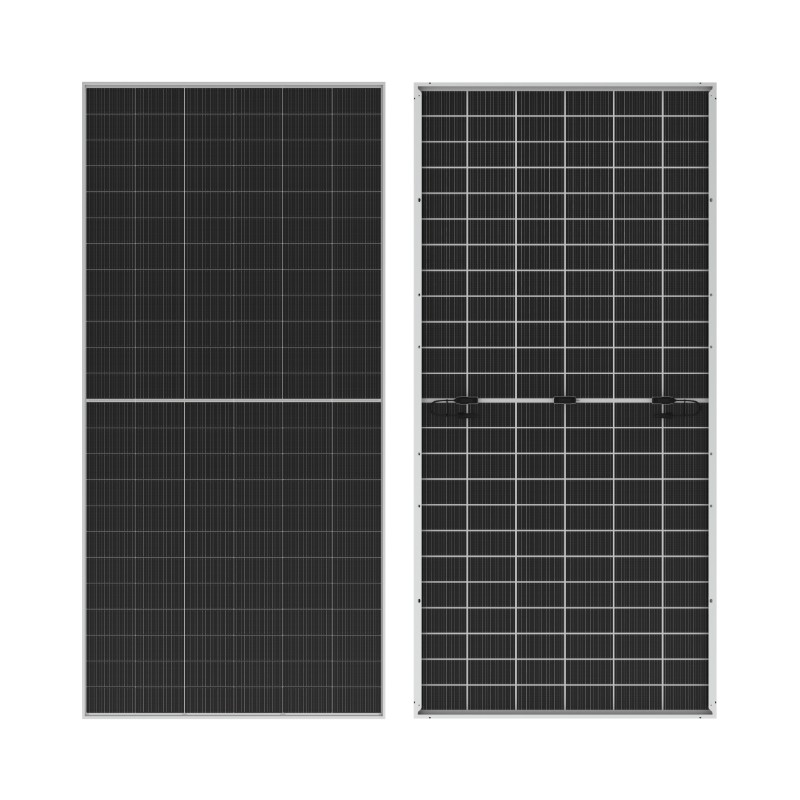
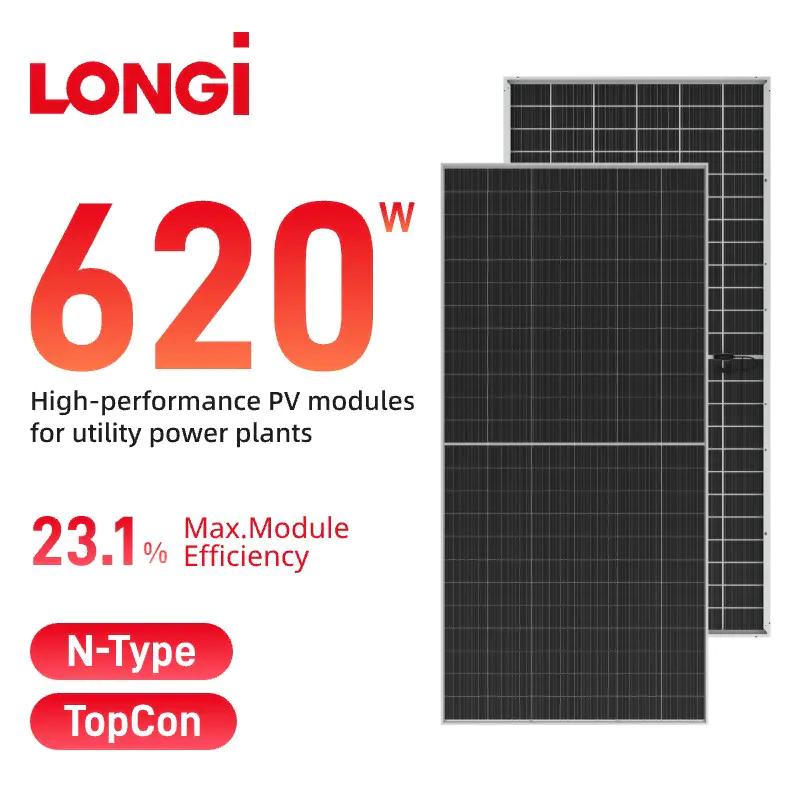
Large-format bifacial double-glass module, 595-625W class
Think of the catalog as three practical classes rather than one long list of wattages. Each class answers a different project need.
Residential | 480-490W
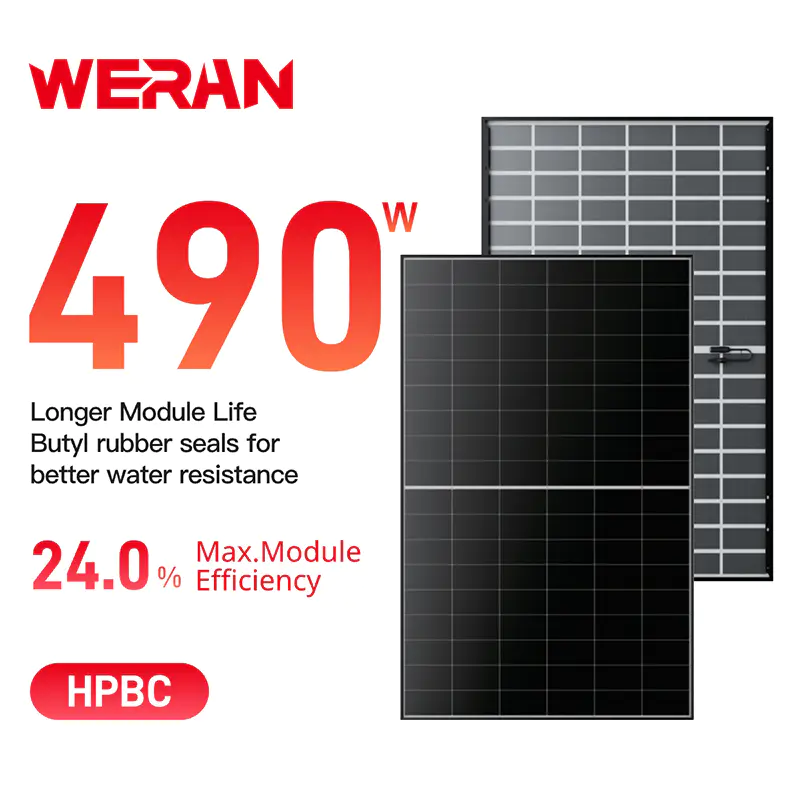
Typically a 54-cell half-cut layout around 1.7 m × 1.1 m. Two installers can carry it across a roof, and it fits tight roof planes with vents and chimneys. Best where space and handling matter more than the lowest cost per watt.
Mainstream | 595-645W
The workhorse of ground-mount and C&I projects. Many buyers treat this bracket as the high-power solar module baseline because it pairs with volume-selling inverters and trackers.
High-power | 665-685W+
Built for large utility sites where every saved module cuts labour, hardware and cable. Back contact and advanced N-type cells deliver the extra watts, but current, weight and wind load deserve a closer look.
Fewer Modules per Megawatt
Moving from 480W to 685W cuts the module count from about 2,083 to about 1,460 per megawatt, a reduction near 30 percent. Fewer modules means fewer clamps, rail metres, connectors and torque points to inspect. The saving grows with project size, but each piece is also larger and heavier, so crew size and lifting method must be reviewed at the same time.
Balance-of-system savings are real but not automatic. On a ground-mount site with fixed structures, fewer and larger modules can shorten installation time noticeably. On a roof with obstacles, the same larger module may leave unused gaps, and the smaller residential class can deliver more total power from the available area.
Freight follows the same logic: a 40-foot high-cube container of large-format modules typically carries about 0.4 to 0.5MW, depending on packing and class.
Storage works the same way. Higher-power pallets hold fewer megawatts of risk per square metre of floor, yet each loss from damage is larger, so inspection at receiving matters. Record glass and frame condition on arrival, photograph damaged cartons, and file claims quickly.
04Mainstream Module Formats and Compatibility
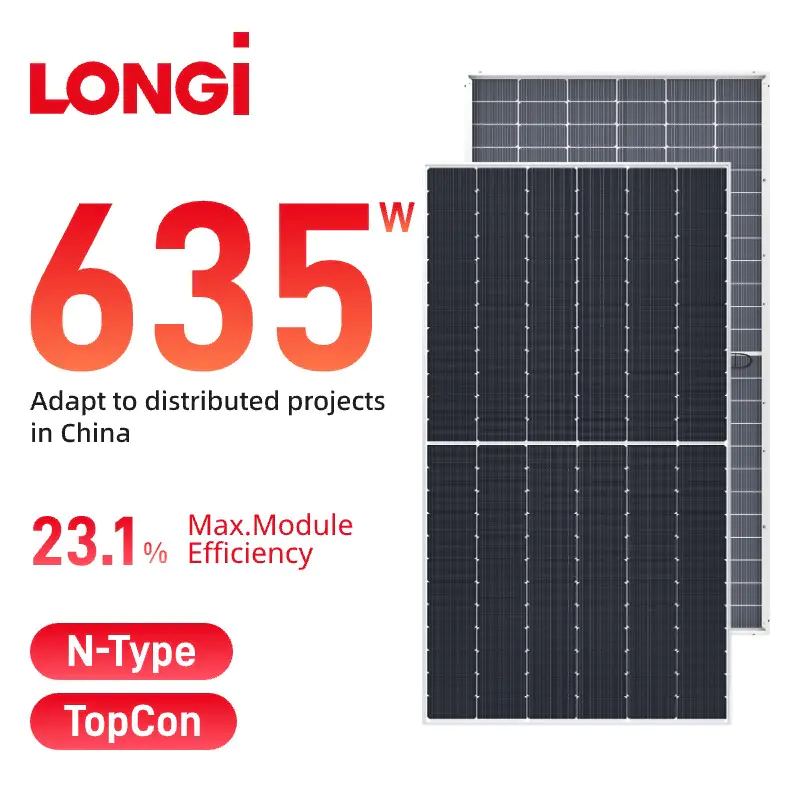
Format matters as much as wattage. Most large-format products share a footprint of roughly 2.4 m × 1.1 m, so power rises while the frame stays similar. A 615-645w bifacial module built on this footprint has become a common reference in tenders because it balances output with manageable current and weight.
Compatibility Checks Before You Commit
Inverter input: confirm per-input current limits and the MPPT window. Higher-current modules can exceed older inputs.
String length: check open-circuit voltage at the coldest site temperature against the 1500V system limit.
Mounting: verify clamp zones, rail spacing and tracker torque tube pitch for the larger area and wind load.
Cables and connectors: match current ratings and keep connector types consistent across mixed batches.
Handling: double-glass large-format modules weigh roughly 32kg to 38kg, which affects crew size and lifting aids.
Documentation: request mechanical drawings so installers can plan fixings before delivery.
The radar chart gives an illustrative scoring across five factors. Higher classes win on power density and freight efficiency, while the residential class leads on handling and fit with existing hardware. The middle class scores well on sell-through, which is why it so often anchors inventory.
Scores are illustrative, not measured values, but the shape is instructive. No class wins every axis. A buyer who needs the highest density accepts tighter electrical limits, and a buyer who needs easy handling gives up some freight efficiency. Writing down which axes matter most for your customers turns this trade-off into a clear purchasing rule.
Rule of thumb: never mix power classes in one string unless the inverter input allows it. Mismatched current can limit the whole string to its weakest module.
Class
Typical cells
Typical project
480-490W
54 half-cut
Residential rooftop
595-625W
66 half-cut
Ground-mount, C&I
615-645W
78 half-cut
Utility, EPC
665-685W
72 half-cut
Utility, trackers
Cell count alone does not rank power. Wafer size and efficiency decide the final class.
05Inventory Optimization and Product Portfolio Planning
Inventory risk rises when a newer class launches and buyers start asking for it. A practical portfolio keeps most stock in the classes that match the majority of tenders, a smaller share in the adjacent class and a controlled share in the top class. The chart shows an illustrative mix for a distributor serving both rooftop and ground-mount customers.
Four Planning Rules
Anchor about 60 to 65 percent of units on the two mainstream classes that match your typical project size.
Hold the adjacent class as a swap option so a project can move up or down one step without redesign.
Keep the highest class mostly to confirmed orders plus a modest buffer, since demand is lumpy and project-driven.
Review the mix monthly and trim any class whose turnover slows for two consecutive cycles.
Pricing also shapes the mix. The price gap per watt between adjacent classes is usually small, so the class with the lower installed cost per project often wins even when its price per piece is higher. Track both numbers. Warehouse space is the other constraint: higher power means fewer pieces per megawatt, which frees floor space, but pallets are taller and heavier, so racking limits should be checked.
Seasonality matters too. Residential demand often peaks before incentive deadlines and summer installation periods, while utility demand follows tender calendars and financing milestones. Matching stock arrival to these cycles reduces storage time and keeps working capital available for the class that is actually moving.
Regional rules add another layer. Some markets favour modules with specific certifications or local content, so a class that sells well in one region can stall in another. Confirm approvals for every destination before ordering.
Keep a short list of approved alternatives for each class, so a delay on one product never stops a project waiting for modules.
Remember: a balanced portfolio is judged by turnover, not by catalog length. Five well-stocked products often outperform fifteen thinly stocked ones.
06Distributor Purchasing: A Five-Step Selection Workflow
A repeatable workflow keeps purchasing decisions consistent across customers and seasons. The flow below works for both stocking orders and project-specific orders.
Define project needs: list site type, available area, target capacity and installation method for the next two quarters.
Check electrical fit: compare module current and voltage with the inverters and string layouts customers already use.
Confirm mechanical fit: verify frame dimensions, clamp zones, weight and wind or snow load ratings.
Plan stock mix: split volume across classes using sell-through history and open tenders.
Stage purchase orders: release volume in batches tied to shipping windows so cash is not locked in slow classes.
Reading Container Loads
Order quantity is easiest to plan in container multiples. A container of large-format modules holds roughly 600 to 700 pieces, so a 650W class fills about 0.4MW per container while a 685W class reaches nearer 0.5MW. Full containers lower freight cost per watt and simplify customs paperwork.
Staging orders also protects against specification changes. Manufacturers update power bins, frame details and packing layouts during a product cycle, so a smaller first batch lets you verify the datasheet against what actually arrives.
Finally, keep a simple record of every order: class, quantity, arrival date and sell-through after sixty days. After two or three cycles this record shows which classes deserve a larger share, and it gives suppliers hard data when you negotiate delivery schedules.
Payment terms deserve the same attention as power class. Longer terms on slower classes and shorter terms on fast movers keep cash flow healthy and reduce pressure to discount old stock.
07What to Verify Before Placing an Order
Two modules with the same nameplate can behave differently in the field. Before you commit volume, request the following items in writing and compare them on equal terms.
Item
What to request
Why it matters
Power tolerance
Positive-only tolerance
Protects delivered output
Temperature coefficient
Value at maximum power
Affects hot-climate yield
Bifaciality factor
Rear-to-front ratio
Predicts rear-side gain
Degradation terms
First-year and yearly rate
Sets long-term output
Certifications
Safety and quality reports
Required by many tenders
Packing data
Pieces per pallet and container
Drives freight and storage
Tip: a datasheet is a starting point. Ask for flash test reports on delivered batches and keep samples from the first shipment for comparison.
Power class evolution will continue, but the buying logic stays steady: match the class to the project, confirm the electrical and mechanical fit, and keep stock balanced across adjacent classes. Buyers who follow that logic can adopt new formats early without being left with old inventory.
One more habit helps: revisit the specification checklist at every product update. Small changes in frame size, glass thickness or junction box position can affect mounting hardware and cable routing, even when the power class stays the same.
08Frequently Asked Questions
Q1: What counts as a high-power solar module today?
In most catalogs, a high-power solar module starts around 600W and runs up to the 665-685W tier and beyond. The label depends on format, so always compare modules of similar size and construction before drawing conclusions about output.
Q2: How do I choose between the 615-645W and 665-685W classes?
Start with the site. Large utility arrays with trackers and high-current inverters benefit most from the higher class, while mixed C&I and ground-mount work often runs best on the 615-645W class because of its broader hardware compatibility and lower handling load.
Q3: Does a higher power class always lower project cost?
Not always. Fewer modules reduce racking, labour and cable, but higher current, weight or wind load can add cost elsewhere. Compare installed cost per project, not only price per watt.
Q4: How can distributors avoid slow-moving inventory when new classes launch?
Concentrate stock on the classes that match most tenders, stage orders in batches, and review turnover monthly. Keep the newest class tied mainly to confirmed orders until demand is clear.
Q5: Can different power classes be used in the same array?
Only with care. Modules in one string should have closely matched current, and the inverter input must tolerate the combined electrical profile. Separate strings or separate inputs are the safer approach.
Q6: Which datasheet details should I check first?
Begin with power tolerance, temperature coefficient, bifaciality factor, degradation terms and packing data. These items explain most real-world differences between modules that share the same nameplate power.
Q7: How much does module weight change between classes?
Large-format double-glass modules are noticeably heavier than residential panels, often by more than ten kilograms. Plan lifting aids, pallet handling and roof or structure load limits before choosing the higher classes.
Q8: When should a buyer move up to the next power class?
Move up when your customers already own compatible hardware, the freight and installation savings are confirmed on a real project, and the new class has appeared in at least a few open tenders. Until then, hold it as a limited-volume option.
 English
 Français
 Español
 عربى
 Український