01Why Distributors Are Moving Toward Private-Label Module Supply
Global distributors face a familiar squeeze. Catalog modules are available from dozens of suppliers, margins narrow every quarter, and every importer ends up quoting the same datasheet. That is why more wholesalers now evaluate a solar module OEM program: it lets them control specification, labeling and warranty positioning in each market they serve.
The challenge is that a module sold into a desert utility park and a module sold onto a suburban rooftop face very different demands. Power class, glass structure, frame size, cable length, certificates and even pallet design change from one region to the next. This guide explains how to customize those variables in a structured way, what a capable factory should be able to show you, and how to avoid the mistakes that delay first shipments.
3-5 wksTypical sampling window for a new specification
600-700Large-format modules in a typical 40 HQ container
6-12 wksAdded time for a new regional approval
02OEM and ODM: Where the Difference Really Matters
The two terms are often used interchangeably, but they describe different levels of control. In an OEM arrangement, the distributor defines the specification and the factory builds it under the distributor's own label. In a solar module ODM arrangement, the factory contributes an existing design platform, such as a proven cell layout and bill of materials, and the distributor selects from adjustable options. In practice, most global programs end up as a hybrid of the two.
Aspect
OEM
ODM
Design ownership
Distributor defines
Factory platform
Customization depth
High
Option-based
Minimum order
Higher
Lower
Time to first shipment
Longer
Shorter
Best fit
Established importers
Market entrants
Choosing the right model
Choose OEM when you already know your target specification and can commit to volume.
Choose ODM when you need speed and want to test a market before investing in a unique design.
Start with ODM and migrate selected models to OEM once demand is proven.
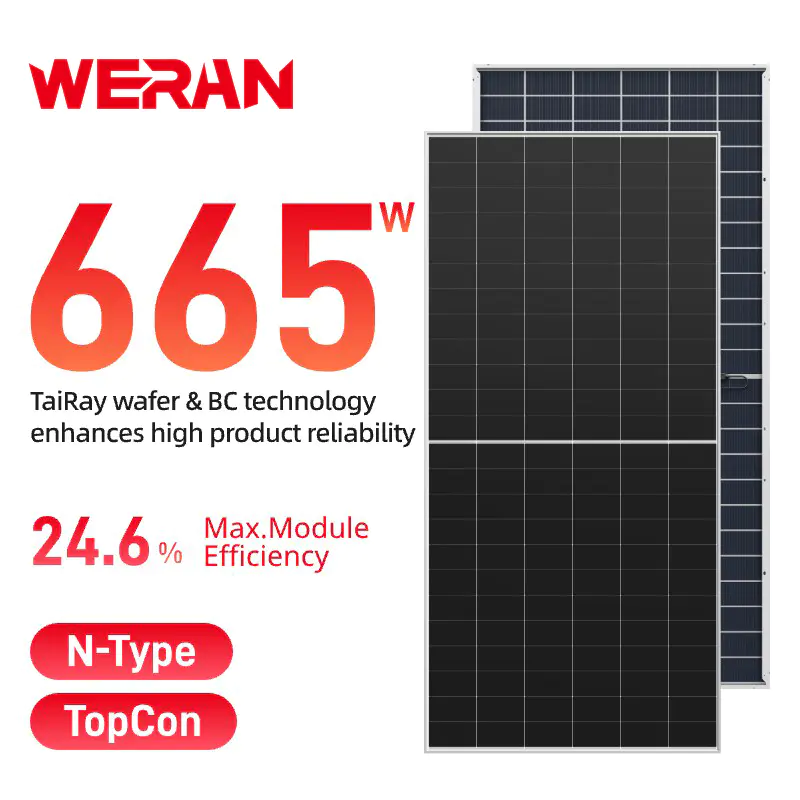
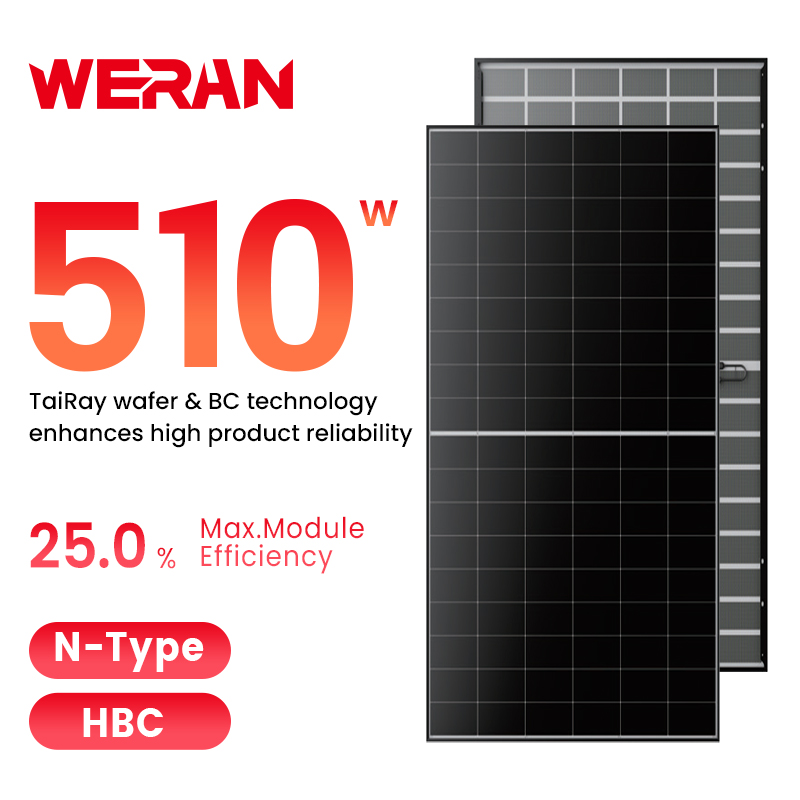
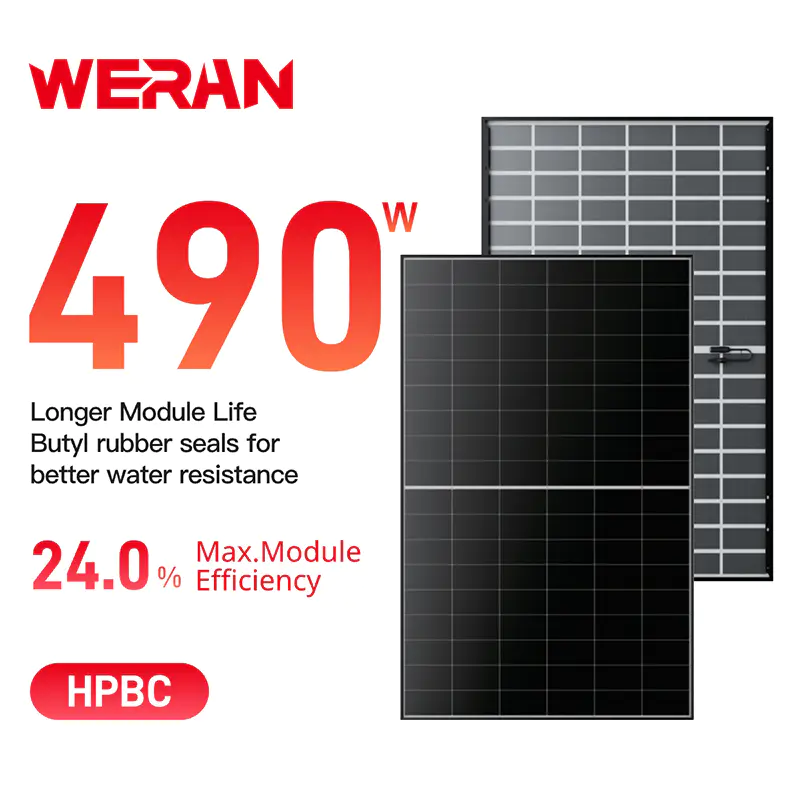
A single platform shows how this works. The WERAN 640-670W HPBC 2.0 Bifacial Solar Panel and the WERAN 640-670W Back Contact Solar Panelshare the same 640-670 W back contact power class, yet one uses double glass for utility and EPC projects while the other uses single glass for distribution and commercial work. The cell platform stays fixed, while glass structure, labeling and packaging change by market.
A practical rule: customize what the market pays for, and standardize everything that only adds cost.
03Customizing Specifications for Different Markets
Effective custom solar module manufacturing starts with the end customer, not the factory catalog. Each segment rewards a different set of choices.
Utility and EPC
Buyers price on delivered cost per watt, so they favor power classes in the 600 W range and above, bifacial gain and double-glass durability. Customization focuses on power binning, junction box type, cable length for tracker or fixed layouts, and pallet counts that suit container loading.
Commercial and distribution
Rooftops and warehouse projects value balanced weight, snow and wind load ratings, and predictable delivery. Single-glass constructions are common because they reduce load on lightweight roofs. Distributors often add tailored label layouts and regional datasheets.
Residential and installer
Buyers care about appearance and installability. Smaller formats, black frames, lower weight and clean surface finishes matter more than the last few watts. Installers also want connector compatibility with local inverters and storage systems.
WERAN 640-670W HPBC 2.0 Bifacial Solar Panel: a double-glass platform for utility and EPC specification work
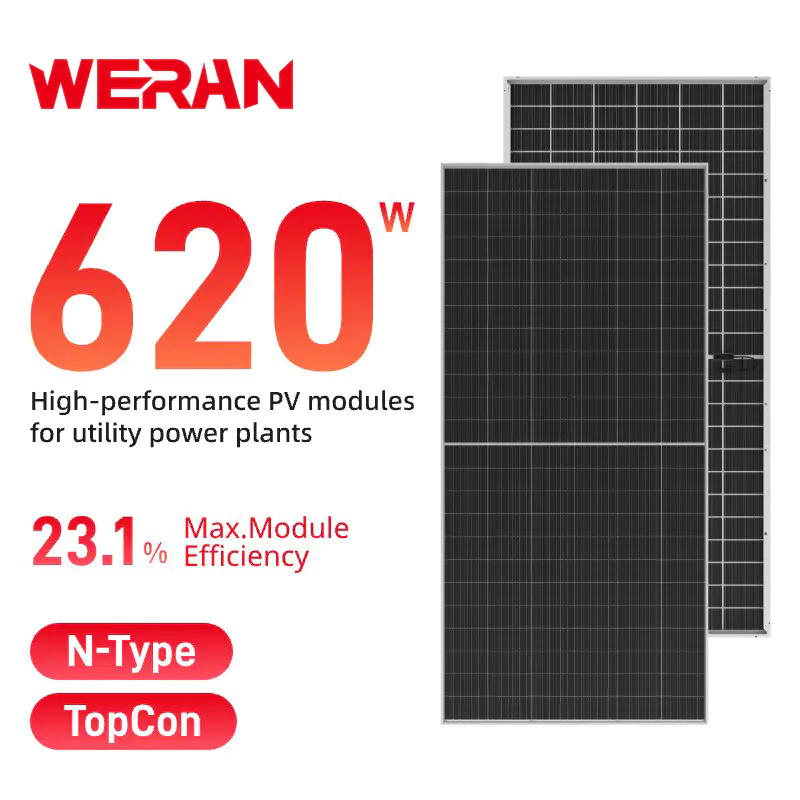
A mainstream large-format bifacial platform commonly used for volume wholesale programs
What buyers ask for first
Branding and power class dominate inquiries, because they decide how a module is positioned and priced. Glass structure and connectors come next, since they affect both durability and installation compatibility. Frame color is requested less often but matters heavily in residential tenders.
Power class and tolerance range
Glass structure: single or double glass
Frame size, color and anodizing
Cable length and connector type
Label design, barcodes and serial numbers
Why one specification rarely fits both
The radar chart shows how differently the two segments weigh the same six factors. Utility buyers lean on power and price, while residential buyers lean on aesthetics and weight. A distributor serving both should hold two specification sheets rather than force a compromise that satisfies neither.
04Production Capability: What to Verify Before You Commit
A glossy brochure says little about whether a factory can run your specification repeatedly. Production capability is about three things: capacity, flexibility and consistency. Ask for line-level evidence rather than company-level totals, because a plant with large nameplate capacity may still have only one line configured for your cell format.
What to look for on the line
Automated stringing and layup, which reduce operator-dependent variation.
Defined changeover time between formats, so small custom batches do not stall the schedule.
Dedicated sorting by power and current, which keeps pallets uniform.
Multi-source approval for glass, encapsulant, backsheet and junction boxes.
Documented capacity reservation for repeat customers.
The lead time pattern is typical: the first full order takes longest because materials, labels and certificates are finalized, while repeat orders run faster once the bill of materials is locked.
05Building a Quality Control System You Can Audit
A credible quality control system is layered, so that defects are caught at the cheapest possible stage. Inspecting only the finished module is expensive and late; the aim is to prevent problems upstream and confirm the result at the end.
Core checkpoints
Incoming inspection of cells, glass, encapsulant and backsheet.
Electroluminescence imaging after lamination to reveal micro-cracks.
Flash testing of every module, stored against its serial number.
Insulation and ground continuity testing for electrical safety.
Periodic reliability sampling such as thermal cycling and damp heat.
Ask to see a sample traceability record. A good system lets you trace a single module back to its material lots, line and shift within minutes. That record is also what makes warranty claims fast and fair.
06Certification Support for Multiple Regions
Certificates decide whether a container clears customs and whether installers can legally sell the product. For a distributor covering several regions, the practical question is how many approvals a model already holds and how quickly the factory can extend them to a new label or variant.
Region
Typical requirements
Europe
IEC type tests, CE declaration, recycling registration
North America
UL listing, fire classification
Middle East and Africa
IEC reports plus national conformity programs
Latin America
Local certification and labeling rules
South Asia
National registration and local test acceptance
Points to confirm in writing
The certificate covers your exact model name, power range and bill of materials.
Any material change, such as a new glass or junction box supplier, triggers a documented review.
The factory supplies test reports, inspection certificates and declarations in the languages your customs agents need.
07Packaging Customization That Protects Margin
Packaging is where small decisions have large cost effects. Damage in transit, inefficient container loading and confusing labels all erode margin, and all are fixable at the specification stage.
Choose pallet height and module count to match your target container type and your customer's unloading equipment. A pallet that is too tall may be impossible to handle at a rural site, while one that is too small wastes container volume. Corner protectors, strapping and moisture barriers should be specified rather than assumed.
Labels and documentation
Private-label programs depend on consistent marking. Define the nameplate layout, barcode format, serial number logic and carton marks before samples are built. Add pallet-level packing lists and a short handling guide in the local language, which reduces site damage and warranty disputes.
08Supply Chain Support and Global Distribution
Customization only pays off if modules arrive on time and in the right mix. Strong supply chain support turns a one-off order into a repeatable program, and it should be planned in parallel with the technical work.
Support that matters in practice
Rolling forecasts that let the factory reserve materials and capacity.
Mixed-model consolidation so smaller markets can share a container.
Complete shipping documents: commercial invoice, packing list, origin papers and test reports.
Clear claims handling for transit damage and nonconforming batches.
Buffer stock options for fast-moving models in regional warehouses.
09How to Evaluate an OEM/ODM Partner
Once the specification is clear, compare partners using evidence instead of promises. A short, disciplined evaluation saves months of rework.
Request a written specification sheet and compare it line by line with your requirements.
Audit the factory, in person or through a third-party inspector, focusing on traceability and testing records.
Order pilot samples and run independent verification in a recognized laboratory.
Review certificate scope against your exact model and label.
Agree on warranty terms, claims procedure and a quality escalation path before the first purchase order.
The best partner is not the one with the longest feature list, but the one who documents every change and tells you early when something slips.
10Frequently Asked Questions
Q1: What is the difference between solar module OEM and ODM?
OEM means you define the specification and the factory builds it under your label. ODM means you choose from the factory's existing design platform and adjust selected options. ODM is faster and needs lower volume, while OEM gives deeper control.
Q2: Which specifications are easiest to customize?
Labels, packaging, cable length and connector type are the simplest to change. Frame color, power binning and glass structure take longer because they affect testing and approvals.
Q3: How long does a custom module project take?
Sampling often takes three to five weeks, and a first full order commonly ships within ten to twenty weeks from the brief, depending on certification needs. Repeat orders are usually faster.
Q4: Do I need new certificates for a private label?
Often yes, or at least an extension. Many programs require the certificate to list your model name and label, so confirm the scope early to avoid customs delays.
Q5: What quality records should I ask for?
Ask for incoming material reports, electroluminescence images, per-module flash test data, reliability test summaries and a traceability sample linking a serial number to material lots.
Discuss Your Module Specification
Share your target market, power range and certification needs, and our team will help you map them to a practical specification and schedule.
Head office: Room 503, Building 3, South Area, Hongqiao Zhengrong Center, Shengui Road, Minhang District, Shanghai, China
 English
 Français
 Español
 عربى
 Український